Showing posts with label ambiguity. Show all posts

Saturday, April 04, 2015

SEARCHING FOR VALUES

Obnoxious as a value (Avril Lavigne)

Sometimes new ways of finding value depend upon the collapse of the old ways and sometimes they are pressed into our lives because so many phenomena are upon us that have no names and aren’t well-enough known to fit them into the old categories.  Consider music videos, which began as a sort of kids’ entertainment and has now become not just an art form, but a whole new genre of “writing.”  Some colleges have hastened to teach people how to make them, but what do you do with them?  They are often too ecstatic and chaotic to mean anything traditional, particularly since we are used to making the oldest people judge the work of the youngest -- which is nonsense in this case.  I’m 76 and can’t even “see” fast enough to follow the tachistoscopic contents, much less any context in sex/drugs/rocknroll -- which some people consider demonic.  But I'll figure this out.

Consider the emptying of Ph.D.’s to the point where the letters after one’s name mean little unless one knows the institution, the specific discipline, the reputation of those professors, and the current status of the field.  A gray area has formed around people who have finished all but their thesis, but find it impossible to get the actual thesis past a committee formed of rivals and graybeards.   The past has become a burden.  But is that worse than awarding Ph.D.’s for the equivalent of “basket-weaving,” which is code for something worthless?  Something similar has developed with professional journal acceptance, to the point where a contingent simply accepts everything online in “open” journals.  We end up resorting to “cloud curation”, basically a popularity contest.  Or turn to money, the great shared value system.  No one asks "is the movie any good"?  Instead we ask what was the gross?

Prizes and promotion are susceptible to our great interest in gaming the system and our dependence on friendship or convenience circles can replace serious literary recognition with Oscar award night.
Oscar.

Ideas are insidious.  The construction/deconstruction/post-construction thought system that was once as hard to figure out as non-Euclidean geometry, has now slid into our language and assumptions.  They have been particularly effective in undercutting status that depends on precedent, dominance, elitism, meritocracy.  Our professionals -- doctors, lawyers, theologians -- are now joined by professional manicurists and mechanics while others -- for instance, public school teachers -- get no longer get respect nor a decent paycheck.

In a world where kids are schooled at home, publishing is done by oneself, and music is mostly free, we can often see lasting value only in retrospect.  Not very helpful.  And yet uncertified, unqualified, off-the-wall, individual nonconformity can be the most effective strategy for value that there is.  Follow your star.  (It's not on Google.)   People talk about passion.

“Value” in the sense of practical usefulness, something that sustains life (food, water, shelter), is a separate matter from what I’m talking about here.  But even in that case there are different views.  Moral relativity.  For instance, few things have more felt value to individuals than their pets, since attachment gives them almost the value of another human life.  But the law finds dogs of negligent value unless they can be leveraged into some kind of money through popularity or uniqueness or usefulness. 

Competitions and awards supposedly based on absolute value do not just enhance the reputations of those receiving them, but also lifts up the importance of those awarding them.  These factors can depart cruelly from what is good for life.  Consider prize-winning pugs and bulldogs who have been distorted by breeders into walking sufferers, barely able to breath and unable to give birth without human intervention -- partly because this distortion is seen as desirable in fancier’s terms and partly because a dog with a shoved-in face looks like a human baby -- it’s “cute.”

But this essay is about the values of behavior -- best action, ethics, moral standards.  Here’s a list of factors that make “values” problematic and a source of conflict.

God in the cloud.  No longer an old man -- and what has He done with His robe?

1. Value is emergent from experience and tradition, not imposed from above (an authority figure or god) but it is often "felt" as a powerful entity said to have the ability to punish or reward humans.  This point of view usually assumes the Power controls all human lives, not just believers -- but non-believers might not agree. 

2.  The values of the group and the values of a sub-group or individual may be in conflict, even between siblings.  By definition, one’s values emerge from experience and two children in the same family might be treated very differently.  Sometimes a family is so chaotic that no rules can emerge except the ones the child deduces, which may be pretty negative in terms of consequences.

3.  For a child, values have sharper edges than for an adult.  Shop-lifting candy might seem dubious but barely okay (if you apologize), or cute.  Even for an adult, shop-lifting food in order to survive means something different from stealing food as a political statement, maybe not even eating it.  Acting in a political way that prevents food from sustaining starving people in a famine might not feel like stealing food at all, but righteous participation in punishment from God.


4.  A feeling of entitlement always interferes with justice.  If any separate but allied group can feel they are exclusive (because of either superiority or inferiority like drug gangs), that will affect their understanding of ethics.  For one thing, the signals they perceive as signs of value -- special clothing, jewelry, privilege of access to social events, identification with beloved people -- become values in themselves.  Kindness, generosity, political effectiveness, membership in religious groups, are all value signals as much as tattoos are.

5.  Strangely, not caring about value signals is often a value signal in itself!

6.  One might not be seen as valuable in one’s own time, either as an individual (a teacher, an artist, a religious leader) or as part of an admired group later.  (Consider Vietnam-era veterans.) but not seen as very admirable until after time has passed.  So that means that social value is shifty and one might struggle to reach the heights, only to discover that social change means no one thinks the achievement is admirable anymore.  Even in practical terms of money value, we are on the verge of respecting plumbers more than philosophers.


7.  Even as values shift, some people are left behind with an earlier generation’s experienced feelings, while the youngsters don’t even think the same qualities exist anymore.  Think of the deep and consequential changes in our ideas of valued sexual behavior.   Marriage is ignored here, yearned for there, irrelevant other places, made into an expensive social marker, seen as a form of capture, or clearly enacted as a violent act of war.

Many people use some form of the “Golden Rule” as a marker for value.  Was it Bertrand Russell or George Bernard Shaw who pointed out that such a principle is all very well unless one is a liver fluke -- all situations are not equal and not everyone wants what you want.  I think of my favorite counseling joke:  “Hurt me,” said the masochist.  “No,” said the sadist.  In some contexts, NOT being hurt is the same as being hurt.

Dinosaur ethics.

The problem is ambiguity.  And the time-context.  What is done to a person now might be painful, unwanted, and controversial -- but result in a few years in something beneficial.  Or it could be the opposite.  


So value systems, besides being emergent from experience, are often a gamble really.  They can pit the individual against a group.  They can change over time, for the better or for worse.  They can be enforced with violence or simply ignored until they are useful.  They can make you rich or get you crucified.

"Corpus Hypercubus" by Salvador Dali

Saturday, December 07, 2013

A MONTANA ARTIST WHO WILL NEVER BE IN THE CMR AUCTION!

This first image is the art, not the artist.

"Letter to God" by Tip Toland

Tip Toland

This Montana artist will never be in the CMR Auction!  And yet how Charlie would have loved her work. At its core, it is very much the same as what Charlie was doing: considering the human creature with love and humor.  Toland earned her BFA in ceramics at the U of Colorado-Boulder in 1975 and her MFA in ceramics at Montana State University in Bozeman.  She picked up whatever "menial" labor she could find in order to keep eating.

Here's a bit of a gallery.  They're not representative pieces -- just the ones I particularly like.  You could go to her website:  www.tiptoland.com  


"Grist" (2012)


http://vimeo.com/53520165   Here she is, speaking for herself.

Ogi Ogas and Sai Gaddam have been talking about the Mona Lisa and why it fascinates us. Their premise is that the painting gives us two versions of the portrait melded together -- one strictly accurate(non-smiling) and one blurry (smiling) -- that are interpreted by two different parts of the brain that do not see the same thing, do not perceive in the same way.  It is the effort at resolution between them that holds our attention.  Super-real sculptures do something like that.  Every clue tells us this is a real person, but it is also clear this is art, mimesis. 

Most of the people who do this super-realism do their work in flesh-like plastic or do waxwork as in Madame Tussaud’s museum of famous replicated people.  Remarkably -- almost incredulously -- Toland works in stoneware, or if that’s not available she uses hydrocal, a hard form of plaster which is what we used for casting in the Scriver Studio until we could afford bronze.  (The skull above appears to be bronze and brass -- I love it!)  

I would not know about Toland except that she is the subject of an article in the Sculpture Review (Fall, 1913), that stuffy old instrument of the figurative sculptor organization, the National Sculpture Society, with its roots in the Beaux Arts Paris context that supported so many famous public monuments and was the genre “home” of Bob Scriver.  Even more shocking to some than Toland’s work is the “figurative sculpture” on the cover of this issue.  We forget someone has to sculpt a doll.  This doll on the cover is Neil Estern's way to pay the rent.  She is child-sized, designed to wear the child's clothes.    


One of Bob Scriver's works is a toy quarter horse for Breyer that is sold to kids and collectors.  Someone had to model the Barbies, trolls, "My Little Ponies," and Betsy-Wetsies. 


Super-realistic dolls, especially those portraying children, go straight to our hearts but are not marketed as sculpture.  One does not play with them as toys either.

Nudes, even more than dressed portrayals, engage additional different parts of our brains as we ask ourselves,  "Is this real?  Am I allowed to look at this?"  There might be an impulse to somehow interact, maybe even to offer a warm sweater.  Though I know what Bob's likely response would be and it would not be protective.  Nor would he critique himself for it.

Others of us see things differently and to some Toland's work will be philosophical, possibly even religious, as we ask ourselves what we poor vulnerable "forkéd" creatures are doing in this existence and how it is that we can see ourselves revealed naked as Toland does, replicate ourselves as tenderly as this, yet kill and abuse each other.  Why do we know we are here instead of going through life unconsciously as other animals?  How can we answer the insoluble riddle of who made us and why we are like this and how?

Many creation myths speak of humans being squeezed-up out of mud, which is essentially what Toland's work is.  But it takes enormous skill and patience to make these sculptures of water-clay, section them, thin the pieces to a uniformly thick shell, fire the hollow pieces, reassemble them, then work on their rejoining and finishing until they are "real." (She uses pastels for color, sometimes ground into dust.)  This long process of creation is not unlike gestation and giving birth, so by the end her sculptures are like children.  She gives her people names.  I don't know whether she uses molds -- maybe sometimes.  She says attaching the hair is the hardest part, but the invention of synthetic hair makes improbably long tresses possible.

One part of the brain clearly craves dolls, puppets, representations of the human if only knotted out of a handkerchief.  It must be deeply wired somewhere that is more accessible in children, even infants, but is always there throughout life if the artist can access it with an image.


Invent this for a child to put in a pocket.

"River of Patience" (2002)

Like a dream this woman in a common act is made surreal by two simple additions:  her hair is so very long and the objects she is brushing out are not flowers or bows, but babies.  So, considering the title, is this a mother producing babies or a woman getting rid of babies -- getting them "out of her hair"?  Another layer of ambiguity.  I used to be impatient when Bob's mom would look carefully at his sculpture and see only things like buttons or other tiny signs of accuracy.  She never saw composition or emotional content.  But I see now that she was wrestling with the ambiguity of life itself: should she see it in terms of a kind of familiarity, or should she venture into another level where the dreams and questions exist -- a level possibly dangerous and uncontrollable, but the place where artists truly live.


Monday, September 23, 2013

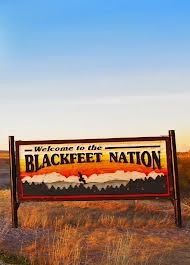
BLACKFEET AMBIGUITY


People seem to hate ambiguity and yet the authors of “A Billion Wicked Thoughts” suggest that what holds our attention is ambiguity.  Their example is the “Mona Lisa,” the famous portrait of a woman who may or may not be smiling.  They explain how the artist got the effect (mixing vagueness with precision) and how brains are riveted by the need to know, perhaps a quality related to the early hunter trying to decide whether to risk his last arrow on a shadowy form in the forest.  The daisy factor:  she loves me, she loves me not . . .  Sometimes knowing for sure will end the relationship.  No more mystery, no more attraction.  And yet the results of their data-scraping on porn websites reveal things we never thought about before.  

“Data scraping” is a way of making computer information accessible to human beings.
“Normally, data transfer between programs is accomplished using data structures  suited for automated processing by computers, not people. Such interchange formats and protocols are typically rigidly structured, well-documented, easily parsed, and keep ambiguity to a minimum. . .
“. . . output displays intended for human consumption often change structure frequently. Humans can cope with this easily, but computer programs will often crash or produce incorrect results.”
TEDTalks have noticed this technique.  Quid, for instance, demonstrates its program for diagramming “scraping” which does not result in tables of figures, but rather in colored, moving, clusters of relationships -- rhizome-style -- that are easily understood and include the factor of time.  http://www.youtube.com/watch?v=mKZCa_ejbfg

Looking at the welfare of nations, the progress of war, and other difficult to understand complexes in this way is a kind of narrative -- a story.  In fact, the best writers and readers see stories in this way.  Structuralist, post-structuralist and deconstruction movements of thought would be far more appealing if they were diagrammed so vividly and maybe someone will see the value in that.

So here’s what a team did with the problem of understanding modern guerrilla warfare in the Middle East, skirmishes here and there with very mixed results in terms of fatalities.  First they accumulated data, then they decided on a couple of factors which they graphed.  This is quoted from the transcript of Sean Gourley’s TED talk on war.  It’s on his website. (http://seangourley.com)

And the same pattern emerged in each conflict. This wasn't supposed to happen. These are different wars, with different religious factions, different political factions, and different socioeconomic problems. And yet the fundamental patterns underlying them are the same. . .   And what we really found was that alpha [the crucial factor in their formula], if we think about it, is the organizational structure of the insurgency. Alpha is the distribution of the sizes of attacks, which is really the distribution of the group strength carrying out the attacks. So we look at a process of group dynamics: coalescence and fragmentation, groups coming together, groups breaking apart.

Looked at over time and correlated with other factors, maybe from outside or maybe with developments inside the countries, it was possible to see what made change.  Not that it was always possible to predict what the forces would change.  In Iraq the “surge” at first produced a consolidation of the guerrilla groups, and then -- as the surge continued -- the groups flew apart again.  Gourley explains this in many contexts. 

The issue I want to think about is the Blackfeet Reservation.  This next week is “Days of the Blackfeet” at Blackfeet Community College and I hope to attend as an observer and data gatherer -- not that I’ll be able to produce a TED talk, but that at least maybe we can suggest ways around the same old cliches.  Maybe we can be Independent Diplomats or at least a kind of Public Intellectuals.  (Check out Carne Rosshttp://www.carneross.com)  Maybe the sessions will be the source of some good stories that show, Ross says,  “The few can never make decisions for the many.”  

Jack Gladstone

Darrell Kipp
Rosalyn LaPier

Lila Evans

Shannon Augare

Forrestina Little Dog

Willie Sharp (Tribal Chair)

Barack Obama and Eloise Cobell

The struggle to understand can be dignified and made something to respect instead of the sneering that comes from the surrounding white villages who don’t attend their own town council meetings because they cannot tolerate the ambiguity of their own situations.  On and off the rez we most often are given the information we need in spread sheets, rigid columns of numbers in categories thought up by some “quant” head with a pointy database.  IF you can get info!  Where does one access the raw figures for health, education, housing, crime, food distribution, income, transportation and so on?  Bureaucrats are reluctant to release them, partly because the numbers are often sought with the intent to use them as hostile evidence and partly because they really aren’t recorded.  They represent funding so it is an advantage to manipulate them.  By now much info is on computer and therefore could be found by a data-scraping program in quite a vivid way.

I often reflect that working with data is not unlike beading: small elements, carefully placed, finally forming a pattern, an image.  If I were a high school rez kid with oodles of neurons just waiting to be engaged, I would learn a data-scraping program, the kind with colors and movement, and put it to work.  This is what it means to be a modern hunter/gatherer.  If I were a manager of a government agency, I would do my best to learn how these programs operate and who can contract to deliver them.  


But I would not JUST data scrape.  It has to be put into context, weighed in terms of human values, which is what the traditional stories do.   So far, commercial companies are using data scraping to discover “world-shaking” issues like what kind of candy bar would sell best.  A good humanities education would make this laughable when you could use the technique to discover which children were getting enough to eat.  

Geography would point out that each of the rez communities has a character of its own that comes from where it is (the capital, the three resort towns, the two more traditional towns, the community on the flats, the “long towns” along the rivers, the towns the railroad built and then abandoned) and their unique history.  People move themselves into the community where they fit.  Some communities (Moccasin Flats, Robare, Palookaville) are so vivid in memory that they continue to exist in our minds long after their physical traces are gone.  Individual buildings are the same.  In my mind are many ghosts of structures no longer there.  

What if one of these programs could trace the life-paths of tribal members as they went from one place to another, even to Europe or China, and linked them to time so that we could see that they went to Seattle in wartime, went to the various government boarding schools, went into the military, moved off the rez to find jobs -- what would the moving beads reveal?   What would it show if intertribal marriage were put into a program?  Or the progress of fractionation, both people and land?

This is not an argument for ending ambiguity.  Rather it is a way of muddling things further so that we can leave the same old assumptions behind and find new ways.  What is causing dissenting groups to form and disperse over time?  What conditions would give them effective voices?  What are the effects they have on our personal lives?

Chief Mountain and the North Sentinels


Friday, January 11, 2013

THE LURE OF AMBIGUITY


In an email from a gay male friend whom I met in acting classes a half-century ago, he listed some outstanding drag performers.  We had been talking about how unresolved, how mystified, we were in those long ago days by all that sex stuff. Of course, acting classes meant we were struggling with the mysteries of basic identity, much of it created by contradictions between the dictated culture and our own individual identities.  Some of it was gender and desire, but there were other dynamics as well.  Anyway, my friend listed drag performers he admires.  I’ll let you go explore the vids yourself instead of making links.  There’s quite a bit.  Most of it is elegant, not offensive.

“Speaking of drag performers: look up on Youtube.com the work of Jimmy James (does a killer Marilyn), Jim Bailey (does astounding riffs on Streisand, Garland, Peggy Lee, Diller...a genius.) Charles Pierce (Bette Davis.  He gets applause by WALKING like her!) and a total original: Lypsinka.  Undescribable..or is it Indescribable?...Anyway...”

I’ve been working on a blog post about the lure of the ambiguous.  We can’t quite resolve our feelings about Jimmy James, but neither can we quite resolve them about Marilyn Monroe.  And that’s what holds us: the need to figure it out.  It’s biological, that “freeze and stare” impulse while we decide whether to pounce or flee -- so deep in our impulses that it quite transcends any one drive (food or fight) and is the field on which arts of all kinds are created.  The picture that can’t quite be resolved -- like Escher’s puzzle stairways -- yet we keep trying to resolve the labyrinth.  This way?  Or that way?

A basic human thought process is dividing everything into halves, which is, of course, inescapable if we make any one firm distinction, whether it’s between male and female or edible and inedible.  One of my besetting short-comings is in terms of relationships: I want clarity.  Most people much prefer possibility.  I try to get to resolution.  For many people that’s the way to boredom.  The end.  Move on.  So my “clarity” gets re-fuddled, sometimes in good ways (generating new options) and sometimes in a bad way (picking a quarrel, transgressing).  

One strategy, which I like, is “intellectualizing”, making a chess game of reality so that a single move from square to square is resolved, but without ending a game that is complex enough to last a long time.  Every move adds more strategy.  Some people can’t tolerate so much ambiguity, so much of a thought-drain, or don’t see enough of a reward in winning to make the effort worthwhile.  Others make it a power game and overturn the game table.  (Eric Berne called that “Uproar.”)  The people who realistically find ambiguity hard to tolerate are those who have a lot to lose.  Suppose you were in Syria right now:  the stakes in the game are very high and so is the ambiguity of what to do, what the outcome will be.  Cross-dressing is totally irrelevant, unless it’s a disguise for escaping.  But there are other people who for personality reasons can’t tolerate any coloring outside the lines, even in details.

When the culture is stagnant, drag fascinates a lot of people.  Even J. Edgar Hoover introduced a little risk into his life with his black ruffled taffeta party dress, because the Fifties were a lock-down.  In those days I could create a household furor by wearing a color that was not “for redheads,” like pink.  Even now, though clothing is wildly creative and gender-inclusive, Michelle Obama can make a stir by wearing bright prints with no sleeves.  Obeying unwritten rules is a characteristic of the ruling classes.

Here’s a totally different context.  The front page of the GF Tribune this morning is about four members of the Blackfeet Tribal Council being taken to court for breaking the self-imposed Tribal hunting laws.  This is inversely related to the demand across Canada and the US for the reservations to be considered sovereign nations because white men who violently attack Indian women on the rez cannot be touched by tribal law and therefore go free.  White men are terrified of being governed by rez law -- it’s the reverse of red people being governed by state law.

Originally, when whites and Indians were culturally very different from each other, it made sense to separate tribal law from state law.  (Not from federal law.)  Now the ambiguity of cross-categories has created an unforgivable, intolerable situation for tribal women. It should be worked out in court because this is a civilized country.  Isn’t it?  But the court procedures will be in the hands of men, mostly white and “educated” (which means trained to use a certain kind of thinking and white-written rules).  It is the tribal women who suffer the consequences.  Without formal legal prosecution, the only recourse and response by rez people is violent vigilantism -- tracking down those attackers and punishing them “by hand.”  So -- in a funny reverse way -- these tribal leaders being tried in a federal court are setting a good example.

There are thinner but parallel situations to be resolved.  For many generations (maybe for all time) the powerful have felt they had the right to be corrupt, to transgress, to consider themselves an exception to all the rules.  Nowadays, maybe because so much is ambiguous and fluid in our world, this is challenged.  Tea Party members insist on their way, which is the way of the absolute, because the old laws are to their advantage.  Ultra liberals claim so much validity for high tolerance that the innocent are damaged. We act out much of this in terms of taboos.  In some situations using an arbitrarily forbidden word will get you fired.  Other times and places (therapy?) nothing is forbidden, presumably because of the need to get to the truth.  Always, the effort to figure out what the “rules” are and cling to them, is a way to avoid having to “freeze and stare” so much that a person can’t get anything else done.  Just decide and then stick to it.  

When I was with Bob Scriver, who was 26 years older than me, we got the “stare” quite a bit.  Next after that comes the judgment: sometimes gleeful, sometimes judgmental, often a distraction, sometimes justifying behavior that wasn’t pleasant.  A person can get so accustomed to that attention as to be uncomfortable without it.  It becomes a performance.  Ask Indians how often they must perform Indianness.  Surely I don’t have to mention politicians.  But too much performance can mask the original reality.  One can be trapped in performance and then who are you?  It happened to Marilyn Monroe, the “real” one.  Bad results.