Showing posts with label tribes. Show all posts

Tuesday, July 05, 2016

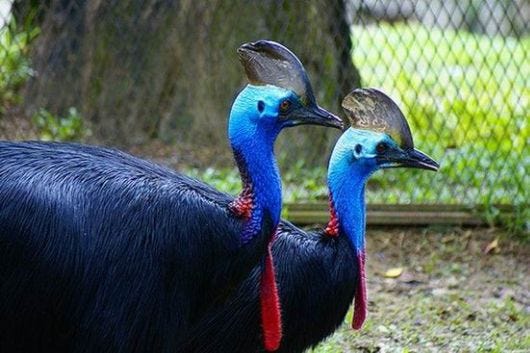
CASSOWARIES AND THE MALE BURDEN


(Reprint from Tuesday, June 03, 2008 Prairiemary.blogspot.com)
This is a relatively informal account of a very serious ceremony. I adopt the tone in part because it deals with SUCH serious forces in life, which are often best handled with a bit of humor, but make no mistake: this is “ultimate” stuff in the Tillichian sense. The Umeda are (or were) a small group living in New Guinea in one of those very marginal places where humans can survive only with hard work and good luck. They get to believing in all sorts of talismans and symbols that help them “do what has to be done,” and it was only by living with the people for a while that Alfred Gell, a rather classical sort of Brit anthropologist, was able to dope out what things really meant.

Alfred Gell
He says: “Ida is a public non-verbal spectacle, whose meaning is also public and non-verbal, and is not given separate existence in the exegetical homilies of ‘ritual specialists’ or ‘doctors’ — of whom there were none in Umeda. Informants were neither willing nor able, in my experience to translate a non-verbal exegesis, beyond the provision of a bare name, details of the status of the role (senior, junior, comic, terrible, etc.) and of its ‘properties’ (masks, body-paint, dance-style, etc.) Both Gell and I greatly admire Victor Turner’s work.
“This general lack of indigenous exegesis does not rule out the possibility of an analysis however; Turner himself stresses all along the native exegesis is not the ‘whole truth’ about the meaning of symbols. In this account of Ida I myself will be concentrating on what Turner calls the ‘positional’ meaning of ritual symbols; that is, on the role of a particular symbol within the context of the rite as a whole, seen, as it were, from ‘outside via an ‘observer’s construct.’ Furthermore, I will be looking at the rite in the context of Umeda social structure and cosmology.”
So, to perform an Ida, first you need a village and then you need that village to be in a deep jungle valley where the sky is never visible, there is very little to eat, and the success of the village depends on the diligence and responsibility of the adult males, who are seen as “cassowaries” who are the opposite of a responsible mature man — the freedom and solitude of the fierce bird is something they earn in old age when they can retire to a little shelter built in the jungle. The main part of their lives is about the hard work of clearing gardens, cutting sago palms (without metal in the old days) and pounding the sago pith into a kind of flour (a pretty suggestive mortar-and-pestle act) which is washed to take the poison out of it so it can be reconstituted into a sort of jelly that looks a lot like semen. It takes a married couple to successfully do this enough to support a family.

When men are young, they wear a gourd over their penis, in part because they think of semen as a kind of “milk” or sago jelly: a food to conserve. They call the sago jelly “jis” — a little echo there. The drive towards sex becomes a drive towards feeding. As men age and become preoccupied with the gardens, they tend to leave their gourds off. The gourd worn by cassowary dancers in the Ida is bigger than usual and the dancing causes it to bounce, striking against a belt with hard seeds fixed to it so that a rhythm is created, a dancing percussion.
Gell was a bit puzzled because the costumes, which consist of paint, the gourds, and a “mask” which is sort of like a frame held over the head, a kind of bell or upside down basket shape with the man inside as the clapper. It doesn’t look much like a cassowary. The men could easily make a costume out of actual cassowary plumes and be much more convincing. But it DID make the men look like palm trees, the trees their mothers planted when they were born, the trees that were considered so much a part of them that they could “commit suicide” by killing their tree. Maybe this was too deep to safely express.
Then one day Gell was in the deep jungle cutting down trees with the men when they felled a hollow tree and out crawled a creature that looked like an independent penis, a skin-colored writhing worm that came out of the hollow and went into the bush while the men turned away in dismay as though it were a taboo and unbelievable creature. Indeed, it was Freudian enough to shake Gell! But then it came to him: the so-called Cassowary mask was really a version of this penis (maleness) housed in a tree. The man in the mask was really this creature, a penis of independent motives, like the man’s own penis in its hollow gourd. (The creature was actually a kind of blind worm or slow worm, which is not really a worm. The ones at Google Image don’t look particularly penile, but they're not necessarily from New Guinea where creatures are often unique. 
The crucial center of any persisting culture is food/sex, to keep the existing people alive and reproducing themselves. In such a marginal place, these two responsibilities weigh heavily. An Ida, in an intensely poetic way, says things that should not be said, lets destructive emotions find some kind of release.
The actual Ida consists of a sequence of dancing that lasts for more than a day and a night, inside a long time-frame of about nine months. (Does that catch your eye?) Each “part” is assigned to a different group so that everyone has something to do. They are age-grouped: little kids together, bigger kids together, in the same sequence as growing up. For relief, there are clowns who make everyone laugh and ogres who make everyone shiver and shriek. (Have I noted that it’s Rose Festival in my original home town? Interesting to compare with an Ida. Or, failing that, to compare with Christmas or Easter, each with its Cassowary (old man or rabbit) and cluster of events.)
There are two points that are almost frankly — but not admittedly — connected to male ejaculation. One is supposed to guarantee the fertility of the sago: a pot of boiling sago is provided at dawn and the sago dancers jump over the fire, then plunge their fists into the gruel, burning themselves painfully. (They don’t say that it is torture to guarantee the courage of grown men, not unlike Sun Lodge skewering.) The other is supposed to encourage the fertility of the jungle itself, where the sago palms grow, and it consists of dancing archers who finally shoot their arrows into the trees.
Sago Palms
Men in Umeda culture never hold hands, but when they are cassowaries, they occasionally do. There are always two cassowaries who dance wildly and aggressively so that it takes enormous strength and determination to get through the Ida. Taking the role is a huge honor, a pay-off for struggling through all the steps from toddler to aging family man.
There’s much more in Gell’s book: “Metamorphosis of the Cassowaries: Umeda Society, Language and Ritual.” It’s out of print but can be found occasionally on used book websites or in academic libraries.

Wednesday, September 16, 2015

WHY BLOOD QUANTUM IS NOT ABOUT BLOOD


An Easterner who knew nothing about "Indians" questioned the title of one of my short stories:  “Blood Quantum,” which was meant to be a fictionalized tracing of how the US Army originally tried to impose order on a population they had just “conquered” and were therefore obliged to record and feed.  (In modern times conquerers feel no such obligation.)  The People were lined up, their names written down (though these People had several names each without counting nicknames or translations and they belonged to an oral culture unacquainted with writing which is different from being illiterate in a writing-based culture) and that original list became the provenance (the genealogy) and fate of all the following generations.  They were LEGALLY  pure Blackfeet, no matter that there were Cree, even  enemy Shoshone, maybe a few Irish and several other categories on the list.

“Tribe” was a European concept and so was Nation.  So was “legal.” The People just traveled together, partly because of being related and partly just because they liked each other.  There was no boundary, as there is for the category called “citizen.”  The reader asked “quantum what?”  He’s used to hearing about quantum physics, I think.  We can only interpret new things via things we already know -- unless one has means of inquiry that opens both cans of worms and the sky after storm.  This guy will try to fit “quantum” into “genome” but basic blood types hadn’t even been discovered when the first list was made.


The biggest problem is the courage it takes to look at something that may challenge one’s assumptions, which is the basis of one’s identity and relationships.  Trying to go farther and deeper has destroyed a whole sequence of communities who thought they had it all -- including me.  The main thing I learned is that to learn some things will mean a death of illusion.  For instance, the more I learn about my family, so sure it was fairly virtuous and educated, is that it wasn’t.  This makes me unwelcome at family events, but there are few of them now anyway -- they’re out of fashion and I have never met the people under thirty.  Even the denomination that claimed it accepted everyone turned out to be as prosperity-worshipping and proselytizing as any others.

My terms of understanding are drawn from fields so far from what most people know that to them I sound like a stuttering idiot speaking nonsense.  (Blood quantum -- WTF?)  The assumption of our times is that people exist in friendship networks which they are proud to extend and which mean good commercial skews.  Prosperity and proselytizing in their devil’s bargain.


The first of my favorite two fields is methods of indigenous thought -- both by and about and inclusive of a number of “disciplines” like paleogenetics, cell morphology, disease and language patterns, neuropsychology -- stuff we’re just defining as we come capable of perceiving them.  The two main principles are that everything is related, even interwoven; and that everything is a process -- it’s all constantly changing in some random and surprising way.  Someone recently suggested that if we knew the genomes of everything, we could make the world be the way we want it: safe, luxuriant, and easy.    They haven’t understood anything.

The other field of method and awareness I’ve internalized is that of theatre.  Not just naturalistic portrayal of humans, but also the landscape and illusion projected on the kuppelhorizont of our minds, which means all the aspects of religion from the rigid and politicized “organized” religions to the drug-propelled visionary sensorium people sometimes call “spirituality.”  On the one hand, all this stuff is just a kaleidoscope of broken glass making patterns in a handheld tube.  On the other hand, it’s the only focus and meaning we have and we must hold on despite the tumbling.

Lou Diamond Phillips in place

Indians just seem so different.  Are they better or worse than us?  Should we imitate them or run from them?  By now isn’t their blood quantum so diluted, their cultural context so broken, their competence so challenged, that we ought to just dump the concept of indigeneity -- people shaped tightly to their location -- altogether?  Movies begin to be about the entirely pristine tiny groups in the Amazon forest who have never made contact with the larger world.  How do we know ANYTHING about them?  Should we send an envoy?  Sting? (To “help” them -- i.e. control them.)  In there somewhere is the hope that they really are magic.

I’m interested in the series called “Longmire” that’s based on a wagonload of procedural mysteries by Craig Johnson.  I was startled that our librarian dislikes the video series on grounds that it portrays tribal people as corrupt and avaricious.  It took me a while to understand that the show uses the point of view of actual "indians" and from the tribal point of view right now people are obsessed with corruption among their own people.  So is the larger world, which makes the issue worthwhile.

Graham Greene in "Clearcut", an early Canadian film

Graham Greene in "Longmire", current

The fact that many roles are played by NA’s with chops means that there’s a “real-feel” that can be disconcerting.  I mean, watching Graham Greene’s career and personal life can be wrenching.  On the other hand, the idea of an old woman who is an authority and a mystic at the same time, is absolutely convincing when the battered hat and impossible shelter belong to Tantoo Cardinal.  Lou Diamond Phillips is plainly at the heart of all the plots, sometimes more than the sheriff.

I haven’t talked to any local tribespeople about these things.  The ones under thirty or even forty are nearly indistinguishable from small town whites, all wrapped up in  music and celebrities.  The ones with whom I used to discuss these ideas are dead -- not long ago.  They used to be travelers, widely-read, linked to people who knew things.  More political than anthropological.  It is lucky that I saw my solitary state coming and prepared for it.

But I’m disappointed in all cultures most of the time.  They’ve forgotten so much and refuse to learn anything at all.  The movement called “political correctness” has created much evil with their idea that people can only speak for people just like themselves.  Instead of creating an even playing field it has opened a litigious abyss.  Publishers and producers are afraid of such poison -- it costs money.

Australian and Filipino = contemporary American West

Theatre teaches me to enter other people, to feel their spines in my own back, to look out through their eyes. There is so much stored in people of the land, even now, but not for much longer.  Not because they are disappearing but because their land is disappearing, industrialized, poisoned by agriculture, and now dried and burnt by cities sucking up every resource.  The cities make the laws, the cities still want us numbered, recorded, controlled.  The cities are the Matrix.  They know nothing, John Snow.


Monday, May 11, 2015

WHO'S YOUR MAMA?


The recent catastrophic earthquake in Nepal revealed something few had suspected.  Gay men who had used an intricate international system to traffic ovum, using their own semen to create children, were trapped in front of their Nepal hotel as they tried to fly home with the new child. 

Conventional Israeli couples who want children were unable to use the newest technology in their own country because that nation is a theocracy, dominated by the principles of Judaism of long ago.  Therefore, parents froze ova of that woman or another, shipped them to Thailand where the man’s frozen semen (actually just the healthiest seeming sperm) was injected into the ova in vitro, the resulting zygote then shipped to Nepal where a surrogate mother carried the baby to term.  Presumably, the checkbook parents then raised the infant to bond with them and sustain the family continuity.  If you can call it that.  The cost is about $50,000.  

There are few ancient tribal prohibition about being rich or what money is used for -- at least until Jesus.  But the ancient tribal obsession with genetic inheritance is still in play, working against adoption.  There are “tribal” prohibitions on homosexuality, though they are being challenged.   Tribes want members. 

The fact of harmful mutations accumulating in closed natural communities is only considered at the molecular level -- like, how to jigger the faulty gene while preserving the parent genome, but now research suggests that parent genomes change in the transfer and ensuing environment more than we ever suspected, beyond the changes in the original mix-and-match of male and female.

Below is an interesting example of a conservative Jew wrestling with the situation.  http://www.jewishpress.com/indepth/columns/moshe-feiglin/surrogate-motherhood-and-nepal/2015/05/07/  When science-loving people are forced into conflict with traditional morality, it’s tough to figure out what’s right.  God laughs.  Satan only smiles -- there is more to come.

In low income USA the problem is likely to be the opposite: there is a mother but no father. (Is there any country that exports dads?  Maybe China, which gave away all its girls?)  A wicked development is the low-income mom-only baby, reluctantly conceived because the mother didn’t (maybe couldn’t) take steps to prevent either intercourse or fertility.  Once the baby is born, infanticide is pretty easy.  The other day's Great Falls Tribune had as many stories about babies murdered as about wedding anniversaries.


The baby might be breastfed because it’s cheaper, but the breast milk may be contaminated by the mother’s intake of alcohol or drugs or both.  Or bad nutrition.   Medical interventions will be VERY expensive, but paid for by the public.  The crucial nurturing of being held, warmed, kept safe, may be entirely missing.  The child may believe that all mothers are only angry or rejecting or impossibly confusing, going back and forth emotionally.   In their words, when they are old enough to express themselves, “a cunt.”

Mothers may try to make little boys assume the role of husband, even sexually, but particularly in terms of taking the brunt of poverty, rage, and social pressure.  Even in a more “normal” family a boy of a certain age, maybe long before he is ready, is expected to be “a little man,” to interface with business people by carrying messages or substances. This can be either a burden or an advantage, but a boy still in elementary school will be twisted by it.


One of the hardest twists is a boy who is supposed to be the shining light who would save the family with his brilliance, but then if things don't turn out well is blamed and thrown out.  Sometimes the whole family slides into despair and sends him away as the one most likely to survive on his own.  This is almost biological, as animals also exclude young males, esp. those who challenge the alpha male.  It is not always girls who are sold as children for purposes we don’t want to think about.  Boys are also trafficked, prostituted, tortured, forced to be soldiers or pushers, drugged.  

Some boys go to the street to escape their uncontrollable families.  Increasingly, boys are thrown out onto the street because they are gay and/or infected with HIV/AIDS or transsexual or simply defiant.  All these things are seen as endangering the family.  But a boy who quietly does sexwork might be supporting his family.  Or maybe that makes him part of a voluntary family, wicked as it might be in the eyes of the public.


Komodo Dragon

So how should we think and feel about all this?  I still haven’t digested that boys fall short in school or are demonstrably fragile emotionally.  Then there is the dismaying news that the Y chromosome, already missing one leg off what would be an X in a girl, is losing even more genes through evolution.  And all the tinkering with insemination has taught us that a little slender pipette can do the job -- no penis of any size necessary.  

No one has succeeded in creating either a human ovum or sperm without a human.  But there has been some success in causing an ovum to just begin growing on its own.  Lesser animals -- reptiles and amphibians -- can grow to completion.

Komodo dragon parthogenisis zygote

The practice of creating zygotes that are frozen against future failure to conceive has presented law with insoluble problems, like lawsuits over the “ownership” or “parenthood” of tiny cell masses -- too teeny to be split in half with Solomon’s sword -- that might or might not develop into a real baby, hopefully healthy. 

Then there is the problem of sperm donors with hundreds of descendants, some of whom will have a strange attraction to familiar others, even marrying them.  Or the doctor who runs a clinic that doesn’t bother with sperm donors since the doc himself thinks his much superior genetics (he’s a doctor, isn’t he?) is good enough for all women, populating his waiting room with babies who look just like him.

Frozen storage

The problems are hairy enough for individuals, but what about the society as a whole?  What is the law to make of so many systems that assume traditional marriage, natural conception, genetic inheritance?  Ownership, taxation, all sorts of small exemptions and prohibitions even in criminal law, like not testifying against a spouse.  (Does that include common-law marriages? or live-ins?) What happens when according to the relevant laws of parentage, there’s no allowance for a baby created with a mix of conception, gestation, delivery, nurturance, and economics.  How many parents can a child have?

People from coherent cultures that worked in other places and times are often emotionally discombobulated by new requirements imposed by quite a different system.  That means they’ll go underground and be forced into evasion of authorities.  The ambivalence of many places, like polygamous Mormon communities, don’t help.

A Mormon family

Most of the desires and decisions are out of the hands of the babies themselves.  They must simply cope with whatever happens.  If it’s damaging, the child will have to find a way to repair, if there IS any.  It’s too early to hear the stories of adults who have made the best of it.  Right?

Wednesday, November 20, 2013

POPULATION HYDRAULICS


When Europeans finally landed on the SE coast of the North American continent and saw that there were people, but people quite different from themselves, they thought they had found a new species.  A species is a biologically defined category based on whether two kinds of animal can mate and produce children.  If they can, they are not separate species.  It took about nine months to find out that these people were NOT a new species, but human beings.  Still, the Euros hung onto the idea.  

In fact, the idea still haunts us.  People even suggest that male and female human beings are separate "species", but clearly that’s not the case since they produce children all the time.  Some people play with the idea that humans and one of the more human-seeming apes might have a child, but it can’t happen.  They ARE separate species.  They don’t even have the same number of chromosomes, so there could not be a zipper-like match-up of genes as is necessary to make a new being.


The Euros would continue to war against each other for the next few hundred years, struggling to establish nations, which to them meant control of territories defined by borders and signified with flags and kings.  They brought these ideas to the New World and imposed them on people who might push each other back and forth but never fought gunpowder-horseback-armor wars with horrific death rates.  They also brought their deadliest weapon: microbes.  This emptied the villages and sent a wave of depopulation across the land, which persuaded the Euros that there was nobody out there.  So they grabbed the land.  As an educated white woman told me not long ago, “the Indians weren’t using the land anyway.”  Meaning they hadn’t plowed it.

The whites also brought an old Egyptian concept of establishing borders to show where one person’s set of rights ended and another’s began.  This went back to the flooding of the Nile which annually erased all markers of fields but renewed the fertility necessary for the crops of the time.  Geometry was invented to re-establish boundaries.  By the time the 15th and 16th centuries came along, the Euros had forgotten that part but remembered that Kings (as in King Tut) and God (the ultimate SunKing who authorized all the other ones) had the power.  Kings meant nations.  So they looked for them in America.


Instead of kings and nations, they found chiefs and tribes.  They never got their heads around the idea that these were fluid entities that responded to circumstances, as did the survival-based occupation of territories.  In brief, the People went where they had to in order to eat and defended their movement however they had to, and they followed whomever they trusted at the time for whatever the situation was.  The people who were related, who observed the same customs, told the same stories, and MOST of all spoke the same language, formed into bands who occasionally gathered as a whole in a unified ceremonial time.  This appears to be a universal human practice.  

At the core was a small intensely related group of people and then the farther people thinned out until at the fringes were folks who might have split allegiances, or who were immigrants from somewhere else, or were captives or were just antisocial.  There was no real boundary, but only a moving migration of people in and out, closer to the center of identity or farther away.  My guess is that in their minds even their dead relations were therebutnotthere, just a little farther away on the edge as though they were hunting in the Sand Hills. 

The Sand Hills of Alberta

Most Euros couldn’t get their heads around this.  But some people had always been like this, especially once the big sailing ships were devised and the sailors realized that there were people in very pleasant places who would accept them so long as they behaved.  They left their former identities.  And then there were the gypsies.

Once the Industrial Revolution put paid to the old life everywhere and Native Americans were confined on reservations (though some always walked off), the government ended up stranded in their assumptions between Indian ways and Euro ways, so they just drew a boundary like roommates, one messy and one neat.  Secretly they figured the NA’s would eventually die out anyway, either by assimilation or attrition.  But they didn’t.

Since the relationship between government and People was forced into the equating of tribe with nation (The Blackfeet Nation) so that this relationship between them had to be by treaty until they realized their mistake and started calling the treaties “agreements”, they were vulnerable to international law.  The United States does not like international law.  Now they are trying to UNdefine tribes as nations and UNdefine the reservation as a nation with boundaries because then they can go to a lower internal level of law.  But the Blackfeet “treaty” was never even signed by the government.  To regularize the present, it is necessary to call for “do-overs” of the past, some of them legal and others practical.


Cunningly, the US killed all the buffalo and sent all the children to schools to learn to be white.  But they couldn’t kill the culture.  They made lists of the original people and called that “blood” though it was only provenance, meaning descent.  No one even knew what blood types were until 1901.  They didn't mean blood -- they meant sperm and ovum.  The genome is much more recent than blood types, and it cannot guarantee that a person belongs to one tribe or another because of that moving edge of the population.  Naturally, as soon as the provenance lists were being drawn up, all sorts of folks showed up claiming to be Blackfeet because it meant survival.

Nevertheless, there some direct descendants of people on that original list and they were likely to be more intensely and culturally Blackfeet than others.  We speak of them as “full-bloods,” meaning that all their known ancestors were named on that list.  Few are left.  Few Blackfeet speakers are left, but some of them are children, which is a new phenomenon.

Darrell Kipp at Nitzipuwahsin School with a star pupil.

Fractionation of people’s ancestry as well as their land allotments on the reservation tend to undefine them, but the real definition of the Blackfeet has got to be something in the heart.  To demonstrate it by living on the reservation, learning the language and the ceremonies, knowing one’s ancestors, and claiming this identity is basic.  Some tribes will not accept membership from people who don’t live on their reservation.  The movement to claim membership without “being here” takes people away from the land that made them who they are.  But sometimes the only way to earn a living or get higher education is to leave.

There is also another movement already underway and strong enough to be named:  reconquista after the recapture of the European Iberian peninsula.  The brown people are coming back this way -- no wonder the Euros are scared!  Their secret is the same as the Nile: fertility.  Their motive is the same as all species: survival.  The industrial revolution has led us into a desert.  Now the People have the advantage, esp. the ones who have the culture and the land in their hearts.  They are in favor of education -- on their terms -- and they are creating a new culture that combines many old ones.  The fringe is coming to the middle and the old boundaries are breached to let in the waters.

Friday, November 01, 2013

"ALL WHITE PEOPLE ARE CRAZY!"

A friend suggests a book about all the white people who have come to the Blackft country and stayed, even burrowed deeper.  In his phrase “a very weird lot, often with shady motives, personality disorders, and sordid histories.”  I think over the assortment I know either personally or from history and find there’s truth to that, though not all of the whites who came and attached were disreputable.  When I first arrived, the Bureau of Indian Affairs still employed whites, and professionals or business owners were white.  They were the usual mixed lot found in small towns with some standout “good guys.”  I think of Phil Ward, the  thoughtful superintendent who hired me, Bill Grissom who was the heroic rez agent at the time of the ’64 flood, and “Cookie” a public health nurse who spread nurturing and cleanliness where ever she went, even though her scrubbing and feeding could get a little carried away.


On the historical Canadian side in particular, the frontier pattern was white men (usually fur buyers) who married and had children with tribal women (which on the Canadian side kept those women off the tribal rolls for a long time).  That category splits again between those who loved those wives and stayed with them versus the ones who abandoned their local family when they went “home” to Britain and white wives.  (Part of the reason Custer’s wife was so insistent on her version of reality that she was trying to expunge the memory of Custer's Indian family.)  Culbertson and Natawista stayed married but at the end each reverted to their own culture.  Dr. McLaughlin, the “White-Headed Eagle” who ran the Oregon territories so long also stayed married to his wife and arranged for his son to be educated as a doctor so prestigious that he treated the French king.  But in old age that son returned to “home” and resumed his moccasin life.   Malcolm Clarke evidently had more Blackfeet wives that we have been led to believe, but sent his daughters back east to be educated for prominence.  (His sons balked.)  The Conrad brothers also had doubled families, one Indian and one white, and mixed success with the sons.  There’s something about gender assignment here: not sexual desire but roles in society.


During the time period after the Civil War traumatized men sought out reservations where there was more tolerance of abusive men, partly because they sometimes were money-makers and partly because it was a legal gray area.  WWII saw white men marry Indian women who owned enough land to start a ranch.  Another time period after the Vietnam War brought in seeker white men, traumatized, looking for both freedom and attachment.  And the ensuing New Age prompted some men to want a ceremonial life drawn from the land, a few of them using the prestige gradient of it as a kind of endorsement and others using the same gradient for profit, selling what the missionaries had taught Indians was empty to the distant white people seized by the desire to have artifacts, sometimes as war trophies.

But there were others who came as hopeful contributors:  the Gold family, despite their own struggles with depression and alcoholism, tried to help by founding the public school and healing trachoma.  Many priests and protestant clergy dedicated themselves to helping people, even if not on their traditional terms.  Some came as raiders -- the Conrad brothers quite literally were teenaged Confederate raiders -- and others came hoping the rez would be a business opportunity.  There was a difference between the people who came as single men and those who came as whole families, as the Sherburnes did.  The Scrivers came as one man who later went home for a wife and established a family.  In the second generations, each family had one son who wished to be Blackfeet but was prevented from marrying into the tribe.  Bob, of course, became a peripheral ceremonialist.  These families have mostly left.
Clare Sheridan went everywhere on this contraption, but drove a fancy car to Montana.

Others, like Adolf Hungry Wolf or John Hellson, married tribal women and entered deeply into the old-time life.  The Reiss brothers came (temporarily) as artists and founders of a summer art school that welcomed indigenous people to the European ceremonies of portraiture.  (Winold also had warm ties to the Harlem community in New York City.)  His brother, Hans, was a close friend of Winston Churchill’s cousin, Clare Sheridan, whose book about her experience on both sides of the tripwire we call the 49th parallel is entitled “Redskin Interlude,” a vivid memoir about her sojourn with the Tailfeathers family.  Gerald Tailfeathers began his outstanding art career at the Reiss school.  His mother was half-Irish, as was Clare.  This is all pretty much lost history, but shouldn’t be.

Buffalo soldiers

Someone could probably research a whole book about the relationship between the German enthusiasts over historical Blackfeet life, often tied to authentic manufacture of new “artifacts” and the persistent romantic streams of thought among the Germans.  There are emotional ties between black Americans and “Blackfeet” -- occasionally I get an inquiry about ancestors but the number of blacks on the rez, except those produced by ventures into cities, is very small.  I don't know what happened to the descendants of the Buffalo Soldiers who were here.  There was one black man in town when I came.  On the Canadian side there are a few Japanese who have joined the civic community, but none that I know of as ceremonialists.  Many hispanics now live on the rez, easily merging.

People have always known about quiet white men who were sexuality atypical in an honorable way.  Some have connected with the “Two Spirit” tribal people and others have seen themselves as conscientious and essentially motherly protectors of youngsters.   Jack Loadman -- teacher, historian, foster parent -- published with the Montana Historical Society.  

A few have not been so benign.  The movie “Warparty” notoriously depicted a gay man as the consort of the brutal military-type law enforcer.  A. B. Guthrie also included a gay man in "The Big Sky" who in the movie version of his novel was converted to a “fool.”  We don’t know whether these authors were drawing on people they knew.  Any population with a high proportion of ex-felons (meaning most dark minorities) includes atypical men, not so honorable.

Euros often fancy that a tribe is a genetically defined group of people who are “different” and therefore either attractive or repellent, depending on the motives and prejudices of the whites.  But in fact the People had a genetic core that spread out from family into a fringe of all sorts of people who might or might not become active participants in the vital enactment of their beliefs.  They were not strict island populations or species.  Many who arrived by water came simply because the geological chance of the techtonic break that created the Mississippi and Missouri river network, a kind of highway -- gave easy access into the heart of Blackft territory.  Some came as loners, some as rich people looking for excitement, some artists (Audubon and Catlin), and always for profit -- maybe furs and maybe booze and maybe weapons trafficking.  The ancestor of the Cobells was an Italian sailor.  The Weatherwax, Kennerly and Wetzel family names come from rum runners, some with criminal connections and others simply resourceful entrepreneurs.

Such tangles of personality thrust up against the hardships of survival on the high northern east slope of the Rockies produced a set of people formidably shaped for survival.  In the earliest years ritual renewals were shared openly.   But when the government saw the ceremonies as sources of strength for enemies in war, they were suppressed.  Finally opposition ended, Indians were by law hired to be Indian service employees, white business dwindled in the face of other forces, and "roots" became popular.  Then the old ways -- like compressed springs -- came back in force.  To think of them as merely benign and even child-like would be a mistake.  They are tough, edged, and useful in carving out a future.  Enter the scene at your own risk.  Those who joined the People in that heart-and-soul way have brought the gift of themselves.  What that means is up to Fate.