“Writing” is defined and admired in a zillion different ways, which because of the tech breakthroughs have now been doubled to two-zillion — all of them argued about, variously marketable, and springing up everywhere, esp. if you can include something a little strange like oral, spoken, “writing.”
Or even dreaming. Or a person can write music.
People who want to “write” believe they can take lessons, or study success, or imitate people who inspire them. I can remember my mother, who made a production of letter-writing, sitting at our dining room table with her supplies laid out, including her treasured fountain pen, and writing to HER mother who was dying of cancer about 160 miles south down the Willamette Valley. I was maybe four. I set out my crayons (there weren’t even ball point pens in those days) and cheap paper. She wrote big, maybe the equivalent of an 18 point font on a computer, so I wrote big as well, with loops and gaps to look like words. I didn’t even know the alphabet yet. But I was “writing.”

Waves of emotion came and went in her. I sensed that, even saw tears, but didn’t know what or why it was. She didn’t tell me. She was emotionally very private — because of being invested in control — and let me sit at the same table to imitate her just because it wasn’t worth the fight to make me go away. This is the essence of “writing” to me, the visceral process of being human recorded on paper, as though it were a kind of polygraph. That's a reference to telling the truth, which is only a dimension of writing — not a criterion.
School makes writing a technical feat. First the stick-and-ball printed alphabet, then cursive, and now keyboard. First spelling your own name, then writing simple sentences, then complex ones (which some never master), then organized paragraphs. I used to teach that as a little monster: a topic sentence for a head, a body with three points on top, maybe six legs to stand for evidence, and a concluding tail. Most people never really get that. Today some teachers go on to webbing, or the structure of the whole piece of writing, but it’s not linear enough for people who are invested in sequencing and hierarchies.

In college they ought to teach metaphor, rhetoric, style and so on, but most writing teachers at that level operate by demanding that you write something and then telling you what’s wrong with it. They see themselves as editors. They know good writing when they see it. They say that. They think THEY are writing.
Lately there has been a sea change. Nothing like an intrusive computer-generated grammar corrector to make you abandon grammar. The good thing about computer writing is that computers don’t have a limbic system, much less an empathic pre-frontal cortex with mirror cells. But a good writer has both of those things, which propelled my mother’s letters and generated an equally emotional response when her mother read them. If this connection is not there, it is only print. Pirates and editors can’t really tell if it’s “good” or “bad” writing. They look for the price tag.
Some people think that visceral writing is raw emotion and use language that suits their idea of visceral, usually taboo subjects and obscene vocabulary. There seems to be an appetite for it out there, because this is a time of suffering in print, misery lit, agony aunts. But entrails also record and respond to the beautiful, the uplifting, the happily memorable.

Hallmark's home office
Some people only allow themselves to describe the latter, which is also the school’s fault, part of their program to pretend conformity is provided by Hallmark and therefore is pretty. I used to flunk any kid who wrote that the mountains were beautiful, the birds were singing, and the sky was blue. I mean, fiber tips were invented by then, so I used a red one to write F as big as the page. It was mean, but it was the only way to get through. The trouble was that the administration and parents wouldn’t allow it. I can’t teach anymore.
Even written words have sound echoes so rhyme, rhythm, melody counts. They say that Americans speak in anapest — duhduhDUM. (Or was it iambic -- hmmm.) Every language has its song but then they are sung differently in every region and according to every origin. The analysis of all this stuff is incredibly complex and getting more so, with new jargon developing around it. Just forget all that and listen. Read poetry out loud, sing songs, listen to people who are nothing like you, listen to yourself.

I don’t know of any post-high-school programs for budding writers who use these ideas, much less teach the terms for them. Should they? Shouldn’t they simply give out big sheets of paper and something to write with and provide the safety for them to open their hearts, enough time to develop thoughts that have been submerged deep under the mental fluids, slow to float up, constantly turning end-over-end, bursting into flames.
There’s another step before that: opening the 200 cells dedicated to sensate knowledge. That “five” thing is just about the obvious organs that stick out the top of your collar: eyes, ears, noses, mouths, and skin. “Five” entirely ignores the lie detector spikes, the gut ache, the plethysmograph records of arousal.
And there’s another thing after that, which is out of the writer’s control, maybe not even predictable. The crowd reaction. Could Scalia have predicted the things being said about him now? If he had, he might have changed quite a lot, maybe enough to save his life. A little humility is good for one’s health. But maybe a good writer should NOT know how his or her culture will react, maybe imagining it will stifle exactly what others are craving to read. The publishing premise that people will buy what they bought last time, that they have a category that they stick to, is only partly valid.

OMFG
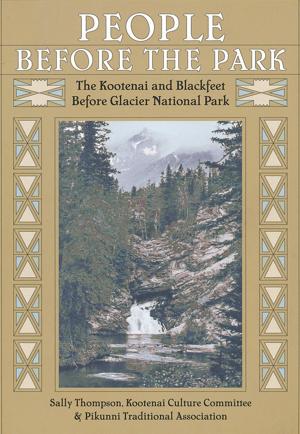
Many people teach the narrative tricks of structure, rising suspense, characterization, and so on. It’s all valid. Writing that explores a subject or place is valid. The local “ranch romance” writer, Kari Lynn Dell, uses the particulars of this region and of rodeo to major effect. Barney Reeves, a retired Canadian paleoarcheologist who wrote about Glacier National Park, is not read by anyone but people in the that academic field. Usually. The interesting dynamic is that, like Melville writing about whales, a romance writer who reads paleoarcheology and digests it might end up like Jean Auel, highly popular best seller writing on the cusp of neanderthals. She turned out to be right: neanderthals loved blondes.

By Tony Bynum
http://tonybynum.com/national-parks-adventure-glacier-national-park/ This is a photo essay. Is it too “pretty”? Does it depend too much on a privileged class of technical ability and equipment that sort of cruises the planet, skimming the exceptional? Tony Bynum is local. Stop using your mouth and use your eyes the way he does.
Clear vivid science writing is hot now. People are not QUITE ready to absorb some of the deeper shifts, which are intensely about the reframing of humans, a realization of what the anthropocene means, and the stamina to endure an account of the death of our mother. Mother Nature.
It’s not about putting crayon to paper. It’s about putting mind to the world. Don’t worry about your heart — just keep it beating. Stay alive.