Showing posts with label archeology. Show all posts

Wednesday, October 28, 2015

A RE-BLOG ABOUT GLACIER NATIONAL PARK BEFORE IT "WAS"


    This is worth re-blogging for several reasons, which I won't bother numbering.  One is that John McGill, the excellent editor of the Glacier Reporter is a trained anthropologist who has been in Browning a long time.  If he sees value in something, it will fulfill expectations.  So I haven't read this book, but I recommend it with confidence.

Another is that I've followed Barney Reeves,  and other people here value his work very highly though it is paleoarcheological, VERY early.  Here's a link to a sample of this kind of early work, which is complementary to the book announced here.  Just so you know.

http://www.cfc.umt.edu/cesu/Reports/NPS/UMT/2008/08MacDonald_GLAC_Paleo%20Indian_final%20rpt.pdf  This kind of investigation of the past is not meant to dictate the TRUTH, as so many used to do, always trying to show that they were best, first, most, entitled.  This is work that says, "Maybe, use your imagination, what is the evidence?"

The book we're talking about here is much more recent and seen through different eyes.  I'm interested in boundaries, edges, divides, and now that "method" is catching up to all the boxes we make, and smashing them before our eyes, this sort of simple-seeming account can be a revelation.

One of my peeves is that people come to a place like GNP and piously say,  "Oh, how beautiful!"  without assimilating anything but the postcard repetition they snap with their little digital camera, probably a selfie that crowds out a mountain.  They don't have a clue about some of the most sacred, massive and primeval forces.  This bugs me partly because my family in the Fifties were towed along on my father's path as he park-hopped us across the continent.  But he never tried to explain what we were seeing -- just that these were a string of pilgrimage sites.  And that's how I got here, going down the list of missed parks on the way from college in Chicago to home in Portland.  

Marrying Bob Scriver meant going through the curtain of stone to stories.  Although once he was telling about being up on the summit of one of the peaks and I asked him what was up there.  "Rocks," he said.  He was trying to put me off from his own secret exaltation, so it wouldn't become ordinary and shared.

Anyway, the book is on Amazon: I just ordered a copy for $8.  Here's Sally Thompson, who is not exactly the author -- maybe the main diplomat.  She makes me think of "Bones," the best of the CSI TV shows.
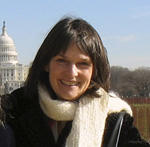
Sally Thompson

____________________

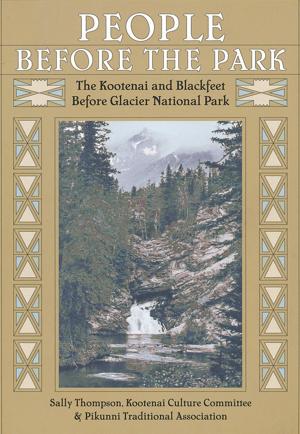
‘People Before the Park’ offers a look into 19th century Kootenai and Blackfeet Tribal tradition
Posted: Wednesday, October 28, 2015 6:00 am

Just released and available at bookstores around Montana, “People Before the Park: The Kootenai and Blackfeet Before Glacier National Park” explores the two tribes in a unique and important way.

There have been many books written about the Blackfeet and Kootenai tribes, and with such wealth of materials, author Sally Thompson at first thought that writing a history of the tribes from prehistoric times to the establishment of Glacier National Park would be possible. The assignment had come from Glacier National Park itself in 2008, but a change in approach soon became apparent to her.
“Given certain political issues, historical issues of trust between tribes and anthropologists, and controversial interpretations of spotty archeological data, it soon became clear that our initial goal wasn’t going to be easy to reach,” Thompson writes in her introduction. “A new approach was needed. Many meetings and six months later, we had a new structure in place. The Kootenai Culture Committee agreed to participate, noting an opportunity to correct common misperceptions, and committee members assigned the oversight of the project to Vernon Finley and Naida Lefthand. The Blackfeet Tribal Council, led by Willie Sharp, accepted a plan for the Pikunni Traditional Association to oversee the Blackfeet effort.”
With Blackfeet and Kootenai experts in place, the direction of the book took off independently of previous works and stands alone in both its approach and results. It was decided to focus on the seasonal round of the two tribes during the 19th century, avoiding conflict over the archeology of earlier times. And each tribe used its own criteria to decide what information to present and how to present it to readers.
The result is two very different approaches to telling the story. The Kootenai, for example, focus on the material aspects of the season, what foods are available, and when, where and how they would be prepared. Seasonal movement was also emphasized, especially routes to favored hunting and collecting grounds as well as strategies employed in traveling into Blackfeet country to hunt buffalo. The spiritual side of their lives, however, is not dealt with in detail, keeping it within their personal experience.
The Blackfeet, on the other hand, arrange their telling of the seasonal round with their spiritual ceremonies as the center about which the other activities revolve. Starting their calendar at the Vernal Equinox, each succeeding month is described not only in terms of movement, and of the plants and animals available at the time, but also the ceremonies that accompany those activities.
The catalog of plants and animals both used and still in use is extensive. Experts such as Pauline Matt offer their extensive knowledge of traditional botany to accurately describe all the plants, how they are collected and processed, and how they are used. Meanwhile, traditional experts like Percy Bullchild are quoted in Napi and other stories that explain how the world view of the Blackfeet fit perfectly into their lives, giving them direction and meaning.
One thing the Kootenai and Blackfeet authorities emphasized they wanted corrected was the previous focus by earlier writers on the sporadic warfare between the two tribes. Oftentimes, they noted members of the tribes interacted peacefully and in friendship, and this aspect receives attention.
In all, the book presents the lives of two neighboring but very different tribes in all their refinement and complexity, fitting perfectly into their environments. Sally Thompson has interwoven the written historical record of the Kootenai and Blackfeet in the 19th century with frequent expansions and explanations from Kootenai and Blackfeet experts to produce an historical work unlike most that students and readers encounter. It is an altogether pleasant experience to pass through the pages, a story of a time not that long ago.

__________________

Wednesday, December 03, 2014

"PAINTED HORSES" by Malcolm Brooks


“Painted Horses” by Malcolm Brooks is being presented by Grove/Atlantic as a classic epic of the West so, of course, they drag Cormac McCarthy, Wallace Stegner, and Jim Harrison onto the blurb page of the dust cover, though the three writers have nothing in common in terms of themes, style, or essential nature.  In the past Grove has been notorious for publishing literary but obscene books, which confused me more since this book has no obscenity in it.  

So I went to the publishing house website to see what their position is now that they have merged with Atlantic Magazine, which was held up to my Enriched English class in 1955 as an example of high-minded respectability.  I was startled to see that Grove/Atlantic is the US publishers of Helen MacDonald’s “H is for Hawk,” one of the most esteemed British books of the year, one I love but hardly a Western epic.


Brooks’ book is in sections, beads on a string, and I suspected they were written at different times and possibly published in small magazines, as writers trying to make a name are advised to do, but I was wrong.  Only one section was previously published.  That was in “The Big Sky Journal,” which is indeed Western, even a product of the Montana writing craze of a decade ago.  (Now replaced by the Portland writing craze.)  The string that joins the beads is that a valley is about to be flooded by a dam (see Thomas King).  A secret feeder blind canyon is accessed only by the man who painted horses and his love, who is supposed to be doing the preliminary environmental study that would allow that destructive dam.  (See Zane Grey: “The Rainbow Trail.”)  


Other reviewers call the novel “layered” meaning that the back stories of the two lovers are in chunks.  One piece is the man’s friendship with a Basque sheepherder which expands to a sojourn in Basque country connected to military WWII mule-wrangling in Italy in places where wheels cannot go, esp. in rainy season.  Another “string” through his story is his saddle, which he never abandons -- if I told you why, it would be a spoiler.  There’s a sort of “A Farewell to Arms”  tale of a previous doomed love affair also connected.  And he has a doppelganger, a brutal man who rounds up wild horses to sell for dog food.


The woman’s story also starts in Europe, this time in London, where she turns away from the concert piano because of the thrill of archeology at a time when possibilities were literally opened by the bomb craters of WWII.  She takes a lot of personal damage in this story.  Her doppelganger is a teenaged Crow woman which is the excuse for a lot of indigenous stuff, including a strange ceremony about a horse that may or may not be authentic.  (I know very little about Crow.)  I see he doesn't know anything about "jingle dresses" which are adorned with the furled lids of snoose cans, NOT rifle cartridges.

The first jolt I got was that a character is named “Max Caldwell” which is the name of the husband Lorraine Scriver left in order to move in with Bob before I was quite out of the picture.  It's just a coincidence.  The character is not at all like the “real” Max Caldwell, who is dead now, and the name evidently also belongs to a friend of Brooks'. 


All through the book I ran up against strange little knots of metaphor and assertions that didn’t ring true.  One, the idea that a horse would trample a newborn lamb, was disturbing enough that I asked the advice of Sid Gustafson, horse vet and novelist.  He said the circumstances would have to be VERY unusual -- it is not normal behavior as “Miriam” claims on p. 240 as evidence of the innate wickedness of horses.  All through I kept suspecting that some information was coming from bar gossip and internet factoids rather than real experience.  The best stuff might be from National Geographic: cave art.


The charm of the book, endorsed by the cover art (Brooks is getting the full media promotion that “publishing” is supposed to be about), is the idea of "horse", of the ancient paintings of horses on the walls of caves in France, this protagonist's love of depicting horses on both stone and canvas, his merging of this with the Native American symbolism of painting on horses, and his desertion of the military (spoiler here) in order to save a group of horses which he gives to gypsies, refugees from the German holocaust.  Oh, romance!  


The main purchasers of contemporary novels are said to be single women in their thirties, generally educated, lovers of Indians, horses and handsome men who limp.  Brooks has said that one of his goals in writing this novel was to “successfully” capture the inner life of a woman.  (Zane Grey was good at this -- but then, his wife and “nieces” wrote much of his novels.)  In that interest he closely describes manicures and menstruation.  (His description of starting a fire by using a sanitary pad for tinder is highly suspect.)  This novel teeters on the edge between genre and "literary."  In the end the conceit of a secret valley where genetically pristine Barb horses can hide for centuries simply collapses in greed, violence, political corruption, and running away.  The prospect of the lovers reuniting is only a couple of sentences at the end, possibly demanded by the publisher.

The other function of publishers, besides promotion, has historically been editing, and some editors have been credited with making their writer’s pile of prose into something brilliant, notably Perkins pruning Thomas Wolfe and Gordon Lish cutting Raymond Carver down to famous minimalism.  I’m not sure how much editorial meddling there was in “Painted Horses.”  


What I want is to point out that today (maybe it was always like this) what is written by Westerners is often edited and promoted by Easterners, and most reviews are written by Easterners.  They are not at all troubled by things that a cowboy would question.  Brooks is a Californian, a carpenter, and a dweller in Missoula which is not exactly Montana.  I would like to hear what someone like Sid Gustafson might say, since he WAS raised on horseback, makes his living whispering to horses, and is core Montana.  I doubt that many Easterners or most Montana university townspeople would even notice the glitches.

How important is that?  I don’t suppose anyone could find an absolute measure.  I ought to have kept a list of the kind of  small metaphorical mismatches that Peter Matthiessen would have blue-penciled.  But that kind of editing is out of fashion now.  The list of acknowledgements at the end of the book gives the specifics of who helped Brooks, so it wasn’t arrogance on his part -- not defying expert advice.  Maybe I’m just picky.  For an antidote, go to http://oldgunkie.blogspot.com/2014/09/malcolm-brooks-reading-in-denver.html

But as a person who lived with horses as models for sculpture and painting, becoming personally acquainted with many painters of horses, there was something hollowed out or crowded aside in this tale.  Maybe Brooks should have looked for advice from an actual painter of horses, like Bill Anton. 

This Anton painting fits the story.

http://roycembecker.com/?page_id=651 is the designer of the cover, but probably not the painter.  The image refers to the two gentle "hills" of the line of the back of a horse with its head down which  Brooks suggested, but never really followed up, unless I missed something.


Saturday, October 31, 2009

ARTIFACTS: BIG STONES (Part 4)

TIPI RINGS

Only a few miles north of Valier along Birch Creek which is the southern boundary of the Blackfeet Reservation, is a place called “Willow Rounds.” Via Google you can find some wonderful photos of the place because the ranch called that is currently for sale. You’ll see other info related to real estate matters. But what we are concerned with is how the place got its name: the “rounds” in question are tipi rings.

Tipi rings result from the edges of lodgeskins being weighted down with rocks. Since the glaciers carried in melon-sized and sorta melon-shaped stones from far to the north, the supply is endless and it makes more sense to find new ones than try to transport the stones from the last place. Anyway, the Blackfeet didn’t wander aimlessly: they moved through the seasons from one place to the next is a rather predictable pattern. They were in many ways migrant pickers, except that what they picked was wild. The seasons and terrain dictated what was ready for picking: camas now, berries then, and so on.

So the People came back to the same general location and often put their lodges up where they had been before. Instead of driving pickets around the edge of the lodgeskin -- which might be moved up and down in the course of a day as the need shifted from fresh air to warmth from the fire. One can find tipi rings in all sorts of likely camping spots, but rarely will there be only one by itself. The basic unit was not so much the nuclear family as the extended family growing into clan. So the tipi rings might themselves be in a big circle.

Tom Kehoe, who was the curator of the Museum of the Plains Indian and who (way back in the mists of time) was married by Bob Scriver to the woman who became the redoubtable Alice Kehoe, a noted anthropologist in Milwaukee, wrote an interesting paper about a phenomenon he found. Some tipi rings had lines of stones extending out from their edges in various directions and of various lengths. No one living could explain this. Tom’s theory was that they might have been like those signposts one sometimes sees at crossroads pointing in every direction, saying “Helsinki x miles” and “Mexico City x miles” and “Boston x miles.” The idea was that the line was code and the length of the line suggested the distance. I liked this idea so much that I put it into one of my “Twelve Blackfeet Stories.” (For you to Google would be better than for me to link, since some of these articles are only in academic databases.)

EFFIGIES

The broad and complex stone circles that seem to record sidereal events or maybe the course of the sun through equinoxes and solstices are quite well known. Some have names and regular pilgrimages. But New Age people who claim them and “own” them or create their own figures or add labyrinths and so on, are a pain in the patootie to scientists. As usual, there is tension between those who want to preserve and study, and those who want to inhabit and renew.

BUFFALO JUMP MARKERS

The v’s that mark the edges of a run leading to a buffalo jump that is several miles away can be subtle since they were not so much cairns as anchors and markers for clumps of brush meant to move in the wind or stations for people waving branches or robes or blankets enough to spook a buff. The book about “Head Smashed In” piskun which is available online from the University of Athabasca, a virtual university, is a revelation in this regard. “Imagining Head Smashed In” by Jack Brink. (http://www.aupress.ca/index.php/books/120137)

Another little-known stone artifact discussed in that book is the chamber dug into the ground and filled with hot rocks to melt the fat and marrow out of the debris and bones left after butchering the animals killed by the fall over the cliff. The researchers have now found the “factory floor” where the animals were processed a little distance from what must have been a fairly repulsive stinking fly-ridden mess at the base.


CAIRNS


Cairns themselves, sometimes considered to be “Sun Worship Altars” in Christian terms, will likely be on the tops of ridges and hills and if there are trees nearby they will be decorated like Christmas trees with small offerings of fabric or fetishes. There's one near Starr School.

The name is Gaelic but the practice is worldwide and for some reason often related to heights or crossroads or meant to look like a person standing. Sometimes a body or ashes are interred. When some young adventurers from Babb, Montana, which is one of the tourist towns on the Blackfeet Reservation, went to Africa, they took some small stones from the top of Chief Mountain, a natural marker of the boundary between Canada and the US, and left them on Mt. Kilimanjaro. They brought back some small stones from that mountain and when the matriarch of the family died, she was buried with a stone from each “istuka” (Blackfeet for mountain) in her red patent leather purse.

BOULDER ERRATICS


The glaciers brought along with the strewn “cobblestones” the occasional massive boulder that was finally stranded on the prairie when the ice melted. These puzzled the early prairie people who told a lot of stories about them coming to life and chasing Napi as though the latter were Harrison Ford in an archeology movie.

Once they were left, the boulders functioned a lot like a tree: a place to get up high for a hawk (there are often white marks), a sun porch for a mammal (our bobcats used to love the one along Willow Creek near Parsons), and a travelers’ landmark. The one on the road from highway 89 along Birch Creek to Heart Butte has become an altar, with small offerings left on it or at the base. Some call them “buffalo stones” and indeed that’s what they look like. In the old days the buffs would appreciate a good place to rub off old dead fur and their friction would polish the sides of the boulder smooth even as their hooves cut a bit of a moat around the bottom, which held moisture so that a small variant ecology would take hold there.

EFFIGIES

Hugh Dempsey, the emeritus scholar of history in Calgary who is also a noted prolific author, tells the story of a warrior who blundered and was consequently killed and left on a hillside where his people found him. In his honor, they marked the outline of where his body fell, like a crime-scene outline. Like so many things, it has since been disturbed and overbuilt.

Use www.amazon.ca, the Canadian Amazon list, to find books by Dempsey or his son. The book with the effigy story (photo included) is “The Amazing Death of Calf Shirt” by Hugh, published by the U of Oklahoma Press. The relevant story is called “Peace with the Kootenays.”

DREAM BEDS

Another important use of stones was the “dream bed” high on the mountains where shale was either piled up New England fence-style or propped up on edge to make a wind break for a person fasting and praying for a vision. Arlo Scari in Chester, Montana, can sell you a book with photos of the “dream beds” in the Sweetgrass Hills. (http://comus.msun.edu/Hon290/SweetGrassHills.html) Proceeds go to save the hills themselves, which contain gold and are the target of cyanide heap leach miners, who want to grind up the WHOLE HILL!! Since there are many uses and stories about those hills, they could be considered “artifacts” or at least “material culture” in themselves.

These artifacts are not so collectible as arrowheads, nor so attractive. One must take a photo, though the defenders of Indian artifacts will object even to photos of Chief Mountain or the Sweetgrass Hills on grounds that they are sacred and photos profane them, lowering them to the status of tourist items. Actually they are in the most danger from developers, careless uses, and contemporary blindness and ignorance. Those forces have long since obliterated the gardens going on without the gardeners that Tim haunted in his youth. Still, there are seed-savers who can re-plant.

(to be continued)

Sunday, June 14, 2009

DROP THAT ARROWHEAD!

SALT LAKE CITY (AP) 6-14-09

A Utah physician indicted in a federal investigation into the theft of ancient artifacts in the Four Corners region has been found dead in an apparent suicide, a sheriff’s official said Friday.

San Juan County Sheriff’s Chief Deputy Grayson Redd, a distant relative, said James Redd’s body was found Thursday afternoon by his local church leader near a dried-up pond on his property in Blanding.

Phil Mueller, a family member, said Redd died from apparent carbon monoxide poisoning in his Jeep.

“It’s a tragic loss for the community,” Mueller said. “He was everybody’s general practitioner and birthed most of the babies in Blanding.”

Police did not verify a cause of death, but the sheriff’s chief deputy said the death has been ruled a suicide.

James Redd, 60, was one of 24 people indicted after a two-year investigation. The indictments were announced by federal officials Wednesday. Court papers say those involved stole, received or tried to sell Native American artifacts, including bowls, stone pipes, arrowheads, pendants and necklaces.

Redd was charged with one felony count of theft of Indian tribal property. His wife, 59-year-old Jean Redd, was also charged.

Of those indicted, 19 are from southern Utah, four are from Colorado, and one is from New Mexico. They range in age from 27 to 78.

BLM and FBI agents assigned to the investigation used a confidential source who came forward in 2006 and paid more than $335,00 during the following two years for 256 stolen artifacts, according to court documents.
_______

It’s impossible to judge such a case from the outside with this little information, but on the surface it appears that this respected doctor in a conservative community was so devastated by this accusation that he abandoned his wife, also accused, and snuffed himself. But people all over the West -- both Indian and white -- have picked up and bought arrowheads and larger objects for centuries. People proudly show off their arrowhead collections, arranged in patterns on cotton and put under glass.

In my neighborhood in Portland, the amateur anthropologist on the back of the block had a considerable aggregation of stones with worn or chipped patterns on them to indicate they had been used for pounding or grinding. When he died, our next door neighbor took them to his house. When he died, my mother moved them to the side of our garage, arranged in a row. Before my mother died, they were all stolen, probably by a man she hired to help her in the yard.

They are seen as “found wealth” that belong to no one. We could go out to the likely places around Valier and find some today. Look on high places, where a sentinel might sit flint-knapping the day away. Look in places that the wind or erosion or human activity has turned up or worn away the earth. Check out the tailings of gophers and badgers who’ve been digging burrows. Bob used to pride himself on being able to spot arrowheads, often small, since they only needed to provide a sharp point on the end of the arrow.

If you pick up something small that has belonged to no living person in a place where it has been for centuries, isn’t that harmless? It’s not as though one stole a framed collection from a basement museum or, indeed, a curated collection presented at a university or major institution. This is not the same thing as picking up as fully-beaded buckskin parade outfit complete with an eagle tail-feather Sioux bonnet! You could hardly find such a thing lying on a gopher hill anyway. But, you know, you find it in a hock shop in some small town. The decorating magazines are stuffed with photos of rooms with walls where elegant bags and banners hang.

We are in a time when a LOT of rules have changed. Every morning when I go to the post office, some guy and I have to do a little dance about the doors -- who opens it for whom? I have a pocketful of jokes to relieve the situation. Often the guy is older, raised to believe women are special and should be cherished and protected. Do I want to give that up? But it’s a generalized assumption. Some women are special and cherishable and some are not.

Likewise, our assumptions about American Indians and their artifacts. Two hundred years ago (1809) artifacts -- even skulls -- were considered war trophies and curiosities. A hundred and fifty years ago (1859) the flashy outfits were just being constructed and the Medicine Pipe Bundles were being created, because the people needed power. A hundred years ago (1909) the American Indian was the face of the United States: noble, spiritual, and elegant. Fifty years ago (1959) the back-hoes were digging out buffalo jumps so the local ranchers could sift the dirt for arrowheads. Today (2009) all that sort of thing has gone underground and you have to know the right people to buy the really good stuff, unless you’re willing to accept arti-fakes, which are remarkably good. Tribes are aggressive about protecting their land.

Like everything else we drive underground, once forbidden the objects in question were greatly enhanced in value and a network sprang up, often among people who were already inclined to be secretive. My guess is that they are about evenly divided between red and white. That is, if you accept a marginal, sometimes low-quantum, sometimes urban enrolled person as “Indian.” I expect there are more men than women. There is sometimes a gay connection, partly because NA populations do not demonize gays. (Today they DO demonize artifact dealers.) And there can be a drug connection because drugs are money and they are underground.

Why would a doctor get involved in the first place? Because he has much money (legal). Why would he be so humiliated as to commit suicide? Two possible reasons: he was educated and therefore understood the high post-colonial reasoning about ownership that would be used against him in court -- let alone the fact that he was committing a felony -- and maybe because a doctor is invested in privacy. Things happen in the medical context that neither the law nor society wants to know about, which is why there is such a high value on confidentiality in professions. Sometimes justice and the law do not dance together, even among lawyers and judges, much less officers.

A third reason: Native American issues are so highly politicized, so incendiary, so reinforced by emotional ideas left over from the early days (that Indians are all noble, that Indians are all fiendish killers, that ALL Indians are really like each other, that collecting arrowheads is an innocent pursuit) that it’s pretty tough to keep a clear head about the issues. This case turns up some real biggies with major consequences, quite apart from the life of the ironically named Doctor Redd.

Tuesday, January 27, 2009

HEAD-SMASHED-IN BUFFALO JUMP

Yesterday there was a good deal of messaging that was prompted by an article in The New York Review of Books, “Google and the Future of Books” by Robert Darnton. Vol 56, #2, February 12, 2009, in case anyone is looking for this on paper. The article is about the resolution of the lawsuit against Google’s plan to digitize all books, which was resolved in Google’s favor, kicking up fears of monopoly. The article takes a long historical view, tracing the impact of technology and the birth of the whole concept of copyright. Google is digitizing books without copyrights, books with expired copyrights that are out of print, books with copyrights that are “orphaned” (the publishing company has dispersed, the author can’t be located), and everything else they can get hold of. The question is how to manage all that stuff. (I do worry a bit about sunflares or the reversing of the planet’s polarity wiping out all the virtual books. But those catastrophes wouldn’t do ordinary books much good either.)

A respondent suggests that the real news is that ebooks are now profitable enough for anyone to care. And that other entities besides Google are puttin’ out the books on the Internet.

Athabasca University Press, is a “virtual” university far to the north in the province of Alberta where developing oil sands means there are a lot of vigorous people who have liberal gaps in their arduous work lives which they choose to fill indoors taking online courses. The director, Walter Hildebrandt, was the director of the University of Calgary Press when they accepted my book, “Bronze Inside and Out.” (It is partly available online through Google Books. I didn’t give permission nor did the press.)

Athabasca U Press is scouting a new trail by making their books available online for free, as well as the journals they publish. One CAN get the books bound conventionally, Print On Demand. I tested this service by downloading “Imagining ‘Head-Smashed-In’” by Jack W. Brink, one of the intrepid archeologists and paleontologists who have made Alberta one of the most exciting places to regard the deep past.

“Head-Smashed-In” is the name of a buffalo jump, a place where for millennia native peoples have chased the animals over a cliff in order to kill them for meat. One of the first things I learned was that it was the buffs who were supposed to get their heads smashed in, rather than the people, though some unfortunates did get caught up in the melee. Also, I had not known this had been the name of the place for a very, very long time -- in Blackfeet, of course.

A rather fabulous museum exists next to the site -- not ON it, since that would destroy what remains of the site. If you are going to southern Alberta this summer, mark on your map both Head-Smashed-In near Fort Macleod and the Tyrrell Museum near Drumheller, which addresses the much, much earlier dinosaur era and the slightly overlapping megamammal period of the mastodons. I know people who consider these “religious” institutions because one comes away infused with wonder at the clear evidence of nearly inconceivable events.

I just read “Imagining Head-Smashed-In” online. It is full of gorgeous photos of the land plus illuminating paintings of how things must have been -- FAR more complex and skillful than the usual conceptions of bison pouring lemming-like over a cliff. It turns out that this specific piskun (Blackfeet for buffalo jump) is archetypal, an example of how the actual cliff is only part of the operating terrain which includes a wide grassy basin above the cliff that stretches for kilometres, the abrupt sandstone break which leaks high quality spring water at the bottom, and then another smaller area suitable for the work of cutting up the carcasses, rendering fat, roasting meat in pit-ovens, cutting and drying muscle meat, cracking open leg bones for marrow. The final elegance is not far away: the river valley of the Old Man River, excellent for winter camping and stashing the preserved airtight packets of meat in rawhide while working on the hides of the animals.

This efficient and arduous work demanded cooperation among a hundred or more people until the arrival of horses made it unnecessary and then the elimination of the buffalo herds made it impossible. (See a parallel with printing?) To properly understand the remnants that they found, Brink and his crew replicated as much as they could. Buffalo chips (dung) DOES burn as well as wood, but only if there is a stiff breeze. Buffalo bones burn rather well, so long as they are greasy. Since the grease is nutritionally valuable, the bones were smashed and boiled in rawhide-lined pits heated with hot rocks, then the fat skimmed off. (One of the most outstanding tribal families today is named “Grease-Melters.”)

The crew figured out why the boiling pits contained one kind of stone and the roasting pits contained another: quartzite holds heat better for boiling while flat plates of sandstone are better for roasting pits. This is the sort of detail that can make historical novels come alive. They also discovered that smashing bones is a lot harder than one might think, not least because one’s face and clothes become spattered with marrow and grease.

The Head-Smashed-In museum is built as steps down a cliff face. Brink chuckles over today’s visitors to the museum assuming that inside they are looking at the actual rock of the piskun, because the reality is that it’s a huge casting created by spraying latex onto a real cliff to create a giganto mold. At the bottom of the cliff is another giga-casting of a partly excavated dig with real equipment scattered around it. To me this is MORE amazing than including an actual rock outcropping in a building.

Even more remarkable is Brink’s gradual realization that the local tribal population should be included, that much information remained among them (the last “jump” was about one hundred and fifty years ago), that there were political issues to resolve between and within the tribes, and that much could be resolved by good humor and participation.

Everyone with access to a computer can read this book. It is this last quality of being inclusive and generous that makes such a specialized subject valuable for everyone as an example, even if they don’t care whether they ever walk the line markers that show where the bison hazers should be or ever boil a bison bone. The story combines the determined strength of early nomads with the careful sifting and reflection of modern scientists in a fabulous tale. Don’t stop before the last lyrical “imaginings” of archeologist and arrow-user.

Imagining Head-Smashed-In: Aboriginal Buffalo Hunting on the Northern Plains
by Jack W. Brink who “is Archaeology Curator at the Royal Alberta Museum in Edmonton, Canada. He received his B.A. from the University of Minnesota and his M.A. from the University of Alberta.”

Hardcover: 978-1-897425-00-8 (HC) $85.00
Paperback: 978-1-897425-04-6 (SC) $35.95
E-Book: 978-1-897425-09-1 (e-book) No cost.

Friday, January 02, 2009

BLIZZARD SNEAK ATTACK

It was a sneak attack. The weather had been warmed by Chinooks and today was looking like a good prospect for venturing as far as the county seat to do laundry. I went to bed expecting temps around freezing and little or no new snow. About 3AM I got up for an hour to work at the computer and that expectation still seemed justified. When I woke up again -- I’m not sure what time because the electricity had blinked which stops my alarm clock -- the cats were under the covers with me and there was nothing out the windows. The world was simply a blank white sheet of paper except for wind. This is what it means to live at the cross hairs between cold from the north and moisture from the west. All plans are abandoned. The road report that showed dry roads from highway 44 to Shelby now shows impassible roads everywhere. The newspaper made it through because it comes so early.

There’s enough to eat. Lunch is a cut up green pepper, a cut up onion, and a half-can of corned beef hash -- stir-fried until crisp. Crackers is willing to eat the cat food I bought here in town. Squibbie doesn’t want to get out of her chair. By the time I’d gotten up, I’d inched the controls on the electric mattress pad to 8. Normally it’s about 4. But this could all end by afternoon. The forecast is twenty below by sundown and all night, but usually when it gets that cold the moisture is wrung out of the air in a few hours. This is Saskatoon weather. Polar bear weather. By tomorrow it will be much safer on the lake for the ice fishermen. I hope the polar bears will be able to hunt seals.

I have plenty to do. In Paris there is rejoicing because Tristan is recovering from his wound breaking open, thanks to his alert older roommate checking on him faithfully. The boys and Tim, all decked out in motorcycle leathers and boots, attended mass at the Cathedral of Notre Dame to pray for Tristan. A young priest there suggested that their appearance scared the old ladies. My idea was that they should go to the old ladies, gently oh so gently kiss their hands, and ask them to pray for Tristan as well, since undoubtedly in their lifetimes they had prayed for many other boys in danger.

The foxes I’m chasing on the screen at home are Third Force psychology, now sometimes called “humanistic psychology,” which was such a saving force in my life decades ago. Where did it go? Did the neocons try to kill it? Or was it buried in a shower of genomic and molecular confetti? Maybe both. Both Barrus and Darrell Kipp have been drawing on these ideas all along, but have I forgotten about some of it -- sold the books? I see I can buy some of my favs back for a penny each (plus shipping). I wonder if my UPS man is out in this storm.

Another is digesting the “Inside the Actor’s Studio” DVD’s I still have. Where are THOSE books? The one’s they showed on the screen as basic and enlightening. Stanislavsky and Chekov. Actually, they fit right into “humanistic psychology” and were probably one of the reasons I was so ready for Rogers, Maslow, Perls, Erikson, and company. And then after that the kind of Unitarianism that existed when I came aboard before all the furor about making the denomination grow, before art required an MFA and small businesses required an MBA. In those days you just did it out of passion.

The history of ideas folks are beginning to work on these issues. I’m surprised to see that some of them are not just talking about Bush’s eight years, but are reaching back FORTY years to the shift in the agenda of the Republican party, not unlike the shift in the agenda of the UUA. The history of ideas, of course, always refers to the famous essay about the fox, who had a lot of darting shifts in thinking, and the hedgehog, who stuck to one concept and that one concept devotedly. How does that fit in with Kuhn’s idea of paradigm shift?

I read a blog this morning about how the culture changes all the time, but human values do not. http://www.bostonherald.com/entertainment/books/view.bg?articleid=1142261&srvc=rss Unfortunately it was a trivial little complaint about false memoirs: now the self-righteous are claiming that it’s unforgivable to picture lovers throwing apples over a fence, even if the author really WAS in a holocaust prison camp. Why is everyone so hypnotized by this sort of thing when they ought to be indicting our president and his advisors for war crimes? Maybe that’s the answer -- they don’t want to have to face the real crimes that cost lives, both in the flesh and financially.

What a lot of work for a practical intellectual to do. On the local scene it has really shaken people, esp. young men, to witness the aging and destruction of Bush. They had identified with him, thought his values were the right ones, and that he would win -- so they modeled themselves after him. Now what? No one modeled themselves after Nixon or LBJ, so their collapse didn’t hurt so much. And Clinton -- well, Clinton bounces.

General crankiness in town has expressed itself in criticism of two of our three town employees. The clerk, a “girl,” is exempt. The collapses and eruptions of our century-old infrastructure, to say nothing of the exceptional weather, is being laid at the doors of the guys who plow. They do it wrong, they do it late, they do it to the wrong streets, they pile the snow in the wrong places. There’s little they can do that suits people. This makes THEM cranky, so the union has come into the picture and now we have a three-handed “games alcoholics play” situation with victim/persecutor/rescuer chasing each other around the triangle. The mayor, meantime, is having a pacemaker installed. I think maybe only a change of personnel is going to resolve hurt feelings. If the street plowers leave before spring, we’d better hope some unemployed person who can plow streets shows up fast. Will we suddenly become more grateful to street plowers or will they wake up one of these mornings and pack for Mexico?

Another section of my shelves holds books about how weather has changed matters large and small. Today’s archeology/geology lesson in the science sections of the paper is about how asteroid impacts, probably in northern North America, ended the Clovis people along with the mammoths they ate. It just feels a little too relevant.