Showing posts with label Bill Houff. Show all posts

Monday, July 31, 2017

TEARIN' UP THE PEA PATCH (JUST OLD NEWS)


Sorting old files and tear-outs on a hot summer Sunday afternoon is a pleasant but rather narcotic thing to do.  I just looked through a binder entitled “Offices” and discarded about two-thirds of the contents.  As usual, I had saved very severe no-paper offices as well as cluttered, gadget-filled tabletops with baskets for to-be-filed-sometime-in-this-century.  One is my virtual vision and the other is my actual practice.

I notice that much of what I saved — and what is offered in mags — are beautiful photos of carefully composed tabletop vignettes.  It’s not so much what is displayed, which ranges from weeds to carved jade and ivory, but the careful composition and lighting that makes them striking.  In my rooms, I have no tabletops that aren’t occupied by something in use, from printer to sewing machine, so the idea of vignettes is strictly theoretical.

Since I’m a sucker for the Mediterranean trope, there are many pages of California rooms with roll-back glass wall access to gardens and, because of copies of Marie Clare Maison, wonderful stone verandas with ruined surrounds of old stonework, all furnished with sun umbrellas and plants that I’m sure are aromatic.  Europeans have an advantage in their many ancient stone and timber houses, though I’m not sure they feel advantaged given low ceilings and the difficulty of any pipe or wire runs.  

It’s not just the weather: I’m also fond of those stark dark Scots crofts where one must bring one’s own door and expect to replace the roof.  Hopefully, the massive fireplace will have a chimney that draws.  At one point in history, these places were “owned” by being occupied by the land users — not the paper-justified legal ownership, but the practical fact of living there and “making” a living there.  One simply looked for an unoccupied croft with a nearby field for oats.

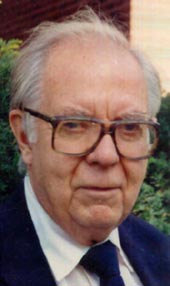
Then I ran across a folder of mailings from Bill Houff who was acting as interim minister in Seattle in 1989.  The first dilemma was argument over whether “Peter Rabbit” (as Alan Deale always called Peter Raible) who was the just-previous minister and a bit of a Clinton type, should be allowed to have an office in the basement.  Peter’s brother Chris, author of “Coffee, coffee, coffee,” (starts at minute 7 on the vid linked below) famous UU hymn, also got into trouble for amour and their father was celebrated for his Texas affairs.  “Daddy Bob”, they called him.  A vid of Chris is at https://www.youtube.com/watch?v=wHc-8xzURY4  You’ll see that the Raible charm is not being tall and handsome, but rather comes from charm and humour.  (Does that rhyme with “amour?”)  All parties are dead now with the exception of Alan Deale who did not dally but was equally charming and funny.

The next church crisis for Houff was a cracked furnace that filled the place with carbon monoxide and — luckily — the smell of a gas leak.  There was no carbon mono monitor in the furnace room, let alone the rest of the building.  Next was a bill of thousands of dollars to replace the sewer line to one of the bequeathed church-owned houses.  And then there was suddenly a gusher of water from the DRAIN of the kitchen sink which turned out to be a crew looking for a leak in the flat roof overhead by turning a firehose of water onto it.  They had stopped up the sewer with grit from the roof, so the water was rising through the drain.  Bill says,  “For this I went to seminary??

Interesting now is that he was writing in the fall of 1989 during the collapse of Newt Gingrich, the impeachment of Bill Clinton, and a host of ringingly similar events to this present moment.  Less interesting is the usual rich people foodie reviews of fine restaurants, and the usual cycle of fine arts events.  In retrospect, I realize that the close-knit and aggressive set of male UU ministers in that time span were being replaced by inexperienced women.  They seem to appeal to Bill for help with miscarriages and marital disfunction.  Also, a lot of lay threatened suicides, all women.  And drug probs, inevitably entwined with debt.

Alan Deale’s female replacement in Portland (still living) did not admit to troubles and indeed her congregations were growing quickly.  But it was a worry that most of the new people in the pews were there for feel-good reasons and were not pledging.  Houff was a guest to urge picking up the obligations.

My tear-outs and Bill’s reports underline how much I was preoccupied with upper middle-class people in those days without really being aware of how ill-suited I was for it.  Visiting wealthy and glamourous friends from my NU theatre department days who very kindly invited me for pre-paid visits in their quite wonderful Brentwood house, built by Leo Durocher  for Lorraine Day, sometimes to function as the family vicar, taught me I didn’t fit.  They had no idea of what I was doing when at home.  Montana was just another script concept.  Performing a wedding only made a casting director muse over whether she could find a part for me.

The first day of fine food and excellent drinks was always a joy.  The second day my stomach began to hurt and I was having trouble sleeping.  The third day none of my OTC remedies worked and I longed to go home.  My physiological and psychological norms are set for high-line Montana.  But also, I had the feeling I was being called to be a witness to their success and luxury.  Instead what I got out of it was that some kind of maintenance man was needed almost every day, in addition to the Mexican kitchen and yard help.  There was as much worry and supervision as enjoyment. 

We never sat down and talked, though they talked to their close friends in front of me, about things I knew nothing about.  They had business every day and evening, though they were generous about sending me off to plays and ballet with free tickets and a chauffeur.  I felt like a puppet.  I would say something and one of them would turn and repeat it to the other.  “Mary said . . .” as though I needed captions.  

After repeated home invasions, they have moved up to the mountains.  They haven’t invited me for decades.  I have nice memories and no regrets.  I hope there are no fires near them.  I look forward to their Christmas newsletters, untouched by human hands.

Parallel, I saved almost none of the massive timber, stone and plate glass modern homes in the Bozeman luxury mag, “Western Art and Architecture.”  They at least will still look good when they inevitably burn, avalanche, and collapse into ruins like Italy.  The owners only come for a few weeks out of the year, so some lone guardian lives there in peace the rest of the year.  Has anyone written a novel about that?  

At one point Peter Rabbit had a garage refitted as a library to hold his collection of novels about ministers.  I wonder where they went.  This is his link to his Berry Street lecture on the subject.  http://www.uuma.org/mpage/BSE1978  More recently the Berry Street lecture was on the indecency of ministers preying on women.  I won’t link.  The text seems to morph.  Sometimes it's hard to break through to reality.

Emerson entered the lists to charge bitterly, "The clergy are as alike as peas.  I cannot tell them apart…it is the old story again: once we had wooden chalices and golden priests, now we have golden chalices and wooden priests.”

(In justice, I should mention that Peter was active in the sanctuary movement that still persists, still necessary.)

Saturday, July 23, 2016

VIRTUAL DOES NOT MEAN VIRTUOUS

http://uudb.org/articles/johngodbey.html

My seminary advisor, John Godbey, was always pressing me to define “virtual” which was one of my key concepts.  

Here are some online definitions.  

1 almost or nearly as described, but not completely or according to strict definition."the virtual absence of border controls"
2 synonyms:  effective, in effect, near, near enough, essential, practical, to all intents and purposes "a virtual guarantee"


COMPUTING
not physically existing as such but made by software to appear to do so."a virtual computer"
simulated, artificial, imitation, make-believe; computer-generated, online, virtual reality
"a virtual shopping environment”
carried out, accessed, or stored by means of a computer, especially over a network."a virtual library”

Virtual reality or virtual realities (VR), also known as immersive multimedia or computer-simulated reality, is a computer technology that replicates an environment, real or imagined, and simulates a user's physical presence and environment to allow for user interaction.

Merriam-Webster  Full Definition of virtual
1  being such in essence or effect though not formally recognized or admitted virtual dictator>
2  of, relating to, or using virtual memory
3  of, relating to, or being a hypothetical particle whose existence is inferred from indirect evidence;virtual photons;
4  being on or simulated on a computer or computer network 
      a :  occurring or existing primarily online: virtual shopping;
      b :  of, relating to, or existing within a virtual reality: virtual tour;


You can see that the term, once sort of philosophical and literary, has been taken over by computers, which has happened to a lot of our vocabulary.  (And has happened to a lot of our lives.)  We live now in virtual worlds.  But we have always lived in virtual worlds.  Somehow authority figures have told us there is a real world, that they know which one it is and they will tell us — if we’re obedient.  They are trying to slide “virtuous” into the concept of “virtual.”  Brains expect words that sound alike to mean the same thing.  But it is clear to me that a very wicked virtual world is perfectly possible and often successful, which is disconcerting to liberal, educated, optimistic UU’s.

Godbey’s field was Transylvanian Unitarianism, an idealistic but heretical Christian movement protected by the king of a small country now part of Roumania.  John himself was actually quite traditionally Christian, the son of a Methodist minister, except for the Trinity invention.  He was trying to get me to say that God could be defined as the Ultimate and Real.  I did not think so.  Therefore my thesis was stuck.  The language to unstick it didn’t exist in 1980, or at least I didn’t know it. (Lakoff and Johnson were beginning their work on metaphor.)  Now I do.


The concepts of “virtual” and “reality” are in the receiver/
creature — not in the environment, the world.  There is NO REAL WORLD.  We each use a virtual system, hopefully coherent and explanatory, but we are forced to change it to survive.  It is the essence of culture, with all cultures insisting that THEY are the reality.  But they are all real only in the terms of that time and place.  (Stan Rowe, a soil scientist in Saskatoon, used to speak of “slabs of space/time” which is what a life is, each slab with its own requirements for survival.)  

That’s all very fancy and theoretical -- and happy avatar to you, too.  How do you stick your head over into another slab than the one you’re believing in now?  You MUST believe in something or how can you make decisions and grow in competence?  If you believe in nothing, you’re vulnerable to addiction, charlatans, and paralysis.  It’s a virtual suicide.


Bill Houff, the UU minister emeritus in Spokane now deceased, used to say:  “If we can’t see anything in the dark, we must step forward believing that somehow ground will be under your feet.”  (You can say, “God will put ground” but that’s two metaphors and I only know one: “ground/earth/
footing” as a sensory phenomenon that is an excellent metaphor, which means that it’s a good idea to know a LOT about dirt.)

Progress is badly challenged right now.  Humanities are no longer considered “real” nor is art.  Governments, education, institutions, and cops are being attacked as unreal and unjustified.  They're not doing a good job of defending themselves.  Instead there’s a flight to concepts no one can really define very well: mindfulness, wisdom, various ideas about ethics.  The search for what we can call “reality” is certainly underway and in some places is getting violent.  


Is this the end of civilization as we know it?  Of course.  Civilization as we know it is always ending.  The problem, as I see it, is that we are trying to make realities out of virtualities, which may weight them to the point of collapse.  Certainly, we are “sectoring” the world into clashing “realities,” particularly the realities of survival.

One of our major dependencies is electricity.  Electricity powers all the machines that keep people alive, provides communication, pumps water, warms and cools houses,  aerates sewage lagoons and so on.  My parents did not take electricity for granted: they were beneficiaries of rural electrification.  Many people in Valier still don’t take electricity for granted, since it can be off for hours.  When it stops the stores can’t accept credit or pump gas.  

Across the globe, massive power failures happen, some of them hostile and some of them cynical (to drive up profits).  The back-up is batteries and fossil fuel, though here on the prairie we can see the wind turbines and could probably build mirror arrays if they wouldn’t blow away.  We have a lot of sun, but I don’t see many photovoltaic cells except small ones to circulate ponds or electrify fences.  We’re taking down the dams.

Is electricity real?  Not until it’s developed into a system.

Both enabling and dependent on electricity is the internet.  It is not real.  It is a virtual network dependent on technology, constantly maintained.  Hackers can and have shut down whole sectors of it.  Internal flaws and bugs can crash the controls to things as powerful as space rockets.  That we can eliminate bugs to the extent of visiting the TENTH PLANET (which was only a dent in the gravity until now) is as close as humans can come to miracle.  But that planet is only implied by technology — we can’t see it.


I’ve been enjoying the series called “Saving Grace,” which is built around a character made “real” by Holly Hunter, that tiny, sinewy woman with needle-nosed cowboy boots, more hair than Rapunzel, and a generosity-based notion of polyamory.  She plays literally "against" an array of men: Ham with his air of Siamese tomcat puzzlement and good-to-go nudity; Butch with his cynical testosterone overload and way-wide hat; Leon the Indian/Mexican papa and source of sanity; and Henry, the cat-loving mercy fuck.  In short, this series is a virtual take, often comical, on some people’s assumptions about men.  

The key is “Earl” the angel, who only mind-fucks.  He doesn’t do miracles, but can’t resist a few little hat-tricks so we'll pay attention.  The producers finally got angel wings right:  they are the same as the best portrayals of God speaking to humans, esp. the Biblical Mary — that is, Dazzling Light.

by Henry Assawa Tanner

The question is, can a person break all the laws and still be virtuous?  Do intentions count?  Where are the lines?  “Earl” is a tolerant angel, easily adapting to Allah for the sake of a condemned murderer who is comforted by the Koran.  He is playing mix-and-match with virtual systems.  So far no Buddhists.  An atheist.  There is an unforgivable that you'll recognize.

John Godbey might not approve, but then again . . .  I met him once just before Christmas in the good old days when Meadville students were given keys to the library.  It was late and dark in the hall.  He was staggering a little, drunk and happy.  He had come to his office to fetch the presents for his beloved son, a handsome jet fighter pilot.  It was before his world broke apart in tragedy, which I cannot tell you about.  I wasn’t there.  But in this earlier sliver of time and place, he was exalted.  His virtual world felt virtuous to him, ultimate bliss.  He didn’t know it wasn’t real.  When the agony came, I think it pressed him back towards Methodism, but not out of his reconsideration of the Trinity.  He was a TRUE believer.

Take the good moments and store them up.  Use the virtual, but search for the alternatives.  “Saving Grace” was cancelled in 2010.  It was a work in progress.  The last five episodes cast her real life partner, Gordon MacDonald, as Hut Flanders, atheist. He reminds me of Bill Shaw, my undergrad biology partner, now dead.


Gordon MacDonald

More than that, I’m aware that there’s another “real” world going on behind this virtual series script.  There have been more than a dozen projects involving Hunter since the end of “Saving Grace” but I don’t know how to access them right now.  Some seem very much about the creature/environment interaction, but as usual lately, the distribution system is not getting them to all those who want to see them.  The delivery system is lacking.  Thus search is necessary — not just a theory.  Esp if you're operating just outside the culture.