Showing posts with label reality. Show all posts

Thursday, February 23, 2017

NATION OR PLANET?

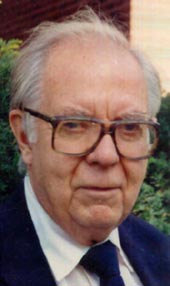
Chris Anderson, curator of TED talks

Social media is based on numbers of engaged people which means they must always expand, EXPAND, and the websites panic if the numbers go down.  The Trump win on election day gave them a jolt.  On the one hand, a lot of people are now looking for clues to the source of the unseen surprise.  On the other hand, it was advertising-based and the advertisers were all from one class, one opinion, one comfy set of assumptions, leaning hard on greed and fear.

In the meantime, some of us have been reading long-form explanations and analysis.  So suddenly every push for growth is asking us what we think.  How do we like the socks we just bought and what should we do about the end of the world when the sun burns up the solar system, less that eight billion years from now?

TED talks, which specializes in intensely enthusiastic people they consider interesting, had been leaning towards trivia, but now they’re going “deep.”  “How do we make sense of today's political divisions? In a wide-ranging conversation full of insight, historian Yuval Harari places our current turmoil in a broader context, against the ongoing disruption of our technology, climate, media -- even our notion of what humanity is for. This is the first of a series of TED Dialogues, seeking a thoughtful response to escalating political divisiveness. Make time (just over an hour) for this fascinating discussion between Harari and TED curator Chris Anderson.”


This thinking is surprising to find on TED talks, because they’ve been fooling around with liberal funny business, pep talks for do-gooders.  Partly, I think that’s due to being too busy with growing to see what was going on elsewhere.  Partly it was because Edge grabs all the high end thinking, some of it too high to understand.  Maybe it's partly because Chris Anderson’s real personality and interests have been restrained by business purposes.  I’d just as soon they weren’t.  Anderson was born to English missionaries in Pakistan and has a sturdy respect for the woo-woo, which he seems to see as something practical, not just a song to sing at camp.

To Chris, Yuval Noah Harari is not exotic.  They like sitting down together to search through the landslide of new ideas that is just outside the consciousness of most people.  The two men endorse the universal protection of the multiple and unique.  They call for people to reconnect with their bodies and senses.  They admit that the planet earth is always unfair in tragic dimensions. 

What are humans for? asks Chris.  And Harari is bold enough to say they aren’t for anything.  They just are.  Chris asks Christian questions, like where are humans going, and Harari gives Hindu answers like “nowhere.”  (Human continuous evolution is neglected, esp. the evolving abilities of the human brain.)

I was interested that when they got to the question of consciousness, which seems to torment the minds of male college sophomore trying to find the kernel of their own minds in hopes of reassurance that they are valuable, Harari related it to suffering.  What is a “sentient” being?  A being capable of suffering: not rocks but certainly even primitive animals and — well, we should think about plants.  

Likewise, when it comes to the problem of separating fiction from reality, suffering is the guide.  If it makes you suffer, it’s real. But suffering can create a uniting of people behind mythic understanding, mythic as in the powerful and meaningful stories of religion.  Harari is Jewish, a suffering people.

We are always busy trying to change the world into something that we want, but this interferes with our understanding of reality.  We should want to know what is actual and real, not just what suits us.  Our real task, the one we can actually pursue, is discovering the reality that is inside us as individuals, the truth we carry in our bodies.

But people have lost their connection to their bodies and senses, because they are always trying to overcome them.

In the beginning of this talk it was billed as an exploration of the difference between national governance and interests (often ethnic) and the global.  By the end it seemed rather to be saying that the way to achieve the global -- the planetary level of behavior -- was through the individuals finding peace.  This might not be quite what anyone else would hear, but it seems to me like a fair idea.  I just wish it were a little more cheerful.

One school of thought in the Bible is that the purpose of humans is to enjoy creation as a gift from the Theos.  Personally, I see it as more like the embodiment of whatever theos there is, which is a kind of immanent idea of merging and emerging, one thing transforming into something else while not losing relationship.  It’s close to being nature-based.

This transcript of a clear and graceful “Chris” talk, is a link to why he thinks the way he does.  The talk with Harari is really a way to convey this point of view.  I don’t think Harari minds — he’s in on it.

I ordered Harari’s books and will try to follow out his thoughts.  “Sapiens” and “Homo Deus” are the titles, the latter being the newer one.  But I’d really rather follow Chris.  I’ve been zapping TED talks without reading them because they are such little liberal pep-talks from do-gooders.  I see now that this was a deliberate policy change to let ordinary people have their say instead of going off into the stratospheric high-tech theories of Edge and their tantrum-like insistence on atheism.  Chris is more of a Whole Earth kind of guy, which ironically was one of the roots of Edge.  TED leans towards AEON.


It’s that Brit thing.  They were such bullies, so ecocentric in their Empire days, but the colonies taught them even as the outsiders “organized” places they didn’t understand.  It was hard: eight-year-old Chris returning to England was constantly beat up simply for being born in Pakistan though he’s genetically English.  But as he proposes, one can use one’s biological possibilities for empathy and that will help very much to relieve our burden of suffering as sentient beings. 

This seems like more of a religious mission than a popular media goal, but good religion is where you find it, sometimes not in a box.

Thursday, January 26, 2017

OPPOSITIONAL DEFIANCE SYNDROME IN THE TRUMP ERA


A dramatic plea for help has come in response to “Oppositional Defiant Disorder” posted 2-18-12, which always gets more hits than most other posts on this blog.  In fact, I’ve been thinking about it again myself because of Trump, who makes a good illustration.

The person, calling herself “Raven Albatross” because I stopped accepting anonymous comments, tells a long story.  She is a perpetual student, caught in that terrible national vortex of going to school, finding the degree doesn’t lead to an income, going back for another degree, repeating the same experience until debt levels are too high to function.  She is clearly intelligent and researches her dilemmas, but she doesn’t say how or whom she has contacted in terms of research.  She has come to the attention of cops, which meant visiting a “shrink”.  Neither was helpful.

I’m not an expert.  I cannot cure ODD.  It’s a great temptation to create a term like ODD and then treat it as though it were something real, with clear boundaries.  Then the definition begins to suggest how to think about it and we get stuck.  Or someone comes up with a pet reason or cure and bends the evidence and results to match their original concept. It may be part of something bigger or it may be a big consequence of a small thing, or sometimes it’s a legitimate survival mechanism in a bad situation.  It’s important not to get captured by one idea so as to look from different angles. 

As they say,  it’s not paranoia if something is really after you.  Right now, everyone in the country is paranoid.  It’s a marketing strategy:  the two major themes are sex and danger, esp. economic danger.  No one will sleep with you and you’re bound to go broke and live on the street.

Lately we’ve all been fascinated by the brain mechanisms behind the forehead, the prefrontal cortex and its function as a dashboard for a multitude of perceptions, assumptions and judgements.  Also, a team headed by Joseph LeDoux is very interested in the amygdala which decides whether danger should be responded to by fight, flight or freeze actions.  It’s a little blob, often compared to an almond but turning out to be complex;  a problem there can definitely make you nutty.

When people begin to feel or act in atypical ways, sometimes inconvenient, authorities (since they are supposed to “know”) define a “syndrome” according to some psychiatric model or system devised by someone like Freud or Jung, which was only invented from reflection with no physical evidence.  Today’s psychological community uses thought experiments to discover unconscious functions of the brain and there are a LOT of them, sometimes very powerful.  These ideas get sucked up by the media, not entirely understood, and gradually turn into something approaching morality.  That is, people are blamed for narcissism or punished for being defiant or oppositional, sometimes criminalized and arrested for not accepting the commands of authority.  Jobs and marriages are lost.

Generally, most people accept the idea that a child goes through a stage of defiance, evidently in service to separation from care-givers so as to become their own identity.  Sometimes it’s funny.  (“Would you like some ice cream?”  Toddler, bellowing:  “NO!”)  If a child (meaning too young to turn away force) is afraid or enraged, punished to the point of trauma (which might be what came first), a cycle of defiance and force may develop that is life-threatening.  Even a surviving child may be too quick to throw up an impenetrable wall that could blight their life.

There is some thought, and probably research, into the coincidence of this emotional refusal with the time that toddler’s brains are being “pruned” by the withering of any neurological branches that are unused.  Sometimes very old people become oppositional in the same way.

When we get into the work of Joseph LeDoux, we are on new ground that doesn’t use philosophical constructs of what theoretical forces are clambering around in your unconscious.  Rather they look at the molecular and cell structures, how they interact, and what can be done about it.  Neuroresearch is evidence-based and not very well reconciled with the traditional “talking cure” psychoanalytic approaches so far.

The commenter was in a car accident, quite serious, but seemingly only suffered minor injuries.  She says, “I went into a traumatic like withdrawal from reality. Weird thing is for two months after the accident (when I became so reclusive that I ended up diagnosed agoraphobic as well as manic depressive, which is a form of bipolar).”  It was not LIKE trauma! A serious car accident IS trauma!  The withdrawal from reality might be called “dissociation” which offers another term to look up, though it’s not that well understood.  Sometimes it’s related to split personality.  Other times it’s seen as a way of coping with abuse.  PTSD is the acronym for combat dissociation: “post-traumatic stress disorder”.  Flashbacks, unwanted thoughts, difficulty in controlling mood,  going to violence easily, and a lot of other unpleasant things.

Agoraphobia, reclusiveness, manic depression, bipolar or ODD, general balkiness and refusal to agree, are all psychoanalytic concepts, labels about emotional and rational life that make a person anti-social, thus attracting treatment, adjustment, even incarceration.  They are REAL and there are a lot of people struggling with them.  They can serve an important purpose.  But that’s not the same thing as neurology, which is how the tissue of the body functions, actually DOES things at the cell level.

These syndromes can be triggered by drug episodes (legal or illegal) and by viral infections of the brain, which we begin to recognize are more common than we previously thought.  The brain had been thought to be protected by blood barriers but now we locate slippery little by-paths.

One of the major changes in the way we think about a person is in terms of identity, which was once seen as a steady state, a box with labels or a sculptured construct that stays the same through life.  It’s YOU and others recognize it that way, though each relationship is a little different. 

Now the idea that seems to fit the best is that a person is an interacting set of processes that is assembled from the unconsciousness of sleep into the consciousness of waking, subtly new every time because the work of sleep does memory sorting and makes new connections.  The “connectome” is the word for the networking (internal internet) of signals shuttling around, ESPECIALLY IN THE OLD PARTS OF THE BRAIN.  You might not be conscious of all the commotion, but it can be detected with special machines like the fMRI.  Even when asleep, the brain is still busy keeping heart, lungs, kidneys and so on operating or you won’t wake up.  The brain’s main work is NOT thinking, but rather the maintenance of homeostasis in the body for the purpose of survival.  

Concurrent with this paradigm shift from box to something more like music, is that there is no reality.  NO REALITY.  All the aspects of the world that impact our skins and organs are things like electromagnetic light waves or sound vibrations — so you’re right to suspect all the waves we’re producing as well as waves from the sun and the cosmos, but that’s not what I mean.  I mean that the brain does not receive faces or words or tunes — it composes them from whatever the nerves attached to sensory receivers produce in the way of code.  Not everyone has the same sort of receivers.  More than that, much of the “wet ware” in the brain will interpret what it receives in possibly inaccurate ways.  It can only work with the categories it already has, until something happens to create a new category.  

There is a LOT to read about neurological research and I think it is far more helpful than “shrink advice”.  A good shrink is more than a diagnostician, but also a companion and support as the search goes on.  (Everyone’s search always goes on.)  A psychiatrist can handle drugs because of also earning MD credentials, but a clinical psychologist might be warmer because of NOT earning MD credentials, which encourage a cold objective approach.

As I say, I’m no medical or psychological expert, but my opinion is that when your car rolled, you got a significant head blow and should be checked for clots, bleeds, and tearing.  It would take very little damage to create ODD if it were in the right place.  Look for people who know about “closed skull trauma,” meaning that the damage doesn’t include cracks in your skull but rather damage in the soft tissue.  Go to the nearest university medical school and ask them to find you the closest neurology research lab.  

There’s a ton of things to read in the research.  Do not trust Wikipedia, but google can be very helpful if you’re looking for definitions or the work of someone like Joseph LeDoux.  In fact, he’s on YouTube, giving lectures.  I sometimes have to watch them three times to “get it” or there is sometimes a transcription feature with the vid.

Your advice to turn off the television and limit the radio is probably wise even for someone who has no apparent problem.  Television is jammed with plots meant to be sensational, frightening, and addictive.  And that’s just the news!  (Jokes.)


If you give me an email address, I can communicate more privately.

Saturday, July 23, 2016

VIRTUAL DOES NOT MEAN VIRTUOUS

http://uudb.org/articles/johngodbey.html

My seminary advisor, John Godbey, was always pressing me to define “virtual” which was one of my key concepts.  

Here are some online definitions.  

1 almost or nearly as described, but not completely or according to strict definition."the virtual absence of border controls"
2 synonyms:  effective, in effect, near, near enough, essential, practical, to all intents and purposes "a virtual guarantee"


COMPUTING
not physically existing as such but made by software to appear to do so."a virtual computer"
simulated, artificial, imitation, make-believe; computer-generated, online, virtual reality
"a virtual shopping environment”
carried out, accessed, or stored by means of a computer, especially over a network."a virtual library”

Virtual reality or virtual realities (VR), also known as immersive multimedia or computer-simulated reality, is a computer technology that replicates an environment, real or imagined, and simulates a user's physical presence and environment to allow for user interaction.

Merriam-Webster  Full Definition of virtual
1  being such in essence or effect though not formally recognized or admitted virtual dictator>
2  of, relating to, or using virtual memory
3  of, relating to, or being a hypothetical particle whose existence is inferred from indirect evidence;virtual photons;
4  being on or simulated on a computer or computer network 
      a :  occurring or existing primarily online: virtual shopping;
      b :  of, relating to, or existing within a virtual reality: virtual tour;


You can see that the term, once sort of philosophical and literary, has been taken over by computers, which has happened to a lot of our vocabulary.  (And has happened to a lot of our lives.)  We live now in virtual worlds.  But we have always lived in virtual worlds.  Somehow authority figures have told us there is a real world, that they know which one it is and they will tell us — if we’re obedient.  They are trying to slide “virtuous” into the concept of “virtual.”  Brains expect words that sound alike to mean the same thing.  But it is clear to me that a very wicked virtual world is perfectly possible and often successful, which is disconcerting to liberal, educated, optimistic UU’s.

Godbey’s field was Transylvanian Unitarianism, an idealistic but heretical Christian movement protected by the king of a small country now part of Roumania.  John himself was actually quite traditionally Christian, the son of a Methodist minister, except for the Trinity invention.  He was trying to get me to say that God could be defined as the Ultimate and Real.  I did not think so.  Therefore my thesis was stuck.  The language to unstick it didn’t exist in 1980, or at least I didn’t know it. (Lakoff and Johnson were beginning their work on metaphor.)  Now I do.


The concepts of “virtual” and “reality” are in the receiver/
creature — not in the environment, the world.  There is NO REAL WORLD.  We each use a virtual system, hopefully coherent and explanatory, but we are forced to change it to survive.  It is the essence of culture, with all cultures insisting that THEY are the reality.  But they are all real only in the terms of that time and place.  (Stan Rowe, a soil scientist in Saskatoon, used to speak of “slabs of space/time” which is what a life is, each slab with its own requirements for survival.)  

That’s all very fancy and theoretical -- and happy avatar to you, too.  How do you stick your head over into another slab than the one you’re believing in now?  You MUST believe in something or how can you make decisions and grow in competence?  If you believe in nothing, you’re vulnerable to addiction, charlatans, and paralysis.  It’s a virtual suicide.


Bill Houff, the UU minister emeritus in Spokane now deceased, used to say:  “If we can’t see anything in the dark, we must step forward believing that somehow ground will be under your feet.”  (You can say, “God will put ground” but that’s two metaphors and I only know one: “ground/earth/
footing” as a sensory phenomenon that is an excellent metaphor, which means that it’s a good idea to know a LOT about dirt.)

Progress is badly challenged right now.  Humanities are no longer considered “real” nor is art.  Governments, education, institutions, and cops are being attacked as unreal and unjustified.  They're not doing a good job of defending themselves.  Instead there’s a flight to concepts no one can really define very well: mindfulness, wisdom, various ideas about ethics.  The search for what we can call “reality” is certainly underway and in some places is getting violent.  


Is this the end of civilization as we know it?  Of course.  Civilization as we know it is always ending.  The problem, as I see it, is that we are trying to make realities out of virtualities, which may weight them to the point of collapse.  Certainly, we are “sectoring” the world into clashing “realities,” particularly the realities of survival.

One of our major dependencies is electricity.  Electricity powers all the machines that keep people alive, provides communication, pumps water, warms and cools houses,  aerates sewage lagoons and so on.  My parents did not take electricity for granted: they were beneficiaries of rural electrification.  Many people in Valier still don’t take electricity for granted, since it can be off for hours.  When it stops the stores can’t accept credit or pump gas.  

Across the globe, massive power failures happen, some of them hostile and some of them cynical (to drive up profits).  The back-up is batteries and fossil fuel, though here on the prairie we can see the wind turbines and could probably build mirror arrays if they wouldn’t blow away.  We have a lot of sun, but I don’t see many photovoltaic cells except small ones to circulate ponds or electrify fences.  We’re taking down the dams.

Is electricity real?  Not until it’s developed into a system.

Both enabling and dependent on electricity is the internet.  It is not real.  It is a virtual network dependent on technology, constantly maintained.  Hackers can and have shut down whole sectors of it.  Internal flaws and bugs can crash the controls to things as powerful as space rockets.  That we can eliminate bugs to the extent of visiting the TENTH PLANET (which was only a dent in the gravity until now) is as close as humans can come to miracle.  But that planet is only implied by technology — we can’t see it.


I’ve been enjoying the series called “Saving Grace,” which is built around a character made “real” by Holly Hunter, that tiny, sinewy woman with needle-nosed cowboy boots, more hair than Rapunzel, and a generosity-based notion of polyamory.  She plays literally "against" an array of men: Ham with his air of Siamese tomcat puzzlement and good-to-go nudity; Butch with his cynical testosterone overload and way-wide hat; Leon the Indian/Mexican papa and source of sanity; and Henry, the cat-loving mercy fuck.  In short, this series is a virtual take, often comical, on some people’s assumptions about men.  

The key is “Earl” the angel, who only mind-fucks.  He doesn’t do miracles, but can’t resist a few little hat-tricks so we'll pay attention.  The producers finally got angel wings right:  they are the same as the best portrayals of God speaking to humans, esp. the Biblical Mary — that is, Dazzling Light.

by Henry Assawa Tanner

The question is, can a person break all the laws and still be virtuous?  Do intentions count?  Where are the lines?  “Earl” is a tolerant angel, easily adapting to Allah for the sake of a condemned murderer who is comforted by the Koran.  He is playing mix-and-match with virtual systems.  So far no Buddhists.  An atheist.  There is an unforgivable that you'll recognize.

John Godbey might not approve, but then again . . .  I met him once just before Christmas in the good old days when Meadville students were given keys to the library.  It was late and dark in the hall.  He was staggering a little, drunk and happy.  He had come to his office to fetch the presents for his beloved son, a handsome jet fighter pilot.  It was before his world broke apart in tragedy, which I cannot tell you about.  I wasn’t there.  But in this earlier sliver of time and place, he was exalted.  His virtual world felt virtuous to him, ultimate bliss.  He didn’t know it wasn’t real.  When the agony came, I think it pressed him back towards Methodism, but not out of his reconsideration of the Trinity.  He was a TRUE believer.

Take the good moments and store them up.  Use the virtual, but search for the alternatives.  “Saving Grace” was cancelled in 2010.  It was a work in progress.  The last five episodes cast her real life partner, Gordon MacDonald, as Hut Flanders, atheist. He reminds me of Bill Shaw, my undergrad biology partner, now dead.


Gordon MacDonald

More than that, I’m aware that there’s another “real” world going on behind this virtual series script.  There have been more than a dozen projects involving Hunter since the end of “Saving Grace” but I don’t know how to access them right now.  Some seem very much about the creature/environment interaction, but as usual lately, the distribution system is not getting them to all those who want to see them.  The delivery system is lacking.  Thus search is necessary — not just a theory.  Esp if you're operating just outside the culture.

Friday, December 25, 2015

CONCEPTS THAT I'M WORKING ON NOW


CONCEPTS I’M WORKING ON
Might or probably aren’t final conclusions.

PARADIGM SHIFT
There is no such thing as permanence.
Boundaries create change because things pile up on one side or the other.  Then gates open.
All boundaries can shift.  
Everything is interwoven.
It’s a dance, a symphony, a time art.
If we are friends or even enemies, we are linked, changed.
If we pay no attention, it’s to shrug.  Mostly.
Gradients, vectors, power transfer, value change

Taxonomies (pigeonholes)
Anything you look at is at first just a big blob.  Then you begin to distinguish one part from the other, one kind from other, one situation from another.  So you say, “this and not that,” but if the pigeonhole is mistaken, you’ve got to say, “It would be better to make a new system.”  Think of all the animals who were thought to be related until we looked at their genomes — and then they were entirely different.

In the academic context, disciplines of knowledge have been historically useful, but now they don’t fit what we are learning.

IDENTITY AND CONSCIOUSNESS are the screen but not the machinery that produces them.  They are dynamic and assembled from the body, its functions and interactions on every wake-up.  They are not the on-switch.  They can be multiple, they can alternate, they can be incomplete.  Shape-shifting, tricksters, morphs, illusions, are part of the deal and often self-protective or the person couldn’t persist/exist.  But some molecular additions are toxic, some permanently.

The operation of the body, inheritance, responses, are NOT the essence or intention of the person.  They are the result of molecular interactions which are triggered and hosted by the body.  This includes intentions, which can seem voluntary but aren’t.  They must be backed by other forces, maybe other people or circumstances.  Maybe meds.


ESSENTIAL CONCEPTS:

EMERGENT: something that appears or becomes possible because of underlying conditions.  It wasn’t there earlier.  An important result of mutations and adaptation: evolution reaches back as well as forward and finds new uses for old parts.

HOMEOSTASIS:  the limits of survival.  Too much or too little will take the creature or group or species out of the game, so those who can manage to stay within the boundaries will survive.

FOCUSING:  Eugene Gendlin’s way of talking about managing the “working platform” of the brain.

FLOW:  Mihaly Csikszentmihalyi way of talking about an exact match of skill/capacity with the demands of a situation.

THE CIRCLE OF BELIEVERS A conventional way of thinking about observers like anthropologists or scholars of religion who do not share the beliefs of those who are being observed, but do not denigrate or mock them.

REALITY:  CONSTANTLY REINVENTED CONSENSUS.  What the screen shows for most people.  Humans cannot access directly “reality” which is matter of wave lengths, molecules, chemical interactions — the equivalent of pixels excited by technologies.  We must interpret the “code” of neurological processes only as shown on our consciousness screen, or through technological detection. 

IDENTITY: MANY LAYERED DYNAMIC PROCESS that uses memory, habit, group feedback, environmental cues, and other brain tricks to shape the picture and story on your screen.

ECOLOGY: An operating circle of interrelated forces and entities that maintain the homeostasis of the whole.

NICHE: That ecology circle, which is based in geography, and can’t be maintained if the environment goes outside the limits of homeostasis enough to damage the ecology beyond recovery.

THE FELT SACRED  is a meaning so deep that is beyond what the brain can describe.  Basic mammalian instinct generated from the bottom up to the most elegant abstract concepts puts a human, separately or in groups, in a state of vibrant harmony.  It might be landscape, music, interpersonal relationship, art, story — often surprising.


LANDSCAPES OF INTERACTION   (I’ll come back to this.)
   LANDSCAPE OF HABIT
   LANDSCAPE OF WORK
   CHILDSCAPE

TERMS ABOUT THE BODY

CRISPR: The technique that can insert or knock out a gene from it’s long string curled up in the chromosome.  REMEMBER: a gene is simply a recipe for a set of molecules that may or may not interact with other molecules and that may only be about timing or some algorithm of “if/then”.  Many things are the result of interacting SETS of genes at a certain stage of development. 

EPIGENOME is a set of molecules that act on the genome.  They can be inherited.  They come from the environment and can turn genes on or off.

METHYLATION  The process by which the epigenome acts on a gene.

MOLECULE:  Elements made into a structure that can interact with other molecules.  There are many kinds, described and grouped according to what they do and sometimes by the kinds of atoms in them or how they are “folded.”

________________

A fossil from the future


I’m reading “Origins and Revolutions: Human Identity in Earliest Prehistory” by Clive Gamble, a geographer and archeologist.  He notes that hominins (not including primates but all fossil relatives) went along for three million years without changing at all.  Suddenly they began to evolve — what was the trigger?  Later, in the Neolithic period, there was another jump.  He doesn’t talk about the anthropocene — he talks about “post-lithic” humans!

The companion book is “On Deep History and the Brain” by Daniel Lord Smail, whom I came to know about because of his sojourn with the Neubauer Collegium which now inhabits the former Meadville/Lombard building.

Another good author to read is Mark Solms.  There are vids of all three men on YouTube.  Gamble is English, Smail is American, and Solms is Australian.  That must mean something.  Globalizing academia, maybe.  A convergence.

Thursday, November 12, 2015

JOKING ABOUT CIRCLES MEANS WE CAN TAKE HOLD


The joke goes, “There are two kinds of people.  Those who divide everything into two kinds and those who do not.”  Lately the impulse has been more to say, “Everything is shades of something and there are a billion wicked thoughts about it."  But even a one-off distinction creates two sides which can be argued into two categories with different qualities.

For instance, I notice that there are websites calling themselves “religious” which are all about institutions and other sites calling themselves “religious” that are based on what they would name spirituality.  It would be intriguing to trace them back to orthodox versus heresy, as in when the original Roman Catholic church began to break up.  Something like that seems to be happening now, partly because of the mixing of populations trying to escape war or famine and partly because of the addition of science which operates like religion.

Science argues that the scientific method is the only real way to get hold of reality, but -- confusingly -- argues that there IS no reality.  Reality is a constantly reinvented consensus and, as well, human identity is a collection of interacting forces that must be constantly updated.  Science, which once assured us which things could be trusted to stay true, has now begun asserting these two new propositions, based on scientific research, that all is change and interpretation.  But religions still try to stabilize one’s identity as well as one’s understanding of what behavior and beliefs will guide a good life.


There is a concept that goes back to anthropology but is taught in schools that address both of those above.  It is the idea of “the believers’ circle” and comes from the anthropologist watching some indigenous people, the people of the land, in order to understand what it is they’re doing.  Inside the believers’ circle the people believe they are celebrating the truth, a reality that will help them survive and even prosper.  It is a place of virtue and generous enactment.  

But to the anthropologist, no matter how carefully he or she pays attention and is able to understand, it is only one system among many.  You can study all the Bundle Openings you want, but until you have a close felt knowledge of the animals represented in it, your senses connected to them, you won’t really be a believer.  To the believers, the anthropologist is a fool, uninformed, a child unable to learn.  To those with different beliefs, particularly the belief that there are no beliefs that are real, the anthro merely smiles and writes it all down.  It's just a story among many -- nothing to do with them.


Aeon is a shared thinking website based in England.  The theory is that if we all share our ideas from both inside and outside the circle, this exchange will cause us to have major insights that will eventually cause brilliant breakthroughs of human thought.  But this is a preoccupation of educated people, each of which accepts the terms of their believing circle.

I’ve abandoned that hierarchical and territorial sort of thinking in favor of an ecological criterion.  You might say that an ecology is an operating circle: everything inside the circle created by geology and weather and the main economic forces, is related to and interwoven with everything else in that circle.  In fact, vegetable, animal and insect intruders from other ecologies may throw everything into chaos and destruction.  Some elements will be lost and others will be drawn in or mutated until a fit is regained.  Then there's a new circle.  It’s not a matter of what’s “right” or “virtuous” or has always been before.  Instead the main thing is whatever works.  (Sometimes something appears to be working but has a long-term insidious influence, a slow poison.)

Human beings are unique in that they can change their environment or at least compensate for extremes by making interfaces and equipment.  They can also experiment in their minds with consequences or look for new evidence:  virtual circles.  Religion can be used to impose what is best for the people who are their believers, or it can extend compassion to all people, whatever their allegiance.  Compassion comes from empathetic awareness, even recognizing existential despair because those inside see nothing they can believe or even bear.  It's a cage.


In terms of that big scramble of religious definitions, there is one thing that some human beings can access without education, cost, or special privilege.  That is perception of the sacred.  Whether that is seen as an individual brain phenomenon or something cosmic and eternal reaching into us, we don’t know.  We don’t even know how to think about it and maybe we shouldn’t anyway.  Maybe we privilege “thinking” (meaning logic and definitions) too much.

Speech-based thinking happens in parts of the whole brain but is concentrated or managed somehow in the complex of the pre-frontal cortex behind the forehead and most often draws on the metaphors of the eyes, ears and nose.  It can be cool math or hot poetry, and for some people there are not exactly words, but just unspoken concepts of color, pitch, fragrance that they can at least perceive and possibly put into words.

Some people will be deeply offended by this joke and some people will just laugh.

The point is that speech is what we understand to be uniquely human and valuable.  It is, but what everyone forgets is that it rests in, on, and through the animal functions of bone, muscle, circulation, and the management of nourishment.  The constantly reciprocating changes of one’s body supports what is considered identity -- not just words about them.

Part of the point of a community -- which is defined by the believing circle -- is that if individual identity is so wrenched out of itself by trauma, over-extension, ecstasy, migration, then the others in the circle will remember who you are and help you rebuild.  There are many stories about people who rebuild a new identity with strangers -- amnesia, living apart, education -- and then the old and new identities are brought to confront each other.  It’s painful and dangerous, but an alluring and exciting way to escape from a circle that is no longer convincing or healthy.


Recently I watched “Snowpiercer,” a speculation on class hierarchy that is miserable at the bottom/rear, and blindly attached to rails that go round and round.  This is necessary because the whole planet has over-reacted to global warming and turned time back to “Snowball Earth” when everything was a glacier.  The tail end of the train thinks that the front end is oppressing them, and fights its way to the engine to seize power back.  Because it’s a film, the ideas of class structure luxury are vivid.  In the end there is no emperor or Great God.  The train is powered by a child who is destroyed in the process.  

When the sign of hope arrives (this is a spoiler) it is a crashed airplane that is being melted out of the ice and then a polar bear.  This film was written before the polar bears were depicted as starving.  What the bear is going to eat, since it seems to be the only living thing, will be a happy immediate surprise for him, since the train is crashing and presumably there will be many dead people, some of them even cooked.  This is an existential despair movie, but only if one is attached to one’s own circle of belief, which might be that humans are privileged, not animals at all, even if they are edible.  Give it up.  Bears are waiting.