Showing posts with label boys. Show all posts

Tuesday, July 14, 2020

PINTEREST REVELATIONS

I’ve been ignoring Pinterest for years, assuming that it was sort of like Etsy — girly little fondnesses and cute homemade stuff.  Certainly there are no Native American people posting that I’ve seen and the photos that individuals collect about “Indians” are miscellaneous, misattributed, and old 19th century stuff.  They're on the edge of being offensive due to stereotyping.

These are from Popovy Sisters.

But then I ran across “art dolls” which includes jointed, posable, incredibly slender and idealized dolls suitable for clothing and adorning.  They were sophisticated versions of the paperdolls I amateurishly drew as I approached puberty.  Many of them are remarkable.  Closely related are artist-augmented babydolls, so realistic that it’s hard to believe they aren’t real.  Both categories are very expensive.  


Next I found old friends: cloth doll children.  We had a family friend who made them and dressed them in little bib overalls or dresses.  We could play with them at her house but never take them home.  In high school I made some to use as marionettes.  How nice.  How non-threatening.  

Then I finally got nudged into Pinterest because I was thinking about octopuses and a whole new world fell open.  Little pastel octos and entirely terrifying tentacled monsters.  Whole other genres appeared: clusters of middle-aged women having a visit, extremely fat women with tiny sweet faces, and. . . gay boys.

Boys.  If you’ve been reading me a while, you may know that a decade ago I wrote with a cluster of boys in Paris who had formed a family based on photography and art.  AIDS was just arriving.  Boys this age are obsessed with two things: personal relationships and universal justice.  (Reversals also count: I mean, enough anger can turn these to destruction and cruelty.)  They’re all grown men now and we’re not in touch.

But on Pinterest I discover a whole new genre, writing with drawing, something like cartoons except about the lives of a special category of boys: gay, in need of family, falling in love with each other, trying to understand risky survival.  The narrative is as clear as the drawing but I still don’t understand a lot because I’m not them in their world.  I have no advisors.  My brothers are dead.

______________________________________________________________________

This section was removed at the request of the author.
______________________________________________________________________

So I get my Google fingers going and discover there are real books, published by Scholastic, about this kind of boy in this kind of tale.  https://theravenboys.fandom.com/wiki/The_Raven_Cycle.  The author is Maggie Steifvater.  First book in 2012.  NYT best seller  #1.  https://theravenboys.fandom.com/wiki/The_Raven_Boys_Wiki    This is so wildly amazing that I can hardly believe it.  I thought all this was supposed to be secret.   Of course, none of these Raven fans know anything about me — why would they?  But I’m still curious about them.

There are two related literary genres that I do know about, though I’m not spending time on them right now.  One is “lone” and romantic figures, usually male, who may be associated with wilderness and always has a “spirit animal” like a wolf associated with him.  In the Raven Chronicles, it is a raven, of course, which makes for remarkable art.  This is an old trope in Europe and elsewhere, but it is reinvigorated by being gay boys which pulls in some of the cowl-and-cape brotherhood of monastics.  I also think of Neah Bay -- vampires are not far off.

The other genre, which is not recognized as a genre, is that of women — often gay — who write about gay men — often historical.  I’m thinking about Mary Renault, who was gay and oppressed in England in WWII but found family as a nurse caring for soldiers and later in South Africa among a community of liberal ex-pats.  And I’m thinking of Patricia Nell Warren whose “The Fancy Dancer”, is a much beloved novel about a priest and a Native American, which is a Montana book that both men and women love — quietly.  Neither writer wanted to be known as “gay” or any other restriction on the right to simply be a human who writes.  So many times and places to explore, so many differences that turn out to be samenesses.

Here's a puzzle.  Rowling's Harry Potter is portrayed here again and again as a grown man, always a dark and handsome figure, often seeming scholarly and always seeming probably Irish and sometimes suggesting Jesus.  Kenner's question:  What does it mean?  

.

Friday, March 11, 2016

THIS BOY WITH HIV


19th Century:  Pratt:  clothes and hair make the man.


1950's   A few generations later.


2016  Denise Juneau is running for the US Senate.
Her father was in one of my English classes in 1962.

When Colonel Pratt decided to make whites out of Indians, he had the idea that if they were cleaned up, given proper haircuts and clothes, and made to mind their manners, that would do the job.  Likewise, people tend to think that if they take a feral boy off the street who has survived on his own for most of his life and do the same cosmetic things, the boy will be grateful and become just like the savior.  But first the rescuers want his diseases cured or at least addressed to the level of chronic and noncontagious.  The problem is that the change involved in all that -- changes in habit patterns, internal molecular loops, and just general ways of being in the world -- are too much to address while still hungry, shamed, guilty, terrified, and essentially alone.  These are matters of identity and losing one’s identity will only cause panic and rage.  So it becomes a loop: I won't help until you want to be like me. 

One thing at a time.  Starting to take AIDS meds -- even assimilating the fact of being infected and figuring out what it means (esp. if you’ve been told it’s a death sentence) -- might be sort of down the list.  The FIRST thing is a trustworthy human contact when you don’t even know what that feels like, so you never look for it and maybe don’t appreciate it when you get it.  The person contacted must not judge.

Liz Taylor was not inclined to judge.

Consider that there are plenty of grownups who have the same problems as listed above; even the ones who live in “natural” African villages might not have a trustworthy human contact, which might account for ill-advised out-on-the edge sexual behavior.  There must be a high proportion of incarcerated people with no idea how to guide their own behavior and who will die before they ever find out.  There must be people who function only with constant professional support.  And somewhere there must be people who have their boundaries established, keep within the limits of their bodies and minds, live in a supportive community, and still (or maybe consequently) have more energy and insight to offer others.  The "nice" people still might catch AIDS.

The tragedy is that most diseases that can be addressed to the point of becoming chronic must do so in terms of behavior much more complex than taking a pill.  Just taking a pill on time and in the right amounts, just facing the diagnosis which is no longer death but still a lifetime ahead of monitoring and paying. Paying. Getting the meds (even at a free clinic), are an ordeal that presume no competing activities, like a job or even school.  It means stigma, that blood sucking leech.  One is forced into communities of oppression in the name of monitoring one's health, meaning constant blood, urine, fecal and semen monitoring, all of which are usually private.  They expect gratitude or at least obedience.  If you're not paying, they don't feel obligated to
provide privacy or nice manners.

It seemed so simple.

But not all boys who behave badly have HIV.  Not all nice boys who have done very little to break rules will escape HIV.  It’s a virus, an opportunist, and skips through the land like a forest fire, creating a mozaic of infection that is undetectable at first without deliberate testing.  It will be years before the HIV impact on the body may be detected, long after the point of contagion could be identified.  Only recently has it been possible to reduce the HIV viral load below the contagious point.  The good news is that what will control HIV will bring the body into homeostasis and good-enough health that will address a lot of basic needs.  The bad or at least daunting news is that some turnaround in emotional life and the personal power -- that even a boy has -- must be brought into alignment.  Art and community can do the job.

I’m the last person who ought to write about community.  I’ve threaded my way, trying, rejecting, pandering, finding a powerful protector, getting official certification of value, learning high theory and analysis, taking diagnostic inventories, querying family, making natural categories, embedded observing, and so on.  I’ve got bibliographies, actual books, saved downloads, printed out manuscripts (including typed and xeroxed), scraps of memoirs, genealogy charts — on and on.  But I still rarely go through a day without being mad at someone for not understanding me and what I’m doing.  I’ve studied organizational design and thought it was brilliant, but can’t get my house organized, or my time organized beyond writing most of the time.  Organizing cats, of course, is hopeless.

David Barr, effective early activist

But I have a kind of virtual community that includes fictional characters, figures of dream, real people I have never met, and the population of this town and area who all greet me by name though I can’t remember their names.  Some of these people I've known for half-a-century.  Boys with HIV are part of that world, some of them former students who are dead now.  Often the ones who were the best writers, the ones who ventured to the edge.   Natural leaders.

Terrierman, who blogs and lives near Washington DC, rarely recommends a movie.  This time he said, bluntly, “Sit down and watch this!”  It’s a movie called “Human” and it’s on YouTube in several versions, some an hour and an half long and some short.  Here’s the trailer.  http://www.human-themovie.org   This is or ought to be everyone’s community, both human and landscape-sized.  This ultimate community does not know itself and so this movie becomes vital.  Everyone speaks in his or her own language but with sub-titles.  Some are silent.  All are eloquent.

Francine, "Human" (from my cohort)

Sub-groups could create video testimony like this, maybe not so fancy.  But a place like here on the high prairie has as many wise and lived-in faces, as many love affairs, and as much mystical landscape as this film.  Our girls ride their ponies fast over long ridges with mountains in the background.  (That's my favorite section.)  These days cameras are easy to operate and there are local businesses that produce local vids. It only remains to think of it.

But this post is about boys with HIV, esp. HIV acquired by doing criminalized and desperate things.  They cannot show their faces because the stigma will follow them — faces are like fingerprints these days, the iris of your eye is a code that can unlock doors.  But anyone can record themselves if they have simple equipment and — more than education — the motivation.  This is the conviction that created http://real-stories-gallery.org/node/1143  and the groups that have derived from it (Cinematheque, Show Me Your Life, Smash Street Boys, and Shatter Boys UK).  These are ways to create community networks that wrap around the planet.


Boys are the demographic most easily discarded, esp. boys considered dangerous, contagious, destructive, and obstinate.  Maybe gay.  First we render them invisible because they are scary, then we throw them out of schools as ineducable, then we don’t allow them on the job market which almost forces them to join the sub-culture of the forbidden.  They have nothing to sell but themselves.  Luckily, that’s an infinite resource, constantly renewed.

Friday, January 22, 2016

THINKING BIG: How the Evolution of Social Life Shaped the Human Mind"


In pursuit of understanding humans IN THEIR ENVIRONMENTS,  I have accumulated and borrowed through Interlibrary Loan a great many books over the last decade.  I have a basic kit of close experience with certain communities with quite different basic characteristics and an humanities education rooted in the Fifties ideas of “language and thought”.  Right now I feel as though I’ve found a book that is a handbook (so trendy that there’s a new verb:  “handbooking.”) that wraps around and illuminates all this stuff.

The book comes out of the United Kingdom, including most prominently Australia.  The basic argument is this: that we know a lot about human fossils and can now even reconstruct the weather and responding environment in fairly specific ways, including what there was to eat.  In the past scientists have taken a very strict approach to ideas about deep (pre-literate) history, esp. the transitions within and between the following groups:

Anthropoids (all primates including fossils, monkeys, hominins and humans), 
Hominids (all great apes (gorillas, orang utans, chimps, bonobos, gibbons), hominins and humans, 
Hominins (all our fossil ancestors),
Humans (us)
Anatomically modern humans without substantial evidence for cultural accoutrements (art, burials, ornament, musical instruments)

I don’t know where Neanderthals fit into this, since they genetically merge with modern humans.

There are three authors: 
 Clive Gamble, whom I already know from his book, "Origins and Revolutions", 
John Gowlett, who is associated with “Radical Anthropology” (a school of thought with a journal), and 
Robin Dunbar.

Robin Dunbar

Robin Ian MacDonald Dunbar (born 28 June 1947) is a British anthropologist and evolutionary psychologist and a specialist in primate behaviour.  He is currently head of the Social and Evolutionary Neuroscience Research Group in the Department of Experimental Psychology at the University of Oxford, and a visiting professor at Aalto University. He is best known for formulating Dunbar's number, a measurement of the "cognitive limit to the number of individuals with whom any one person can maintain stable relationships”.  The dependent theory is that the bigger a group of known and interacting people, the bigger the brain is likely to be.

These people, mostly English academics but researching in Africa, diverge from Cartesian object-and-logic thought, but have a  firm grip on the implied forces of evolution, which is what makes them radical.  Evolution is driven by the acknowledgement that time forces change and every change opens new possibilities.  The study of solid evidence of fossils and geology have reluctantly opened their more responsive minds in the face of the usual opposition of status quo thinkers.  The study of the evolution of the hominins AND all other humanoid forms (including us) in terms of brain development  (evolving along parallel to the rest of bodies), and the resulting social interactions between individuals, has been invisible.  A strong question has arisen:  why did the human brain-size in Africa remain the same for hundreds and thousands of years, but then suddenly -- without changing size -- explode into art, music, decoration and story?  Was it something they said?  Something they did?  

This book opens the door to a whole new realm.  These men often make distinctions: they repeatedly say, “two things are relevant” and then those two things are not opposed to each other, but either interacting in shaping ways or diverging from each other to explore new territory.  This is Bibfeldtian "both/and" thinking.  (Bibfeldt is a mythical scholar invented to counter "either/or" thinking.)

Lady bonobos

For instance, two things have shaped "apes".  One of the most intriguing little hints is that somehow our closest relatives, bonobos and chimpanzees, diverged because bonobos went with social interaction as the primary focus of life (including sex as greeting, much to the fascination of humans), and the chimps went with tools -- which might have led to our technologies.  (I’m waiting for the invention of a keyboard for chimps — but, wait!  Hasn't anyone tried to get a chimp to use a tablet computer?)  Modern humans evidently came from a branch that refused to exclude either society or tools, until now they've converged.  These authors speak of the sensory ability and the materials available, both expanding interdependently. 

A fascinating riff on the subject of the "occipital bun", which is a pushed-out part of the rear skull, suggests that populating the northern territories required big eyes to gather more light, and therefore needed more brain processing space, which is at the back of the head.  Neanderthals have big eyes and that "bun".  The thought is that this meant the pre-frontal cortex behind the forehead couldn't develop, which kept them from the abilities housed there.

The authors do not indulge in silly thoughts, but stick to the serious business of survival as the planet constantly makes our current arrangements obsolete, maybe even impossible.  What’s the most basic crucial understanding we need?

One element is group size and the basis of their cohesion, which turns out to be music and laughing.  The proposition is that the following table is pretty universal:

5 people are an intimate group.  The authors call them “soul
     mates.”
15 people are a foraging group, best friends or maybe co-
     workers
50 people are a band, which they rename as “overnight
  camp groups”, all of whom know each other and get along.
  I recognize this as the named Blackfeet traveling groups,
   partly family.
150 people are “Dunbar’s number” — I’ll come back.
500 people are mega-bands related by marriage or trade.
1500 people are tribes united by one language.


Print it out, maybe enlarged, and add the names.
Good workshop exercise.

150 is about as many people we can handle in terms of trust and obligation.  These are the people we greet by name at the post office and linger a few moments to trade information.  

You may notice that each increment is threefold.  The authors relate it to classic military unit sizes:

12 men in a section
40-50 to a platoon (3 sections)
150 of 3 platoons to a company
500 is a battalion (3 companies)
5000 is a regiment (3 battalions)
5000 is a brigade (3 regiments)
15,000 is a division (3 brigades)

Dunbar’s number, 150, is the size that will allow balance between enough interaction to maintain social cohesion (grooming in apes, greeting in humans) and the time that will economically work to support survival.  The less time spent on work, the more there is for social cohesion, and vice versa.  In hunter-gathers groups a great deal of time is devoted to what we consider to be "idling" but is actually bonding.  What we consider work is often divisive.


Our technological society has been hard on neighborhoods, which in my post-WWII childhood were about 150 people who knew each other, by spreading them out over space on the Internet.   We even shop there.  People are reading my blog around the planet, which always startles me, and impresses me with the obligation of somehow providing what they are looking for.  

Some are boys or were when I got to know them.  I am sharply aware of the universal tendency to exclude young boys from both social protection and individual reassurance, which are the purpose of groups.  When the leopards come, the hominins go up trees, grabbing the babies to carry as they climb.  Some children can climb.  But the youngest boys are left on the ground.  At some point the hominins also began to act like leopards and destroy the easy prey of their own young.   (Abraham was not sacrificing his daughter. Just saying.)  There must be some survival value to the vulnerability of boys, or it wouldn’t have persisted so many millennia.  But what is it?

I recently read a disturbing account of young males, tortured dismembered discarded — it turned out to be about male dairy calves who are seen to have NO value in terms of human society.  Value = Survival.


Grown but uneducated men in a tech society are in a similar fix.  They can’t even sell sex.  Their blood, maybe.  In some cities they can’t sleep outdoors or in cars.  Those who wish to help them are forbidden to provide soup kitchens where the “nice” people live.  No one will even do what baboons do for each other: pick off fleas.  We’re devolving.

You’ll notice that I’ve left Radical Anthropology now and entered upon Social Commentary.  The line between is permeable and that’s excellent, because it means there are more variables affecting survival.  I was intrigued to see that these authors appreciate what they call “hot” cognition empathy — which is sharing on an emotional level — and “cold’ cognition empathy (theory of mind) which is aware of what others are thinking and feeling, but emotionally detached, even Machiavellian.  Babies seem to be born with hot empathy, but don’t develop Cartesian-style “theory of mind” until maybe age five, kindergarten.


There will be more as I explore this realm of thought.


Sunday, September 20, 2015

THE FEARLESS BODY


In the background of all the commotion of blogging, I seriously read what I consider to be foundational cognitive work, some of it defined as unconscious (meaning you don’t know you’re thinking it) and most of it defining thought and identity as mental, mental as brain, thinking as brain, perception as brain. All is brain.

It has been clear from many studies that the brain is only the dashboard for the whole body and that thinking is done by the whole body: muscles, intestines, lungs, heart, and all the other organs including genitals. This is where the most basic information comes from and where the decisions to act originate when executed. We think “from the gut,” we vote “with our feet,” beauty leaves us “breathless,” our heroes have “heart.”

Writing about this aspect is not easy but vids can capture much of it. This is why — in several ways — I’ve been particularly interested in the work of Tim Barrus and his boys. Including the boys in this work brings up the next aspect of thought, which is sharing and watching others, because — observed by detecting electrical impulses and blood flow — that when one watches someone dance or play ball, one’s body imitates in miniature dilution, which is a form of thought or even metaphor. The observer — the cat’s choice — has more ability to “see” what’s going on than those whose faculties are caught up in the task of riding a skateboard or the sensory waves of surfing.


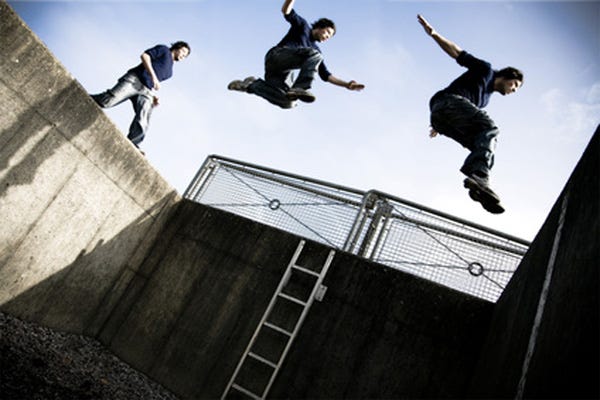
Art, dancing, athletics, parcours, tumbling, and sexwork are all body functions that pursue skin-again-skin, muscle levering against bone, breath and heartbeat, providing a kind of bodily information that will never be available to the couch potato or the lab rat. It is what some call “embrained culture” — really meaning “embodied culture” because it is what translates the environment into muscle memory and technique, the sensory information about balance, temperature, timing. and the pull of gravity that makes the particular moves possible, whether they are ballet, skiing, swimming the butterfly or riding a horse.

Here’s an oddball example: “Oz,” the film about “The Emerald City”, an experimental and idealistic community inside a high security prison. The question is whether people of differing cultural context whose behavior has converged in the criminal underculture can be persuaded and shaped in a controlled environment, basically creating a new culture. Christopher Meloni was electrifying in this show — more than in any other of his films — because it played off his completely unintimidated physicality — contact, sensuality, violence, pain, and sex — were in the moment, spontaneous, and indifferent to constraints. The actor could do this because he was an athlete, a physical trainer, and VERY sophisticated about the body as a chemical factory because his father is an endocrinologist.

Christopher Meloni

Today’s academics don’t think about the body in regard to spirit and deep meaning. Their exercise mostly consists of walking the campus paths between classrooms or maybe a little tennis. No one becomes a whirling dervish, it’s hard to imagine them kneeling, and they think about the symbolism of crucifixion much more than the physiological consequences. The young and vigorous might turn to hiking as a religious experience.

Those who take the shortcut of either entheogens from indigenous societies or pharmaceutical hormones are thinking of the effects on their brains, not their whole bodies, particularly not the impact on the internal organs that filter poison or underlie circulation. Nor the molecular cellular systems that address disease.

This makes them into different people who must react to their original cultures in a different way, supported by a different body. I’m thinking particulary of children beaten and invaded to the point of dissociation. If their home culture — regardless of whether or not they are hostile — has no “place” for them, then they will be in distress or actually destroyed. Today I read an article about the veterans of our constant sequence of combat in undeveloped areas — not really countries. We sent them out, but when they come back — utterly changed — we abandon them.


The article in the New York Times described how and why these men (I expect there are also a few women) have formed their own group culture for detecting and mitigating suicide among their compatriots. http://www.nytimes.com/2015/09/20/us/marine-battalion-veterans-scarred-by-suicides-turn-to-one-another-for-help.html This signals a universal change of information dynamics due to internet culture, which allows people, widely separated by location but united in their need to interact with people like themselves, to become a self-conscious and self-supporting group — whether they are children born with incomplete bodies or victims of breast cancer or scholars searching some issue. These groups are nothing like immersive fiction (novel) second-hand adventures which is the focus of pop publishing, but real-world spontaneous forming of alliances. They have political impact.

Similarly, since abused young boys who would never go into a library or who exist where there aren’t any libraries or books and whose cultures never taught them to read, can pick up the technology of a smart phone almost instantly and soon find others like themselves. With or without permission, with or without guidance, they hail each other with recognition. This has nothing to do with publishing. But is very similar to the experience of those who used to read to find themselves.

I’ve discovered a whole new “discipline” which means a group like those above except founded on thought and experiment, including the incredible fMRI and genome studies that interact with cultures and personal identity. The name of the field of interest slips around a little bit, but mostly they are things like “neuroanthropology” with the neurology studies taking the role of what anthropologists used to think were primitive societies where things were simple. As it has turned out, some guy who hunts cassowaries in New Guinea highlands has as “high” a culture as any Manhattan erudite essayist. He has as much immediate environmentally-sourced sensory poetry in his body — meaning metaphors and sense patterns that carry meaning — as an urban jazz musician.


Boys whose bodies are exploding into growth and control are forming culture. If they are in a group, they will share and intermesh what they feel and endlessly debate as they sprawl on old couches. For them to have tech instruments that extend these tasks, things like vid cameras and internet communication (concepts as well as the knowledge of plugs and operation patterns) is the same as teaching them the canon of books that schools insist upon, even though no one can agree on which books. It is a cultural foundation and one that may replace many of the uses of books, so long as we have electricity.

Because their lives are so physical — skateboard freedom, clinical blood-drawing entrapment — their thought is not necessarily available in words. Because they make sex part of their matter-of-fact daily behavior, we might think they don’t love, but emotional bonding is strong among them. Judging them according to the larger culture just confuses everything. If they can stay within the confines of defined criminality, their culture should be protected, even encouraged as evolution, but the abuse they endure has become part of our own global prevailing culture. So far war and prison has only increased the destruction.


Micro-cultures form all around us all the time, but they are often invested in privacy if not secrecy, partly because they don’t know they ARE a micro-culture and partly because commercial predators will exploit them if they can. We need protective awareness rather than capture and control.

Monday, May 19, 2014

WHO CAN CONTAIN BOYS?


A child should be embraced in loving arms as the first container of life outside the womb.  This is a given of survival.  Even before birth the child is experiencing and creating the contents of his own brain/body which are interwoven through the process of being alive, centered in the bony chalice of the brain, flickering chemical/electrical neurons weaving patterns that are the floor of the rest of identity.  By the time the baby gets to language, the patterns are entrenched and unconscious.

What the circumstances of birth and the ensuing years will establish to the rest of society is what category to put you in.  The first decision will be “like me” versus “other”.  Then “others to be feared,” and “others who should fear you.”  What all that means in terms of attitudes and behaviors is the source material for novels and psychotherapy.  Some distinctions are so subtle they are hard to understand for those outside the system: can you tell a Hutu from a Tutsi?  Even they had to resort to documentation.

The attitude of separation ends in differences in survival and encourages the polarizing of continuums into binaries.  Lately we’ve been challenging the binaries of gender identity, not least because such dichotomies underlie prejudices that damage the whole culture and destroy lives, even entitling murder directly by violence or indirectlys by withholding the basic needs for life, not excluding meds, but including food, shelter from weather, basic cleanliness, safe sleep.


I’m talking about the category of “boys.”  

Big and little, blonde or black, thin or thick, cheerful or morose, “nice” or “wicked.”


There is another set of binaries that controls how we react to these differences. Among a myriad of reactions is the idea that we will kill the bad ones.  Or we will “save” them by taking them home and making them be like us.  We will use them for our own purposes, whether chimney-sweeping or as sexual objects.  We will consider them toys, playing with them so they are made fools or maybe in "good" play so that they pass small hurdles that improve their skills.  We can teach them to belong to us or to belong to themselves.  But they are not belongings.


We are slow to realize that it’s possible to be a mix of boy/girl -- anatomically. hormonally, psychologically.  A “boy” can feel he is really a “girl” or a “boy” can actually have the nuclear DNA code for “girl”.  More than that, there are many dimensions to being one gender rather than another:  physically, boybrain-shaped (yes, there are differences), and testosterone-powered boys might nevertheless be disinterested in what the culture thinks a male should be, which is to say:  physical to the point of violence; competitive; scientific; dominating; tolerant of grease, dirt and pain; indifferent to aesthetics and nurturing; constantly “up” for sex.  All these are arbitrary markers for the cultural container we call “men” or “boys.”  Conan the Barbarian fits, but the man who invented the character of Conan does not.


A certain kind of man -- obviously an aggressive, powerful, competent person -- might have a son who is thoughtful, even poetic, slight, better at reading than manual labor -- and might interpret that son as “girlie.”  Using the only tools he has, he might try to shape the boy as a blacksmith shapes metal:  hot rage, steady pounding.  Since boys are not horseshoes, the result might be a smashed container for a life.

Now that we’re beginning to accept the container we call gay, we still have a lot of sorting to do in terms of other sub-aspects.  Consider the possibilities.

A boy who is physiologically an outlier on the spectrum of possibilities: an “elf” or an “orc.”

A boy who simply doesn’t match the culture that contains him.

A boy who reaches adolescence and -- when his hormones turn on -- finds his desire is atypical or low-powered or uncomfortably high-powered. 

A boy who realizes that his sexual desire is focused on his own sex instead of the opposite, but not other gays -- only straight guys.

A boy who is abused so much that he is confused about whom to love, how to love, how desire is different from love, which is different from the expectations of the culture.

A boy who desires sex with one gender but prefers forming bonds/attachments of intimacy with the opposite gender.  There are other ways of dividing up the dimensions of gender distinctions among different cultural “containers.”  Aggressively physical in dance instead of sports; delicately creating porcelain objects instead of welded steel public art.


Some aspects of this will be considered transgressive by the culture, at least one culture, and may be punished.  For instance, drug-taking or sexwork.  The punishment may be overt, like confinement by this incarceration-crazed society, the ultimate idea being that containing is what imposes order.  Or it can be exclusion from all containers, even locking the dumpsters that are a source of food for street people.  Like other feral and wild mammals, these boys are forced to find or make burrows, nests, out of the debris of a culture so rich that it cannot help excreting, dumping, trashing -- people as well as objects.  People forced to BE objects in solitary confinement that empties their bone chalice skull, snuffs out the fire that burns there.

Then there are the diseases, but none of diseases is specific to males.  NONE.  (Maybe sperm diseases.)  Microbes don't care about human sex.  They are opportunists of skin, blood, bone and flesh.  TB, Hep C, Herpes, and, of course, HIV.  

Containers can be protective or destructive.  Most are unconscious and managed by metaphor, but if those metaphors are examined -- often through art -- they can be brought up to the surface for moral reflection.  Which assumptions are necessary?  Which walls need to be taken down?  Why do we think a wall will keep people from migrating or smuggling in the first place?  Why do we think that a walled community will guard us against trouble when we are most endangered by those inside with us?  Like our families.

What Lakoff and Johnson try to get us to “see” is that in order to change these categories that punish boys for who they are, we must EXPERIENCE who they are.  More than that, we need to see what they see.  Luckily -- as organizations like Real-Stories Gallery, Smash Street Boys, and Show Me Your Life -- have discovered, there is a container that can do this: digital screens.  Forsaking words as too many levels removed from raw sensoria, the boys themselves are able to take you into their worlds -- both internal and of the streets.


Boys who desire males and identify with that.  (Gay, one style or another)
Boys who do sex work because their bodies are all they have. 
Boys who have been so abused and confused that they are drifting, letting anything happen.
Boys with infected and deprived bodies.
Boys stigmatized, marked as victims and constantly in mortal danger.
Boys who have lost the boundaries of behavior that signal to the larger culture that they are    safe to others.
Boys who challenge and try to smash every attempt to contain them because all of them have meant confinement, torture, invasion.


Why should we embrace them?  Because we are the ones who made them that way and because we know what we need to do.  We just don’t want to.  Asking the reason for the refusal is the most dangerous question of all.  The answer has to be action, resources.  From ALL of us.