Showing posts with label community. Show all posts

Thursday, July 11, 2019

SIGNS OF AFFILIATION: CIGARS, MAGAZINES, GOVERNMENT

Long ago, still stinging at one of those intervals when I'd been thrown off the rez, I went to a local Starbucks on a Sunday morning with a NYTimes under my arm.  People were settled in small groups at tables carried outside because it wasn't raining.  I was just becoming absorbed in reading when another woman my age came over, grinning, and asked to have a section of my paper, expecting to sit at my table.

I blew up.  I was invaded.  A NYT was an expensive luxury I had no intention of sharing.  I gathered it up and stalked off, leaving the suburban white woman with her mouth hanging open.  She had thought she was trying to make friends through the trivia of news.  NOT.  In my world no one approached a white woman in a cafĂ© unless they were drunk or wanted to borrow money.  Newspapers arrived in the mail and were treated by those rules.  You don't ask to read someone else's mail.

When I had been back in Portland longer, I was working at the County Courthouse and new magazine shop opened, an imitation of men's clubs in Washington, DC, with cigars in wall-to-wall humidors and big leather chairs for those who wished to rest a bit.  In those years I was living through shiny magazines and at first marched in to buy them.  Realizing slowly that this was meant to be for power men only, I enjoyed sitting down to look over which magazines I intended to buy while the clerk scowled at me.  He didn't quite dare throw me out as ruining the atmosphere.  Not welcome.

I never bought any cigars, but it turned out their magazines didn't interest me either.  I had better luck at Rich's Cigar Store which carried a wide variety of 'zines but had no place to sit.  Not only was the new shop so limited that it finally closed, but the ethos from one cigar/'zine shop to the next was different.  Being able to pick up on the rules is part of the ability to relate.

Social relationships are cultural, but also biological.  Research shows that the brain is organized by establishing connected circuits between neurons, based on recording experiences through the senses and thought, which includes the introception of the body reacting -- digestion, heart beat, tuning of metabolism.  Since biology never forgets a good pattern once it is found, this also becomes the basis for social organization.  The motive is even the same: safety, preservation of the entities through relationship and belonging.  Most basic is family; most troubled today is nation.

Humans who try to be individuals are exceptions and often don't replicate physically, which is a lot easier now that contraceptives exist, so individuals don't carry over through generations.  The universal basis of social relationship has been the virtual "space" that opens between the infant and the caregiver through feeding and cuddling and baby talk.  This magical rapport is the basis of communication throughout the rest of life from the intimacy of lovers to the ecstasy of crowds acting together.  Those who teach or preach and are praised for it, are those who know how to kindle communication by speaking.  Art forms reach for it, but art begins in the virtual space between the artist and the world, or maybe just between the artist and the canvas that teems with potential.

We have greatly damaged this ability to give each other safety by separating ourselves with our little cybergizmos.  The group experiences like theatre, concert, opera, festivals, have been seized commercially or just recorded.  The feeling of belonging to society that I once got from my stacks of magazines are replaced and changed by websites.  Here at my keyboard I keep in touch with one sort of systems but by writing conjure up either memory or virtual people.  I construct a fragile safety.

People who don't feel safe are likely to be hostile, to close off, to make bad choices, like joining toxic groups that seem to be powerful.  The key to success in many life-paths is to construct systems of connection but not all of us have had infancies and childhoods that taught how to make those connections -- maybe in some permissive setting if we are drunk or need money.  Everyone wants money, dues, even the church.  We obey bossy sentimental requirements like poinsettias for Christmas.

In their youth my parents and their sibs were country people and family was powerful.  For a while when I first came to consciousness during WWII and just after, those ties and obligations persisted and I remember the welcoming hugs, the food gifts, the memories and expectations.  By the time we were adults, that was pretty much gone.  We'd scattered over the continent and into quite different social contexts.  No one realized how much the relationships were moral, setting a standard and speaking plainly to those who went astray.  For immigrants whole social systems and contradictions must be reconciled.

Porges argues that this most basic safety for humans was made possible early in the dawning development of humans and then allowed cooperation on projects to begin advancing "civilization" beyond what one person could do alone.  We could explain things to each other and accept different roles.  Partly this was a matter of language but, more than that, the capacity for empathy -- the ability to look at another person and feel as they feel.  Not "sympathy," which is identifying how they feel and making room for it, but real sharing of what the other person is thinking.  

I'm slow realizing that not everyone can do this.  It is an evolution that hasn't reached their personal variation on the genome or maybe has been suppressed by their culture.  For instance, both science and business culture has actively resisted any emotional attachments or "gut feelings" because the model has been math, which is thought to be abstract.  We're still very attached to data, often about a mass of people, averaged, which is esp. unhelpful when the average tells nothing about the individual.

The tension between individual and community goes on and probably always will, because often progress is made and boundaries are found by non-conforming or even defiant individuals.  But people welded into institutions that act in unity can steam roller everything else with their power.  We're witnessing that now with Republicans in Congress.  What they fear is that differing from the group that protects them will cause the group to kill them.  Hmmmm.

Sunday, April 17, 2016

HOW A PERSON -- BUT NOT A COMPUTER -- UNFOLDS

Easter Island -- always watching

If a person had been following the latest research in what it is to be human (which in our age has replaced— or should — all the worrying about what it is to be God (let Him take care of Himself)  they would have learned things that most people have not absorbed yet.  I shouldn’t say “things,” because the paradigm shift is away from things to patterns, interactions, and change.  Get your dictionary.  

Most people assume that thinking is done only in the brain, that it is accessible on reflection, controllable by “will-power” and at its highest point a matter of words and math.  These things are not true. The whole body counts and thinks, most of it cannot be summoned up by reflection, and many feel its highest use is in the arts.

The essence of a human being is the meiotic synergy of two plans for a body as an aggregation of individual eukaryote cells specialized to operate in a unity.  The plans are encoded in a double helix of only four molecules which are arranged in a specific number of chromosomes that are in pairs.  One pair is either XX or XY — the Y allows the male gametes to leave everything behind (pack ONE bag) except their code and travel to the ovum.  The united halves then begin to follow a specific plan.  This will take nine months or three trimesters in the womb.  At that point the new human emerges and continues the gestation outside for what is considered by some to be a fourth trimester.

A baby ready for the world?

At this point the infant can breathe, eat, digest, pump blood, feel with all senses.  Some say that when newly discovered specialized cells are included (spindle cells and others) there are as many as 200 senses.  No computer or built machine can do this, at least not all at once.  A computer has no access to sense code unless it is provided by a human or an auxiliary machine.  Humans do not perceive directly or consciously many sensory elements, but they always perceive code for waves and molecular interactions that are sorted and patterned in the brain until they reach our awareness as colors, sounds, tastes, and so on.

The brain begins to weave a scaffold for identity: all of this is code and the code is emotion- and memory-based.  This is the fabric for the rest of that individual’s life.  Anything not relevant to this first structure is discarded, literally, by the deaths of those cells. 

We’ve only recently understood the epigenome, which is another set of molecular codes that I think of as a sleeve over the helixes.  However you think about it, it is from the environment and is capable of turning individual genes on or off, sometimes in an individual, sometimes with a wave of effects lasting into three generations later or becoming permanent code.  We are beginning to learn how to turn individual genes on and off though they turn out to be complex interactions with sometimes unforeseen consequences.  We come in a cloud of imperceptible tiny independent creatures: parasites, symbionts.

Hitchhikers and helpers.

The next five years are devoted to learning basic muscle management — standing, walking, gripping, — coordinating eyesight, organizing the perception of senses, forming habits of all sorts.  Next comes reading, writing and arithmetic along with the protocols of interaction among people.   The basic stories, games, management of emotion.  

We now know that the brain is forming the connections among neurons and clusters of neurons that we call the “connectome.”  It is not just through neurons, but also from the production of molecules by organs that form operational loops that control the on-and-off swings of whatever is needed in the moment.  These interact with the autonomic nervous system that controls unconscious operation of the body, often resulting in perceptible emotion.

From about  age 8 to the onset of puberty, the individual is forming an identity, self-talk, reaction style, shape and dimensions of emotion, and belonging to the family, a cohort, and larger sets of loyalty.  

Then comes the challenge of managing sexuality and finding a life work that will sustain a family.  All this greatly involves the pre-frontal cortex, the most recent part of the brain to develop, believed to contain morality, art, and high concept formation which isn’t complete until the mid-twenties and sometimes not even then.


Another capacity is that for empathy which clearly involves the eyes, absorbing another person’s emotion and understanding by looking at them.  To know how another person feels through one’s skill at empathy is mysterious and not anything a machine can do, though a lie detector can record what the autonomic nervous system is controlling.  Muscle movements can be formulated and interpreted, but that’s not the same as activating mirror cells.

A lot of people were seduced by the right brain/left brain idea and the studies that assigned image to one side (females and artists) and words to the other side (men and scientists), but they oversimplified and distorted what happens.  It may be more fruitful to review the evolution of the brain from the first hominin, though much of it is guesswork.  

The aggregated organ we call "brain" was tightly formed by interaction with the environment, which changes for many reasons, or — if the homonins went exploring, the new place changed them.  The two — human capacities and environmental demands — are as tightly choreographed in retrospect as that first dance between the infant and the world.  Homeostasis is the guide.


The human body/mind is a composite that is always in flux, but also always evolving new ideas and skills.  This is so complex that we nearly have to reassemble ourselves on waking every day.  Trauma or disease can interfere to the point of insanity, crippling and death.  

Thus we need communities to sustain us through the ordeals and to learn and remember our work after we are gone.  Communities are individuals gathered and in tension between what is good for one and what is good for all.  In a way this mimics the tension between the parasitic developing zygote and the mother’s resources as a providing body.  It’s a balancing act.

The tension between the one and the many can be governed by religious principles or — after writing was invented — governmental laws.  Greek drama was meant to act out the struggle between the individual and the state.  I first learned about it as a sophomore in high school when we performed “Antigone” in a classroom, theatre in the round.  

One young woman has two brothers who war over power.  Both die in battle.  Creon, the king, has to pick one brother as justified in order to reunite the country and he does it by denying the other brother traditional burial, using his power as a human law-giver to oppose what was seen as God’s law.  Antigone insists on burying her brother, which ends up with her death and the death of her lover, the king’s son.  The play has repeatedly been recreated as opera, which was intended to use the best and most powerful of the elements of staging to get to the passionate core.  A computer can do parts of this, but no computer can compose and perform an opera.


There is another set of stages related to the empathy stirred by spectacular story, progress beginning with focused attention, then growing interest, entwined memories, accordance, intimacy, bonding, faithful dedicated love (not sex or not JUST sex), virtual concepts of what is true.  One can go through these stages with a person, a work of art, an animal, a landscape, and more.  It is what unites the person and the group, the world, the cosmos.  It is the source of the sacred, a felt dimension of human being that cannot be detected by instruments, no matter how sensitive they are.

Monday, April 11, 2016

BITTERLY, BITTERLY, BITTERLY

BITTERLY, BITTERLY, BITTERLY


This post is a reaction to a post by T. on Medium.com who just returned from failing to save one of his boys from death. Bitterly, bitterly, bitterly.
There are eleven years between T. and I. At one time that would mean I was too young to be his mother — not now that girls are getting pregnant at nine years old so that they have skipped adrenarche, the years in which people form their identities. Their identity is their baby and their black cocktail dress. The dress is a good thing because then they have something decent to wear to their son’s burial.

Deborah Kerr and John Kerr in "Tea and Sympathy"
Central casting always puts me in a bow blouse or a pastel sweater set. Pearl earrings. “Tea and Sympathy” casting — Deborah Kerr offering a therapeutic mercy fuck. No son and not quite a lover. Not even the Maureen O’Hara Irish shawl.
Maureen O'Hara
T. is right. I was up in the middle of the night to check his blog because I had an idea what was happening. AIDS doesn’t kill one directly, but sits on the sidelines (as long as the money for drugs lasts) and grins while the infections and traumas do the work, a plastic respirator on the mouth as though it were a ball gag and tubes going in, tubes coming out, in places that have better uses: arms and dicks for expressing intimacy. T. sits alongside desperate for the power to do more than hold a hand.
The part I play in this virtual world is the English teacher and the auntie. In actuality I didn’t do either one very well. As T. points out, I’m too much the narcissist.  (See above.)  Just as his own English teachers and aunties were. I think they saw him accurately, and their crime was failing to intervene to stop the torment. They knew his father was abusive, a near-killer, but they needed MAN power, like Woody Allen’s brother who thought he was a chicken and no one wanted to cure him because they needed the eggs. But this man was a rooster and he could kill with the spurs on his heels, aside from treading all the hens.
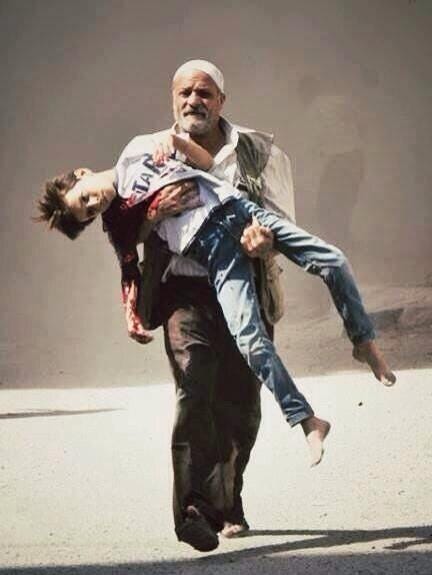
I’m not supposed to be me in the better version of this story — I’m supposed to be a man, maybe Jack, who can make an author notorious; or maybe that agent who pushed writers to go to extremes (esp. people who were already extreme); or best of all one of those original powerful SM leathermen who are dead or old now. Someone powerful enough to carry a young man’s body in his arms.
It’s not a sex change needed, but rather a cultural pattern they call “primogeniture” that goes back and back and back to when men were the heads of clans and castles, “landed”, in a time when men swore fealty to their lords by putting their hands under their master’s kilt to swear on his balls. No books.
Mr. Garnett
Two other deaths I’m processing this week are both men. One was my fourth grade science teacher, Mr. Garnett, who had been a sergeant in WWII. He was the only person to realize that my scowl was an effort to see. I lived in a blur but no one would believe my complaints until he simply called me to the back of the room and presented a vision chart. They say he was bitter late in life, but not why or how. Mr. Thuringer, who had lost a leg in combat, lectured us about the destruction of war and drove a knife into his wooden leg so we’d believe him. Then one day he disappeared.

Mike Burgwin
The second death was Mike Burgwin, my boss at Multnomah County Animal Control, where success pressed him to process his life. After we got to know each other, he’d call me up late at night and tell me stories, many of them terrible tragedies from his work as a cop. He was a big physical man, highly intelligent, with little formal education. I wrote about him on 3/28/16 prairiemary.blogspot.com. The memorial is soon so what I wrote is being edited for use. I look forward to hearing what others say, but I won’t be there.
T. writes with video, words read by Leighton, “Hypocrisy is my sacred lover and i suck his cock in old canoes/” Their work is not for the faint-hearted, the uninitiated, or the mommies except the ones who go to their son’s burial high enough to bear it. There is a community, but a shifting one, like a classroom or congregation. Still, it’s much bigger than anyone suspects, global.
“Anger is the new pornography.” It’s the old one as well. Dean. Brando. Pacino. “Father Knows best.” (Doesn’t watching it make you indignant? He was lying: he knew nothing, Jon Snow.) “Coronet Instructional Films.” Notice they just give instructions, not enlightenment or challenge. On and on and on, esp. on Friday afternoons when teachers are tired. All those classrooms with little chairs, accommodating the baby boom, boys obediently sharpening pencils (which can be weapons), seeming to be safe and happy.
These kids are the age when they don’t just attract abuse for crying and messing and failing to go to sleep. Now the sexual predators get interested, because the kid is old enough to ask why — “Why are you doing this?” as they ask in “Game of Thrones” and “American Odyssey”. We ask it all the time: why are you doing this? Because it’s so much fun to make you hurt. Because I can control you. Because it means I’m superior because I’m cynical.
from "American Odyssey"
There are escapes and compensations. Today the kids can slip away into tech worlds that adults can’t access. They can directly confront porn as extreme as it can get, crossing over into death. The boys in particular take refuge in movement: surfing, skate-boards, parcours. The adults object, “Oh, that’s too dangerous! Why don’t you go in for football where you will only get concussions or basketball where you will only blow out your knees? Or you could be a wrestler with a big important coach like Denny Hastert.” But the boys go free-form, and around here ride fast on horses, dogs running behind. Fathers say, “I know best. Get out of my house.” Around here you go stay with your auntie a while.
Dangerous is the knife that cuts both ways. One gets respect for beautiful danger, esp. if there’s singing. One can be a movie star. It’s a bit of protection, even in a time when as soon as the new “Star Wars” episode comes out, fans begin writing pornographic versions. It’s arousing. It’s a kick of adrenaline, the true addiction of our time.

Clever danger creates double-binds that guarantee results. Damned if you do, damned if you don’t. Tell about these semi-secret, sometimes marketable patterns, and you will be accused of knowing because of participation. (That was in “American Odyssey,” the movie I marathon-watched last night. The heroine survivor witnessed an American atrocity but the perps said she only survived because she was a collaborator. So much for patriotism.)
Don’t tell about the seething pit of violence under our society, and you are accused of being stupid, oblivious, uncaring. Nothing that can be cured by wearing a ribbon or even getting on the board of a nonprofit. So the first thing to do is accept the idea of being damned, but at least out of choice. Observe. Testify. Take the consequences. Which may be death, not even your own. Bitterly, bitterly, bitterly. But with love. Because you can.

Friday, March 11, 2016

THIS BOY WITH HIV


19th Century:  Pratt:  clothes and hair make the man.


1950's   A few generations later.


2016  Denise Juneau is running for the US Senate.
Her father was in one of my English classes in 1962.

When Colonel Pratt decided to make whites out of Indians, he had the idea that if they were cleaned up, given proper haircuts and clothes, and made to mind their manners, that would do the job.  Likewise, people tend to think that if they take a feral boy off the street who has survived on his own for most of his life and do the same cosmetic things, the boy will be grateful and become just like the savior.  But first the rescuers want his diseases cured or at least addressed to the level of chronic and noncontagious.  The problem is that the change involved in all that -- changes in habit patterns, internal molecular loops, and just general ways of being in the world -- are too much to address while still hungry, shamed, guilty, terrified, and essentially alone.  These are matters of identity and losing one’s identity will only cause panic and rage.  So it becomes a loop: I won't help until you want to be like me. 

One thing at a time.  Starting to take AIDS meds -- even assimilating the fact of being infected and figuring out what it means (esp. if you’ve been told it’s a death sentence) -- might be sort of down the list.  The FIRST thing is a trustworthy human contact when you don’t even know what that feels like, so you never look for it and maybe don’t appreciate it when you get it.  The person contacted must not judge.

Liz Taylor was not inclined to judge.

Consider that there are plenty of grownups who have the same problems as listed above; even the ones who live in “natural” African villages might not have a trustworthy human contact, which might account for ill-advised out-on-the edge sexual behavior.  There must be a high proportion of incarcerated people with no idea how to guide their own behavior and who will die before they ever find out.  There must be people who function only with constant professional support.  And somewhere there must be people who have their boundaries established, keep within the limits of their bodies and minds, live in a supportive community, and still (or maybe consequently) have more energy and insight to offer others.  The "nice" people still might catch AIDS.

The tragedy is that most diseases that can be addressed to the point of becoming chronic must do so in terms of behavior much more complex than taking a pill.  Just taking a pill on time and in the right amounts, just facing the diagnosis which is no longer death but still a lifetime ahead of monitoring and paying. Paying. Getting the meds (even at a free clinic), are an ordeal that presume no competing activities, like a job or even school.  It means stigma, that blood sucking leech.  One is forced into communities of oppression in the name of monitoring one's health, meaning constant blood, urine, fecal and semen monitoring, all of which are usually private.  They expect gratitude or at least obedience.  If you're not paying, they don't feel obligated to
provide privacy or nice manners.

It seemed so simple.

But not all boys who behave badly have HIV.  Not all nice boys who have done very little to break rules will escape HIV.  It’s a virus, an opportunist, and skips through the land like a forest fire, creating a mozaic of infection that is undetectable at first without deliberate testing.  It will be years before the HIV impact on the body may be detected, long after the point of contagion could be identified.  Only recently has it been possible to reduce the HIV viral load below the contagious point.  The good news is that what will control HIV will bring the body into homeostasis and good-enough health that will address a lot of basic needs.  The bad or at least daunting news is that some turnaround in emotional life and the personal power -- that even a boy has -- must be brought into alignment.  Art and community can do the job.

I’m the last person who ought to write about community.  I’ve threaded my way, trying, rejecting, pandering, finding a powerful protector, getting official certification of value, learning high theory and analysis, taking diagnostic inventories, querying family, making natural categories, embedded observing, and so on.  I’ve got bibliographies, actual books, saved downloads, printed out manuscripts (including typed and xeroxed), scraps of memoirs, genealogy charts — on and on.  But I still rarely go through a day without being mad at someone for not understanding me and what I’m doing.  I’ve studied organizational design and thought it was brilliant, but can’t get my house organized, or my time organized beyond writing most of the time.  Organizing cats, of course, is hopeless.

David Barr, effective early activist

But I have a kind of virtual community that includes fictional characters, figures of dream, real people I have never met, and the population of this town and area who all greet me by name though I can’t remember their names.  Some of these people I've known for half-a-century.  Boys with HIV are part of that world, some of them former students who are dead now.  Often the ones who were the best writers, the ones who ventured to the edge.   Natural leaders.

Terrierman, who blogs and lives near Washington DC, rarely recommends a movie.  This time he said, bluntly, “Sit down and watch this!”  It’s a movie called “Human” and it’s on YouTube in several versions, some an hour and an half long and some short.  Here’s the trailer.  http://www.human-themovie.org   This is or ought to be everyone’s community, both human and landscape-sized.  This ultimate community does not know itself and so this movie becomes vital.  Everyone speaks in his or her own language but with sub-titles.  Some are silent.  All are eloquent.

Francine, "Human" (from my cohort)

Sub-groups could create video testimony like this, maybe not so fancy.  But a place like here on the high prairie has as many wise and lived-in faces, as many love affairs, and as much mystical landscape as this film.  Our girls ride their ponies fast over long ridges with mountains in the background.  (That's my favorite section.)  These days cameras are easy to operate and there are local businesses that produce local vids. It only remains to think of it.

But this post is about boys with HIV, esp. HIV acquired by doing criminalized and desperate things.  They cannot show their faces because the stigma will follow them — faces are like fingerprints these days, the iris of your eye is a code that can unlock doors.  But anyone can record themselves if they have simple equipment and — more than education — the motivation.  This is the conviction that created http://real-stories-gallery.org/node/1143  and the groups that have derived from it (Cinematheque, Show Me Your Life, Smash Street Boys, and Shatter Boys UK).  These are ways to create community networks that wrap around the planet.


Boys are the demographic most easily discarded, esp. boys considered dangerous, contagious, destructive, and obstinate.  Maybe gay.  First we render them invisible because they are scary, then we throw them out of schools as ineducable, then we don’t allow them on the job market which almost forces them to join the sub-culture of the forbidden.  They have nothing to sell but themselves.  Luckily, that’s an infinite resource, constantly renewed.

Monday, May 04, 2015

A WORLD IN PROCESS


WHERE’S OMAR? TIME TO TAKE IT INTO OUR OWN HANDS?

It has always been true that the ability to create a whole and compelling world out of the scraps of information and experience that come our way out of family, travel, reading books, watching films and so on is the source and substance of the humanities. A person who can construct a world that mixes truth and imagination, in the way that David Simon did for Baltimore long before political tragedy forced the rest of us to pay attention, is a kind of artist who has the ability to focus, like an author or poet, obsessed by a wavering but always-there vision between reality and insight. But as we become more and more aware of how arbitrary life can be, and are repeatedly faced with the necessity of rebuilding lives on new terms, such a person — an “auteur”? — gets our attention.

More than that, an “auteur” often is embedded in a community that outsiders can’t know. He (most often) must manage boundaries: when to open them to secure understanding and protection, when to close them and run like hell for self-preservation, and how to keep track of them over time — because all boundaries change over time. The boundaries of communication have changed dimensions entirely.

In the last few decades, pressing the abilities of computers, the mainstream has created a statistical, granular, bureaucratic world out of advertising, secrecy, and surveys. I became estranged from my religious community when they did this: constantly surveying themselves to see what the majority wanted, proclaiming individualism at the expense of the community, presuming popularity is the key to meaning and growth in membership and money numbers is the definition of significance in world thought. The medical community questions patients, converts the responses to statistics, averages them, and then treats the imaginary case they have invented, entirely ignoring me sitting on the examination table with all my clothes on because medicine is no longer about my actual body. No one wants it.


I came back to the reservation where basic dynamics are still mostly human relationship close to the terms of survival, partly because the boundaries are geographic and therefore more reliable, though surveys on the ground may move them a bit, using transit and theodolite. Even here we still realize that no one lives in the “real” world, we all live in maps that we partly are handed and partly draw ourselves. There is no “real” the same as there is no “God” because humans have always lived in a self-constructed world, even before they had statistics.

“The Wire,” “Game of Thrones,” and “House of Cards” are all constructed worlds but coherent and vivid in a way that scrappy old everyday life is not. Religion used to perform that task — I mean institutional religion like the ones described in “Major Religions of the World” courses, which ignore anything different enough to be outside the prevailing dogma schematic. Or something like the mythology of patriotism, which is still alive in small towns. Sometimes.

There is a kind of person who has defined a world — partly by happenstance and partly by creativity which is only another word for necessity. To the outsiders, particularly those not educated to understand irony, ambiguity, rhetorics, pop underground cultures, unreliable narrators, foreshadowing, subtext, and jargons, this will be very upsetting and they will either demand explanation on their terms, or will set about stigmatizing and criminalizing it. You know — sex, drugs and rock and roll. But even that has sub-categories and internal worlds.
Such a sub-sub-category is unwanted boys. They become interstitial, feral, networked, messengers and accommodators in every place and way. Add the Internet to that and you’ve got a global explosion that no one quite realizes is happening. Those who admire science have long considered the impact of mutation and evolution as defined in a linear and progressive way. Onward and upward.

Physical mutation may support major insight.

Not so many have realized the importance of “horizontal evolution,” that is, the exchange of genetic code from one creature to another, sometimes nested in each other. Some are as minute as the migration of nuclear code from the nuclei of mitochondria in cells — which have always been considered subsumed ancient “cells” — into the nuclei of the main cell. Others are cosmic. Everything in-between — which we now can name and analyze because our instruments can directly see things we hadn’t known existed — everything is moving and changing. The old categories are gone. Indians aren’t what they used to be.

But to a boy unsupported on his own, nothing changes. Life is a trap, suffering obliterates everything else, the only hope is to shut down through drugs or suicide or to find someone who “gets” them without putting brands and bracelets on them. Envisioning and actually making what amounts to a virtual family in a virtual world, is an art form. In our time it can be a highly technical art form: videos, music, travel and performance, all transmitted like viruses without ever being quite put into words, created by interaction, not just pathways into the future but actual terms of whatever future awaits us all. We can no longer ghettoize them.

I’m talking about the community around Tim Barrus. For decades he has been a participant in communities from the Seventies' Dead-heads, Headstart, free-school, commune, social progressive movements. He traveled the horrifying arc of men-who-loved-men in an ecstasy of acceptance — then were thrown into an annealing cauldron of suffering — still met with love. He was in groups of photographers and performance artists, sensitive to the Peace Corps impulse to help the waves of displacement and famine in our times, and then the impact of drugs that can save lives and reorganize minds. Nudity transformed from obscenity to humanity. His “home” has been hot beaches smelling of iodine or darkrooms smelling of vinegar. Sometimes he’s been hurtling along asphalt on powerful motorcycles, others he’s been barely kept alive in a hospital bed. The time he loved most was climbing in the rigging of an old-fashioned sailing ship with a crew of lesbians. Oh, the stories!


The “through line” of his narratives is staying alive. It has been hardest to endure when boys die. Accusations of forbidden acts came from people who used media to destroy for profit.  None were at the level of felonies.  Unaccountably linked with two other writers, one a woman who fabulized her sex life and one who fantasized his jail time, the media invented the “terrible crime” of pretending to be an Indian. (Actually, his family tree goes back in the earliest days to an Indian called “Counselor.” But so what?) It was a culture war between imaginary elites, a slowly rotting “liberal” worldview that pretended it was generous, and an inquisitor’s license to force compliance — not with what was good and healing but with what would guarantee the inquisitor’s importance.

There are always a lot of people pretending to be Indians, some of them genetically but not cuturally qualified, as well as a lot of other people pretending NOT to be Indians whose DNA would spell “tribal”. This was at a time when people thought “publishing” was what defined the value of writing (or, failing that, at least a college degree, the MFA being invented specifically for this purpose). Claiming to be an Indian would make better sales, the same as writing a “memoir” instead of a novel would do the trick. Sales, of course, are Satanic, according to critics safely protected by tenure in universities. Writing books no one reads and that are only published by university presses are, of course, the conditions of tenure. But writing for profit is just so “whore-ish.” Oh, shudder.

In which Cochise was played by Jeff Chandler.
1950, considered a liberal breakthrough.

Now, of course, no one has to worry about publishing — you just put it on the Internet. If you’re going to need money, you ask for it on a “cloud-sourcing” platform. Anyway no one knows how to “publish” something that is cross-media. Cross-cultural . . . ? Live it. Art as life, life as art.

Thursday, October 30, 2014

TOM SHEEHAN: A TWO-GUN WRITER AND POET

Tom Sheehan

Tom Sheehan writes in two genres:  template Westerns and poetic encomium.  You could say he's two-fisted.  He writes novels as well, but those are long guns.

The short stories are mostly on www.ropeandwire.com.  The template is Fifties TV series lasting 45 minutes. The main character is going along.  He is observant, resourceful, and responds to need.  Something unjust happens.  After considerable trouble, possibly the use of weapons, the hero restores order.  The language is old-fashioned, frontier style, and full of poetry disguised as exaggerated folk metaphors.  Very often a boy is involved.  The setting is an integrated virtual world, coherent and derived from (mostly) reading or movies -- entirely believable in terms of the story.  It's like an excellent pocket watch that circumscribes a virtual world, then takes the back off to show the springs and cogs moving the plot along.  We know what will happen, but not quite how, so the puzzle proceeds.

As an example, I’ll just discuss the latest short story, though they all meet the same criteria.  “Chase Holman” is a boy who makes miniature lead soldiers.  He’s kidnapped and the narrator, a trapper named Edward Joseph Dundeen (“Edjo”) who is a Highlander and therefore a moral man, accidentally passes the kidnappers and their victim on his way to “Juice Slattery’s” place to sell the furs on his packstring of mules.  He says, “Juice’d buy a bucket of old grease from me. . .”  But he doesn't realize he saw a kidnapping.

When he gets to town, he learns about the crime. For the mother’s sake (Grace, wearing yellow, who fainted on learning of it so that she was lying there on her back with “them big yellow you-know-whats prouder’n any mountains we ever knowed."  She's elegant and gracious, maybe like Grace Kelly.)  For her sake as well as the generous reward, Edjo sets out to retrieve the boy.  That boy, even when rolled up in a rug and draped over a horse, had the presence of mind to drop one little lead soldier at a time for clues, each little soldier with a personality and role of its own so they become characters in the story.  At the end point, he drops two together outside the hideout of the kidnappers.  The subtext of the story -- which like all Tom's stories creates a virtual world complete in itself -- is the lead soldiers creating a strategy of miniature not-quite-scouts, a virtual world inside the author's world.

Edjo’s mind is on pie.  He says the boy will be back “in his Mom’s kitchen in a matter of hours, having three-minute eggs or a day-long soup off the back end of her stove, sure as shooting.”  Just before the shooting begins, the boy pretends to drop one last little figure and kneels to pick it up, giving Edjo a clear shot at the bad guys. “It was sweet and smooth as eating lemon meringue pie.”

Maybe the best way to explain the poems is to just include one:

The Tom Sheehan Family

BURIAL FOR HORSEMEN
(For my father, blind too early.)

The night we listened to an Oglala
life on records, and shadows remembered
their routes up the railed stairway like
a prairie presence, I stood at your bed

counting the days you had conquered.
The bottlecap moon clattered into your
room in vagrant pieces . . . jagged blades
needing strop or wheel for stabbing.

great spearhead chips pale in falling,
necks of smashed jars rasbora bright,
thin flaked edges tossing off the sun.
Under burden of the dread collection,

you sighed and turned in quilted repose
and rolled your hand in mine, searching
for lighting only found in your memory.
In moon’s toss I saw the network of your

brain struggling for my face the way you
last saw it, a piece of light falling under
the hooves of a thousand horse ponies,
night campsites riding upward in flames,

the skyline coming legendary.


http://sassafrasmag.wordpress.com/category/issue-3/page/2/  is one place to find “Born to Wear the Rags of War” -- difficult to find a better poem for Memorial Day.  It is printed as prose, but is surely poetry celebrating companions -- more than that -- blood brothers in the Korean War, each wearing the rags of war as they rest together where their various "fathers’ sperm has flung them" to defend a motley but beloved nation.  All Souls Day is November 2.

http://www.milspeak.org/Tom%20Rare.htm  is the location of more poems and insightful comment on them by Laurel Johnson of the Midwest Book Review.  Tom’s dignity, bonded friendships, grand sweep of history interacting with geology, love of strategy, and homely metaphors are appreciated by women in a way that other war poetry is not.  He has a classical mind, tenderly marching through the generations, seeing that he is a link between his father and his sons.


And then there’s this:

“A few years ago we borrowed $60K from a local bank to print a book not yet written. Ten pals each signed a $6k note. It was a book about our hometown, how we wanted to keep what was escaping us, the memories, the fragile memories. We paid the bank off in five months. We sold 2500 copies at $42 each and have a self-sustaining account for scholarships for Saugus High School students. Four kids have been helped in college. It's the John Burns Millennium Book Associates Scholarship. John is 89 years old and was coeditor with me; he was an English teacher in the Saugus school system for 63 years and I know hundreds of people who say he was the best teacher they had at any level. And we wanted to keep our memories intact. The book was called, A Gathering of Memories, Saugus 1900-2000 .”

This is a way of life that has somehow slipped away, or maybe it’s just that our attention has been diverted by school shootings and football players who are rapists.  People in this Saugus life have histories that go way back, know the big sweeping foundational literary works that Europeans and Americans used to share with pride, and use their rather abundant personal resources to celebrate their heroes.  

But I snapped at Tom when he sent more poems, signing off with the advice to “enjoy.”  “Enjoy” is for pie.  This work is not bakery goods: not sweet, not consumable, not for easy praise, though he admits he’s a “praise eater” who hopes to be told it’s good work and will even go out of his way to find someone (like me) who thinks heroes are good, old friends are a worthy subject, and Massachusetts is a place to live and celebrate.  They make movies about such lives with grand old actors -- Paul Newman or Clint Eastwood -- playing the lead but they are never supposed to be poets.  “Thirty-five years at Raytheon Corporation as a writer and analyst” with occasional forays into the wild world of the West or even his family roots in Ireland is a life I can’t even imagine.    Well, I can -- but I imagined it was gone since we're long since past the Fifties.  

http://www.inkpots.net/Interviews/Sheehan.html  My hopscotch jobs and aborted careers don’t add up to anything vaguely like Tom’s world, but somehow we meet in print and in an appreciation of this tumbling, story-generating planet.  It’s not a matter of enjoyment because sometimes it’s a racking pain nearly unsurvivable.  Tom doesn’t deny that, meets it with dignity, family, and fine words.  That's praiseworthy.  But would Robert Frost say, "Enjoy?"

Saugus, Massachussetts