Showing posts with label diabetes. Show all posts

Thursday, March 31, 2016

THE WOMAN WITH ROSY CHEEKS AND ITCHY EYES


Not long ago I visited my eye doctor. I like him much better than the one who preceded him, though that doctor had a reputation as a miracle worker when it came to cataract surgery. I complained to that doc and also to the present one about my eyes being bloodshot, itchy, and “tired.” I thought it was from being on the computer so much. Last summer my eyes were such a bother that I went back on an emergency basis. That time the farmers were burning fields and I decided that was the problem.
I worried that I might have damage from my diabetes, because I slip off my compliance regime sometimes. I’m having increasing trouble with forgetfulness and bad temper. It’s a symptom of age. I’m 76. But also I’m reading about atrial fibrillation — arrhythmia of the heart and how it can make the blood turbulent enough to throw off tiny clots. The clots could mimic transient ischemic attacks, or maybe they ARE transient ischemic attacks, which are little pinches in brain function. I had interpreted my diaphragm as fluttering. This has nothing direct to do with my eyes, but if I’m too forgetful to take my pills in spite of sticky notes here and there, then the eyes suffer. It’s the beginning of the final unraveling.
Prince Harry of England -- Rosecea?

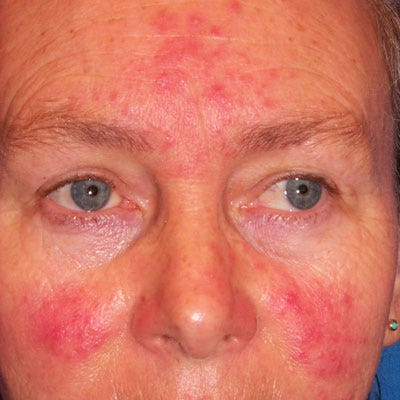
The anger comes from impatience but also from losing my temper over the doctor situation, even with my well-liked eye doc. More and more a visit means some teenager goes down a checklist and not much more. Then at the end of the last examination, the Doc asked if the pink cheeks and scaliness in one spot might be rosacea. Sure, it is. I know the diagnosis because a few years ago the GF Clinic’s one-time dermatologist diagnosed it, but he didn’t explain or prescribe.  Never mentioned eyes.  He was a very weird bald guy who left in months because patients complained. I’m beginning to suspect that Montana is a dumping ground or refuge for docs who’ve been in trouble. Rosacea is so obvious that even a teenager could see it.
My cousin also has pink cheeks — we’re Scots and it’s hereditary in part, though no one really understands rosacea. In all the checkups I’ve had, including the one that was double-teamed Physician Assistants, billed as a “free” Medicare checkup (which it wasn’t because I had to pay for lab tests — not announced in advance), neither really looked at my face. They just looked at the lab printouts, which they didn’t have during the physical exam. They never met my eyes.

The treatment for ocular rosacea is hot washcloth compresses with baby shampoo washing immediately afterwards. But the docs have always acted like tap water would kill me. I’m allergic to one of the eye exam chemicals and keep my eyes from swelling shut by splashing them with tap water, but they insist on using squeeze bottles of sterile saline — and billing me, no doubt. (There’s also an over-the-counter equivalent for rosacea washes.) It never quite does the job, but instead of arguing, I just go down the hall afterwards and wash my eyes in the bathroom. (It’s Unisex, incidentally, and so is the one in the supermarket.) But what do street people do?
Anyway, I didn’t know that rosacea affects eyes until the doc told me and he simply pressed me to try the new dermatologist at the clinic. He didn’t explain in detail. Thinking it was like the brilliant idea of selling glasses in spite of the new cheap internet competition from China, and also because my insurance now requires a co-pay of $45 which would buy three cases of cat food, I put off the idea of making an appointment. Even with low cost gas, it’s a long drive to Great Falls and the ancient pickup makes funny noises.

It's got Clinton by the nose.

Yesterday I was trying to restore order around here and realized I should learn more about rosacea, so I googled. Holy catfish. This is serious. In the advanced stages it’s like Bob Scriver’herpes keratitis in 1962 that just about blinded him and pulled us into a close relationship very quickly because he really needed help. The treatment for ocular rosacea is very simple in the beginning: using a warm compress to loosen whatever is crusted on the eyes and then using baby shampoo to wash the outsides thoroughly. Artificial tears up to four times a day. As things get worse, the tear ducts might be blocked to divert the tears across the eyeball. The same meds that miraculously saved Bob’s eyes is used for advanced rosacea and the often accompanying eyelid inflammation: dioxiuridine.
If the rosacea increases and maybe leads to the inflammation of the eyelids (called blepharitis — I knew “itis” means inflammation but not that my eyelids were “blephs”), then things get more serious. Around here eyes suffer already because of bright prairie light with a high ultraviolet component and the wind carrying particles. Maybe we should all wear goggles. The Blackfeet at one time early in the 20th century had a terrible plague of trachoma, which is a chlamydia infection of the eyelids, rather easily cured if you know what it is and what to do. But people did NOT know what to do and there was a lot of blindness. Other tribes called them the “one-eyed people.”

It was the notorious Doug Gold who had an eye doc friend back in Pennsylvania and brought him to the rez. The doc diagnosed the problem, taught the Golds and a few other responsible men how to diagnose and treat it, and resolved the epidemic. What would they have done about ocular rosacea or were they genetically immune? Do trading posts carry baby shampoo?
Folks love villains and manipulate information in order to control the public reputation of their competitors so that everyone agrees with them. A person with the prominence and control of a doctor is always vulnerable to rumour and accusation. In the early days Doug himself was considered absent-minded, the proverbial professor, but his father James Gold, the Presbyterian missionary in Browning in those days, struggled hard with depression and finally had to be sent to Warm Springs.
So far, attacking Doug, who started the school system in Browning, is based on his mistaking culture for intelligence and drawing the conclusion that tribal people were genetically dumb, accepted wisdom in those times. If one culture accrues information and then tests another culture on their knowledge of it, naturally the second culture (which has its own information and world view) will not score well. Yet people cannot get it through their heads that an IQ test only measures how well one does on IQ tests, all about things valued by people who design IQ tests. They are PRINT culture, never ORAL culture. The more assimilated the Blackfeet become, the better they do on the tests.
If a doc is a little overambitious, a little careless, a little pressed for time, the consequences might be pretty serious. But it begins to look as though the culture of many doctors has left idealism behind and gone to greed. How do we pick our way through the problem? Since public perception always has a political element and is rarely self-correcting, any dynamic of suspicion and resentment can be exploited. Reputation counts large. GF Clinic needs to think about theirs. By withdrawing proper support staff from their doctors and adding boutique profit-makers, they are diminishing their professional standards.

I AM print cultured. I’m also hip to journalistic sensationalism about greedy doctors and the rather scandalous manner in which they have delegated their management and ethical self-policing to managers expected only to increase profit. I can defend myself in part through this mechanism of the internet, but also I’m old enough to remember doctors who used to take my hands, look into my face, and try to get a sense of who I am. It’s not impossible, even now. I recently saw a vid of a doc gently interviewing a squirming pre-adolescent boy who had been living on the street, doing sexwork. It was quiet, respectful, and revealing — even healing. That man was a true doctor.


Wednesday, January 26, 2011

YOU ARE WHAT YOU EAT -- EVEN DIABETICS

At last month’s Town Council meeting I raised everyone’s consciousness by yelling at the Mayor, who is a woman from Seattle used to corporate culture.  What happened was that she tried to soothe my ruffled feathers (I only have to look at her to puff up) by offering me a luxury chocolate truffle.  I said, “Thanks, no.  I have diabetes.”  
She said,  “Oh, but these are really expensive fine high-grade chocolate.”
I shouted,  “Are you deaf???  I have diabetes.”  
She hadn’t registered at all.  She’s a tiny, um, “slim” person.  In her experience the little social routine is one says “I’m on a diet,”  The other responds,  “Oh, surely just this once, a little wouldn’t hurt you!”  Games people play.  Luxury is important to her.  “Treating,” obligating, people is what works for her.  It’s a script.
I’m not on a script.  I’m saving my life.  And I’m in a town and next to a reservation where lives are being destroyed daily by the way they eat and treat.  I expect that processed foods, baked goods, sugar-saturated foods, empty foods, are beginning to rival the damage done by alcohol.  It took a long time for people to fight back against booze and I expect it will take even longer to change the context that creates diabetes.  In the meantime, I’m sure that people are still offering to buy a drunk a drink.
I begin to see how many levels are involved.  Today at Blood Sugar 101, the topic was the phenomenon that people take their insulin, as prescribed, at mealtime in order for the right dose of insulin to be there to deal with glucose.  But their blood sugar takes a nosedive, as though they hadn’t eaten, and then at some unpredictable moment an hour or several hours later, suddenly goes up but out of sync.  Evidently what’s happening is that the valve at the bottom of the stomach clenches, so the food doesn’t go into the small intestine where it passes through the walls into the blood stream.  Then finally it relaxes.  There’s a valve at the top of the stomach as well and it is not served well by food sitting in the stomach.  A loose valve at the top of the stomach lets acid-soaked contents all the way up into the throat and mouth where it dissolves your back teeth, upsetting your dentist.  GERD, they call it.
So that’s a mechanical problem.  Being constantly offered candy and baked goods as a matter of hospitality and social good will is another kind of problem.  The theories about what actually happens during the interaction of glucose and insulin, how nutrition gets into the cell and whether the cell is resisting the action of insulin is a biochemistry issue.  Then there are things to think about in terms of heredity or life-style.  Also, the human body was designed to be on the move all day and many of its systems -- even the pumping of blood -- is meant to interact with that.  People have saluted this principle to the extreme of putting treadmills under their standup desks and walking while they work.  (No word on whether they actually generated enough electricity to operate the computer or keep the light on.  At Heart Butte in the high tech classrooms the body temp of active kids was computed as energy.  If they were sedentary while watching a movie, the lights came on to compensate for the lack of human radiation.  Very inconvenient.)
All the pervasive contextual problems -- like food distribution systems, the ability of people to home-grow their food or find things to eat that are produced locally,  federal subsidies for all the wrong foods (do you think anyone in this village that depends on grain crops is going to fight them?), the genetics of grain -- all have to be changed gradually.  Poor people are fat because rich people are increasingly health-conscious so the surplus foods that sustain commodities and food banks are the things not eaten by the rich: cake mix, frozen cookie dough, prepared dry cereal, etc., high-salt processed cheese.  What IS locally good is the occasional donation of meat.  One woman, not an Indian, told me that she occasionally had to eat ONLY meat for a few days to keep her blood sugar down.  
While society either slowly reforms or implodes itself, one has to buck the tide a bit for the sake of personal survival.  I assume you have a computer or you wouldn’t be reading this, so at the end I’ve listed some of my sources of ideas.
The main thing to remember about diabetes on a personal level is that NO TWO PEOPLE ARE THE SAME.  Every individual has to investigate with the help of an accurate blood monitor, some careful record-keeping, and habits you can’t allow to be challenged if they work for you, but no hesitation about experimenting now and then when something sounds promising.  Diabetes II in particular seems to be metabolic failure of a whole interacting system, not just insulin which can be erosive as well.
At the most recent town council meeting, the FORMER mayor brought candy from the Parrot in Helena.  I love the Parrot.  Looking me in the eye, she told about how she went into the back kitchen to get freshly made hard candies.  She waved them around but did NOT offer me any.  This is an old Montana game people play:  testing, just testing.  Not QUITE punishing.  She IS diabetic, among other things.  I smiled.  It was a very exciting meeting.  I’ll tell you about it later.  They demanded silence -- but it was a public meeting and I’m only giving them a little slack.
This is the state of the art, gold-standard, believe-it-if-you-see-it-here, website.  Jenny is NOT conventional or mainstream and far more fussy and into detail than you probably need, but this is what I go by and it works for me.
This guy produces a LOT of information and he seems to be pretty reliable, though he sometimes reminds me of the late beloved Jack LaLane in his level of enthusiasm and encouragement.
If you respond to curiosity about food and a very broad interest in it, this is pretty absorbing.
This one is okay but a little slick.  Don’t be captured by “products.”
It’s about fat (lipids) and the writer is a veterinarian.  Technical stuff.  You might need a medical dictionary, but I’m always fascinated.
Fats and glutens. Celiac.  A biochemist.
There are a ton of these websites out there.  Find your own “sweet spot.”  It’s time for me to fix supper:  a can of spinach with two eggs poached on top.  (Uh, the can is removed, obviously.)  A sprinkle of garlic salt.  You don’t have to be THIS ascetic!  But I do.  I did add a little parmesan cheese and butter.  I have not had eye damage (which is how I was diagnosed -- diabetic retinopathy) since I began to eat this way.

Thursday, June 25, 2009

SWEET SORROWFUL SUSPICION

At last -- I thought -- I’d gotten to the point where my diabetes regime was predictable, practical and effective. The doctor at the Valier Clinic hadn’t turned over for a while, the very strict pharmacist in Cut Bank had moved on, and all my statistics were normal and happy.

Then suddenly I was told that all my prescriptions were blocked until I scheduled an appointment with the doctor. The good a1c I’d had didn’t count.

Without my prescriptions -- though I take few pills -- my regime might crash and burn. But I really resented being pulled in and suspected it was a money-generating scheme for the clinic. Remember that I had worked “backstage” as a ward clerk with this clinic and knew that “benevolence” was not their middle name. Their first, middle and last names are all “PROFIT.” So, kicking and screaming, I went to the clinic this morning, belly-aching and making accusations and spreading paranoia on all sides like a flu virus. The others were much more docile, because that’s the way is in Valier. You’re docile or you’ve somehow got a grip on enough money and power to throw your weight around. This is so true that if you’re not docile, everyone assumes you’ve got some secret source of money and power even when you don’t.

But no one had told me not to eat, so I couldn’t have the blood workup that was the reason for me being there. And it was NOT the doctor who had called me in -- it was a state agency that had decided to “survey” the state’s diabetes cases through the doctors. I don’t know which state agency. I don’t know whether they were covertly checking for illicit drugs. I’m told Medicare will pay for it, a nice little raid on the public purse, but I’m not told how much the survey would cost or what the goals and parameters might be. Nothing has been in the newspaper.

Big Health Care doesn’t have their fingers on the pulse of this state, they have their two hands around the state’s throat. It’s a major industry. So why all the secrecy or did I just not see the stories or recognize them? Or was some Helena agency hiding from the Big Health Care forces? Diabetes is such a GREAT source of income: something everyone has, assumed to be all their fault, and that people themselves believe can be treated with pills alone. They pretend to diet and exercise, but who has time? Want sugar, take more pills. Anyway, the effectiveness of the diet and exercise is in the twenty years BEFORE the diabetes is diagnosable, so the motivation is just not there in the most crucial years. I predict that diabetes will become a bigger money-maker for the pharm industry that even AIDS or anxiety.

But now I’ll switch sides. How can we drum up support and education for the public’s own health care of their own bodies -- let alone the massive changes that need to be made in the restaurant business, the grocery business, the ag business, the insurance business -- even ignoring the growing conviction that diabetes and other things are caused by environmental pollution, plastics, and food processing chemicals, overuse of poisons -- without knowing any objective measurements?

After all, the state’s humanities people suddenly became convinced by a biz school faculty member that if they only knew how much money everyone made with arts and crafts, the legislature would come to its senses and fund a few basic things like orchestras and museums. Of course, that was before the economic infrastructure collapse, but I didn’t notice any change of heart on their part. Still, was the principle wrong? (I still think it was wrong for art, but maybe right for health. But isn’t art healthy?)

The clinic offers a support group now, but that’s not what I need. What I need is a source of unadulterated food. Another case of fiddling around on the edges of a problem instead of confronting it.

I’m aware that some diabetes assumptions have been shot down now that measurements and cellular knowledge is so much more precise and powerful than the previous equation of “sugar + insulin = health”. In its place is a complex of things that can go wrong with the cycle of metabolism from resistance in the cell itself to antibodies interfering both with the production of insulin and the nature of it. Now there is Diabetes I, people who produce no insulin because the Isles of Langerhans in their livers no longer function; Diabetes II which is more a matter of cell resistance; something called LADA which has to do with autoimmune phenomena; gestational diabetes which is triggered by pregnancy; and so on. The numbering idea stopped with Diabetes III which no one understood.

I learned something interesting, which is that when doctors are given information in conferences or journals, the study is now ranked from “this is only an idea with no evidence or research,” through “this has been studied but the results are not conclusive,” to “this has been studied well for a long time and the results seem convincing.” One of the hallmarks of science is that the case is NEVER closed. New theories and methods turn up new evidence all the time. The best doctors are the wisest in terms of the big picture, not the ones with the longest list of meds.

I did decide to have the blood panel. I don’t need to worry about illicit substances showing up -- not even nicotine. But I’ve been taking metformin for several years now. One is supposed to have regular blood panels for liver function, because research shows some livers can’t handle it for long. Oh, yeah. No one remembered that until now. Too much distracted by the ghastly consequences of diabetes: foot amputation, blindess, kidney damage and for many late middle-aged women, heart flutter that throws clots causing heart attacks and strokes. Too much fear. Not enough thought. I watch the consequences daily in the obits.

I don’t need threats from my doctor or the pharm industry. I beg my friends not to slosh Roundup all over their yards to get rid of weeds. They do it anyway. I know how the doctors feel.

Thursday, December 04, 2008

JACKSTRAWS: Native American Blood

“Hopi Tribe Asks for Blood Samples of All Scientists Studying Native American Blood.” The hope is to find out whether this category of scholars have a vampire gene or what. “We had thought to take mirrors around to their offices to see whether they had reflections,” said the chief. “But that much travel would leave too big a carbon footprint on the environment. And we are very protective of Grandmother Earth.”

Not really. That’s a down payment on April Fool’s Day, but it sort of makes vivid the issues raised by an article entitled, "Whose Blood Is It?," by Scott Jaschik. December 1. 2008. Copyright 2008. Inside Higher ED. All Rights Reserved. Full Text Available At:
http://www.insidehighered.com/news/2008/12/01/blood

Jaschik says, "The basic concept of informed consent in research is straightforward. Those ethics issues may be about to get a legal airing, following a decision Friday by an Arizona appeals court to revive a lawsuit by a small Indian tribe against the Arizona Board of Regents and some researchers involved in the use of blood collected from the tribe. Tribe members consented to the blood being used for research on why they may have been experiencing high rates of diabetes. But they charge that some of the studies conducted with their blood — in some cases by researchers who played no role in the original study, or its informed consent protocols — violated their rights. Some of the additional research challenged the tribe's religious beliefs and members say they never would have contributed to such studies…"

Curiosity about Native American body parts, including bones, scalps and DNA, have been hot topics from the very beginning. In the forties blood type grouping indicated that Native Americans were of Asian descent, which was not politically happy news in two ways: one was that we were at war with Japan, treating Japanese-origin citizens to property seizure and sequestered camps, to say nothing of prejudice and hostility. The other was that the idea of Native Americans having arrived by migrating across the Bering Straits has been used to devalue their status as First Peoples by implying that they were no different from the Euro-immigrants who arrived recently, except earlier.

Beyond that was the preoccupation on the part of Euros with blood quantum as defined by provenance, that is, knowledge of parentage, before there was any ability to analyze blood types and presently actual DNA code. Euros place heavy emphasis on inheritance and legitimacy because what’s at stake is property and status: the sons of kings make out much better than the sons of peasants. Then there’s the question of slavery: one person could own another person, depending on the inheritance of skin color. The “owned” people could be hunted down like any animal and treated as viciously as the owner wished, even if the slave in question had been produced by intercourse with her mother's owner and was half created by the owner’s DNA. Paternity could not be legally proven until recently when analysis of DNA has revealed that even presidents were not above such behavior, though the evidence is found generations later.

So blood is a source of hypocrisy and oppression, except that blood has also been elevated to the status of mystical relationship in the supposed theory of “blood brotherhood” when a white man (always a man) and a red man mingle blood produced by a minor voluntary wound. And since DNA is often found through the analysis of blood, it has taken on a metaphorical relationship, though DNA can also be found by analyzing cells swabbed from the inner cheek or maybe hair. No one talks about “sacred hair ceremonies” or “cheek cell brothers forever.”

The accusation often made against full-blood tribal members by mixed-blood tribal members is that the full-bloods are in-bred. At the same time hopeful people shell out hundreds of dollars to have their blood analyzed in hopes of discovering once and for all whether they are Native American and even to what tribe they belong. The chain of assumptions that the profiting companies make leads them to some strange findings because the suggestions are based on alleles, or partial sections of code. (A Lebanese gentleman might be startled to discover he is Navajo.) The other set of assumptions is about tribes: that tribes are like animal species that don’t mix and have distinct borders, when in fact tribes are more like religious denominations based on affinities and location, what language is spoken.

Maybe the most recent issue has been about money (as though they aren’t all about money in some sense). Since DNA is a code, that code can be valuable and to some very limited extent can be used to create molecules that are possibly medicinal as well as diagnostic and can be patented. Someone can own the code in your blood, without giving the generator of the code any compensation. Many researchers use cancer cells taken from patients decades ago and worth a LOT of money as they have been analyzed and preserved by laboratories.

Like effective medicines, once informed and rigorous protocols are used to generate the original substance, it can be used for purposes not specified in the original agreement. So the Havasupai tribe, whose genetics have been limited by the walls of the Grand Canyon, are of major interest because so many have diabetes. Thus they willingly allowed blood samples to be taken. But then those blood samples were used, without permission or even informing the tribe, for a study of schizophrenia. The slippery slope is that the researcher, who is using only 200 samples, will somehow assert that this tribe carries schizophrenia the way the crowned heads of Europe (definitely inbred on purpose) carry the inability of blood to clot. This quickly becomes “all Havasupai are crazy.

Now the Havasupai, justifiably paranoid, have gone from trusting doctors to avoiding them, since it is unknown whether wearing a wreath of garlic at medical exams will keep them from stealing your blood. And the researchers feel that a stake has been driven through the heart of their studies. My favorite quote in this article is the clincher: Jonathon Marks, an anthropology professor, says that anthropology depends upon cooperation of the groups they study, not so much for legal reasons as because “if we treat people contemptuously, anthropology disappears.”

Well, Mr. Spock could have told them that. Even Captain Kirk had that firmly in mind.

Thursday, November 20, 2008

BLOOD RELATIONS

It’s pretty obvious -- though some resist knowing -- that AIDS is a concern for all of us because anyone (man, woman or child) can be infected, because the economic consequences of whole nations losing generations of parents, because the cultural loss when the makers and storytellers die are human losses so subtle and yet so devastating in their consequences that human civilization is changed. Pandemics like AIDS are the consequences of war but also the causes of war: they make the wheel of death go round. In Somalia we see the effect of a nation that has collapsed. As a lawless haven for pirates it has has basically removed the Suez Canal. That’s only an economic toll.

There is a direct relationship between a boy in Italy or Paris with AIDS and an old woman in Montana with Diabetes II. Both of us are constantly blood testing and watching our scores: theirs for certain cells and mine for blood glucose levels. We know these are potentially fatal conditions: an HIV-damaged immune system allows all sorts of invaders from cancer to pneumonia. Disturbed metabolism feedback loops like Diabetes also mean vulnerability. When I was diagnosed with Diabetes II, my blood glucose was over 300 (three times normal). At night I would wake up with my heart fluttering, which throws clots that cause strokes and heart attacks. We know that we won’t just fall over neatly dead. AIDS means a very long struggle and Diabetes II can mean blindness (it was my eye doctor who first diagnosed trouble), foot amputation, kidney failure. The media brandishes all these potential consequences at us as though that were helpful, as though we developed these problems because we wanted to, were somehow to blame.

Both a boy with AIDS and I with Diabetes are likely to have issues and attitudes to work through, not least of which are tests of those around us to see if they will support or abandon us. In some cases blood relations will attack us more harshly than those not related, maybe because of fear. The relative anonymity of the Internet and the safety from violence (except verbal) or contagion (except emotional), means we can relate to each other. Boys have the restless and intelligent youth I used to meet in the classroom; I have the years and years of stories and the ears to hear theirs. Gender doesn’t matter much.

Boys and old ladies can be romantic, by which I mean they are both inclined to take chances and tell stories, to make the grand gesture. (“Roman” means story, as in “roman a clef.” Romances are not always pretty.) There have been a few popular literary portraits of the boy/old woman connection. The personal angle of this is that I had two younger brothers and was taught to “take care of your little brothers” though they resented and resisted as much as they could and my methods were dominating. At least on the Internet I don’t have to worry about classroom discipline. On the other side, well, maybe they'd like to have a granny.

Both demographic categories are targeted by major pharm-corporation forces, who use their drugs in a manipulative way to make money and even to affect politics. They have joined the military-industrial complex to exploit the population with fear-marketing. AIDS patients must carefully monitor a formidable array of pills in a very precise regime. I remember sitting next to a Canadian Unitarian minister who had AIDS and used a little pill box with a “brain” that prompted him when to take what. It seemed as though its little signal was always sounding. International organizations and publishers unite to try to convince diabetics that they must have special foods, special shoes, new kinds of drugs when a simple return to the diet and practices of my childhood are enough.

Boys and I have a lot of religious questions that go far beyond convention and not just because we think about death. Since religion -- particularly a perversion of Jesus’ Christianity that twists it into pre-Abramic human sacrifice terms -- has been used to punish boys with AIDS. I think it is the privilege of an old woman with a religious studies background to call that whole mock-institutional point of view into question and ally herself with science, particularly the new scientific paradigm of relationship, process, and change, which can also be a new religious paradigm. Perhaps that can spare a boy or two worry about being damned. Call it a ministry.

Old ladies and adolescent boys are two demographic groups not normally considered “at risk,” but this is an oversight. Neither is able to quite make an independent income, so both are dependent on others to some degree. And I begin to think that both are victims of global phenomena: boys having AIDS imposed upon them and old ladies discovering their internal systems have been compromised. AIDS is a disease and Diabetes II, I’m thinking, is a response to too many strange man-made molecules floating around the planet (though the experts say it’s being fat, craving sugar, sitting too much).

Ultimately, both of these phenomena are due to overpopulation, overcomplexification, overinvestment in extending humans in every way possible without regard for consequences. We are destroying our own ecology, inviting microorganisms that were previously confined to small areas, changing the substances our bodies use, and still arguing about whether or not we’re warming the atmosphere and acidifying the ocean. Our social world is changing as much or more, because the economic factors that supported nuclear families -- like well-paid jobs in the auto industry -- are collapsing. We’ve overextended our financial arrangements to the point of disaster. Everything is connected, everything is changing.

But this is good -- even though hard on boys thrown out of their homes and old ladies scraping by in small towns -- because we are now being forced to the point of realization. I monitor my blood daily with my little machine, the AIDS boys monitor their blood with the help of clinics, and the world must also monitor its systemic indicators, the life-carrying feedback loops that keep the whole planet functioning. Blood has been equated with oil and with diamonds, but that’s a Hollywood conceit. Blood is connection, blood is change.

Sunday, September 07, 2008

PRIONS. WHAT THE...?

When I get tired of worrying about money (which appears to be one of those endless loops anyway, mostly because my basic assumptions may be wrong), I worry about the burgeoning problem of bodily disorders based on the assumption that the world is a continuous sheet of code in time, place and substance. (I also think about theology based on this assumption, but it doesn’t worry me -- in fact, it’s a source of reassurance, a kind of repeated assurance that what is now will always exist and has always existed in some form.)

To come back down to earth (my ex-husband and my best former boss both used to say, “Get your feet on the ground!”), Petunia my neighbor came over to see whether I could find out anything on the computer about what is killing her close friend. At first they said she had a blood clot in her brain and inserted a stent to hold open an artery. Now they are saying she has a disease that starts with a “P.” Petunia, who has macular degeneration so can’t write things down, had learned to spell the word which is short anyway. Prion disease.

Petunia’s husband read her the long and rather technical download I gave her from Wikipedia. They tried to puzzle through it as best they could but she still had questions, which I was pretty hard pressed to address. Anyway, at this point no one could answer them for her. The first time I Googled “prion,” I was still back in Portland in the Nineties and there was almost nothing known about them. This was when the first publicity about “mad cow disease” began to hit.

To put it short and crude, prion disease seems to be a mysterious mis-folding of proteins into something that has stopped being a viable part of the constantly transforming feedback loops of a biological being because it is stuck. It is “polymerazed” into something so stable that burning, radioactivity, standard chemicals, just don’t faze it. In terms of my little wood-burning stove in the garage, it makes “klinkers,” stuff that’s left over after the burning has happened. (I guess actually it’s a coal-burner’s term. In childhood I woke every morning to the sound of our coal furnace having its grate shaken to knock the klinkers down out of the way of a new fire.) Hard ash.

And it’s a hardass kind of problem: mad cow, scrapie in sheep, maybe Alzheimer’s, chronic wasting disease in deer and elk, and other mysterious conditions that show no infectious agent, no organ failure, just a stuck brain. Kuru, the cannibals’ disease from eating human brains, is one of the more colorful versions and challenges the idea that it’s a “modern” disease that comes from our changed environment -- since those tribes were talked out of cannibalism and given can openers.

As it turns out, Petunia’s friend and her family had prided themselves on eating lots of venison and elk, partly because they liked hunting, partly because it helps with the money, and partly because they believed it was healthier. People don’t eat the meat, have symptoms right away, and then fall over like the victims of poison mushrooms or death camas. Rather the malfunctions of little cells accumulate until the whole system hits critical mass and everyone notices that something is very wrong. A healthy immune system cannot get rid of prions. Cooking, very high temperatures, bleach -- all the standard household sanitizing measures -- do not work. It’s even hard to test for the stuff.

In the laboratory there are measures that can finally destabilize the interlocked molecules of the protein and disassemble it. But no one so far can figure out how it works. It doesn’t seem to be “alive” in the way that creatures we know use their nucleus information to manage what a cell does -- a tiny entity that’s much more active than we ever imagined until we developed instruments that could watch it block entrance of some things, open gates to other things, change docking ports on its surface, rearrange structures of storage, metabolism and transformation in internal sub-cell structures.

At the same time as I’m looking up “prion,” I’m getting material via a sort of chain-letter network from people who monitor protected high-tech medical journals and newsletters and translate results for the rest of us. Most recently posts have suggested that bisphenol-A interacts with leptin, causing the metabolic dysfunction that we call Diabetes II. (This stuff is in the linings of cans, so watch out, you folks with can openers.) Another suggests something similar pertaining to the chemicals used in children’s nightclothes to make them flame resistant. There is a host of manmade chemicals associated with polymeres and carbons (which is the base of organic life on this planet) as well as many “tweaked” hormones used as pesticides, herbicides, growth promoters and the like. That is, we have produced many molecules by now that are distributed everywhere in our environment -- like in the breast milk and livers of polar bears -- and that we cannot avoid ingesting. They are just a little bit off, not quite normal.

Many of these are prohibited in other countries, but not here because our political system protects big spenders. (Am I paranoid? Well, I watched “The Constant Gardener” last week, and that would make anyone paranoid. And it didn’t even involve the USA.) Anyway, it’s a fool’s assumption that national borders mean much to chemicals which travel on the wind, in the water, in products -- everywhere. So it’s not ridiculous to assume that Petunia’s friend is dying at the hands of some politician tolerating a desk jockey pushing bench chemists to produce new products while not funding extensive testing or government supervision so as not to interfere with CEO income. And there’s no way to simply abstain.

In China or Russia or other manufacturing-intensive economies, life expectancy is dwindling but incomes are growing. I seem to have this near-unconscious and not particularly rational conviction that to be rich is to be “sick” or otherwise doomed in some way, that it undermines judgment and morality. When the prions finally get to reproductive success (and you know the stories about frogs with weird anomalies as well as I do) then the problem will be solved because there won’t be any more people making new skewed substances. Anything that evolves a way to get rid of prions in their systems will survive and repopulate the planet.

Of course, we can jump the evolution queue by inventing things that un-do prions, breaking up the klinkers. But what it it turns out to dissolve proteins in general? Or some unsuspected keystone protein that brings the whole biological carbon-based unit to dissolution? Maybe I’ll go back to worrying about money. But, you know, it seems to be connected.

Tuesday, April 22, 2008

DOES YOUR MITO LEAK RADICALS?

Okay now, pucker up for some biology/chemistry/genetics. That means a lot of acronyms. Might want to get a 3X5 card to make a little fudge list.

First, you know about cells. I assume you know that most cells have a nucleus, which is the double-helix computer, the brains, the game-plan, the building instructions that in the aggregate create a human being out of an ovum and a sperm. The biggest single cell you’re likely to see is a hen’s egg. The sperm you’re likely to see right now is pollen. (My cottonwood is going to put out little tassels of red sexy stuff before it gets around to leaves.) Here’s the main thing you need to remember: the ovum (female) comes with the “house” and that includes the nucleus, except only half the game plan is there. That’s why an ovum is big and the sperm, which must go into “inner space” like an astronaut, is basically half-a-nucleus with a propelling tail. So teeny are they, that they are sprayed like birdshot at the ovum in hopes that one will hit and penetrate. Thus, when the two halves of double-helix nucleus wind together, the plan begins to unfold in growth.

Among the structures in the “house-ovum” is a furnace, which will make energy throughout the life of the cell. This is the mitochondria and it has its own nucleus with its own genetic instructions. Some people believe that aeons ago it was once a separate little one-celled animal that was captured by this new organization of cells constituting a creature, not so fancy as a mammal. (Hey, what about the mitochondria of, say, oysters? I googled. Oyster mitochondria is being vigorously studied!)

One’s genome, as we are used to thinking of it, is a meiotic mix of code from both parents. But the genome of one’s mitochondria comes through mitosis and is ALWAYS from the mother, the house. Powerful as the main inheritance may be, the underlying power has to come from your mother’s inherited furnace. Since my father died at 65 and my mother died at 89, I like this happenstance.

The scientists who study longevity have not settled on a consensus about what causes it, but one powerful theory focuses on the mitochondria. It seems that when a mito makes energy, it “leaks” atoms, those “free radicals” that cosmetic ads caution against. The main cell, when it is threatened by disease, produces inflammation which might be unpleasant but turns away infection. Late in life, when the mito gets leakier, the free radicals may also cause inflammation that turns against the body, causing diabetes, congestive heart failure, cancer and dementia: in short, aging.

There are certain populations, one in Japan that tends to live to a hundred and one in Nigeria that appears to be immune to Alzheimers, that either have something in their main genetic game plan that is protective or they have less leaky mitos. Birds’ mitos leak one-tenth as much as human mitos because they make and use so much energy that they’d be overwhelmed by free radicals otherwise. Fascinating, eh?

(This comes from “A unifying view on ageing and disease: the double-agent theory” authored by Nick Lane and published in the Journal of Theoretical Biology,” available through www.sciencedirect.com. It’s English so leaves “e” in “ageing.”)

Okay, now back to the oysters which are being stressed by the changes in the ocean. I just looked at the titles, so I’ll go back later but biggest worries seem to be temperature and heavy metals, esp. cadmium. Not unlike us.

In a second article at: the case is made that damage to children’s mitochondria can cause autism, by overwhelming the body’s ability to supply energy to the developing brain during a specific window of development -- and also that mild and symptom-less damage to mitos exists in some percentage of everyone (one in 4,000 is suggested), time-bombs waiting for unwarranted stress to take us out. (In the case of diabetes, for instance, the stress of over-processed foods which produce a LOT of free radicals.)

But strangely, this mito damage seems to show an “inheritance pattern” that comes through the father, affecting cousins who don’t have the same mitos. So it might have something to do with the way the larger cell-house manages its mitos. (Check out those Japanese and Nigerians. The scientists can even tell you which “alleles” -- sections of the main genome code -- have mutated in this helpful way and how one molecule can be changed to another by adding or subtracting atoms.) We’re so close! We can see the moon, but we don’t quite know how to get there yet.

BUT mild mito dysfunction “reportedly has been associated with intelligence, because it can increase activity of the brain’s NMDA receptors -- but it can also increase risk of brain disease.” (Quick, Myrtle, a definition!: Wikipedia: “The NMDA receptor (NMDAR) is an ionotropic receptor for glutamate (NMDA (N-methyl D-aspartate) is a name of its selective specific agonist). Activation of NMDA receptors results in the opening of an ion channel that is nonselective to cations. This allows flow of Na+ and small amounts of Ca2+ ions into the cell and K+ out of the cell.

“Calcium flux through NMDARs is thought to play a critical role in synaptic plasticity, a cellular mechanism for learning and memory. The NMDA receptor is distinct in that it is both ligand-gated and voltage-dependent.


Don’t we recognize “aspartate” and “glutamate” -- don’t those have something to do with sweeteners or Chinese food?

Okay. So with my NMDA receptors I’m no wiser but just as paranoid. The focus of the article is not mitos but the rising number of cases of autism in children, with special concern over the Scylla and Charybdis between the stress of vaccination versus the stress of infection. But also there is again reason to blame the modern American diet and in particular, corn, esp. processed corn oil, which is inflammatory as opposed to fish oil which is anti-inflammatory and a way of addressing free-radicals.

Should all children be tested for mito function before they are vaccinated? Should the number of vaccinations at one time be limited? We just don’t know yet.

The metaphor of house and furnace that I’ve been using leads me to reflect on the house I grew up in. At first it had a wood and coal furnace, a monster that had to be fed and klinkers removed. But the house was toasty from the bottom up and not dependent on anything but air for convection. My mother converted it to electricity for the sake of the ease and safety as she grew older. Now she didn’t have to go to the basement to chop kindling or shovel coal -- just nudge a thermostat up. That furnace became more expensive as electricity cost more. It didn’t heat the house from the bottom up the way the wood/coal had. It began to be damp. The basement was chilly. There was mold. A lesson in there somewhere -- maybe modern diets equals easy furnaces.

Friday, April 18, 2008

WATCHA EATIN' & HOWYA DOIN'?

As you know, I’ve managed to back off Diabetes 2 since January, 2006, when my blood glucose was 11.2. By January, 2007, I was at 6.7 (6 is the goal -- under 7 is okay to the more generous experts). July, 2007, was 6.2. November, 2007, was 6.1 and this doctor said the goal was 6.5. (I'd lost fifty pounds.) As folks with experience know, the problem with Diabetes 2 is that no two doctors agree, neither about goals nor about causes, and they will give you all sorts of advice that doesn’t fit and doesn’t work. And get mad if you say so. Yet this is a condition that requires the person (as opposed to the patient, since most of the time I’m pretty IMpatient!) to feel as though they are in control -- NOT helpless.

The April issue of Vogue is quite interesting. First of all, the cover was controversial since it “embodied” (nearly literally) a story pairing athletes with models. A HUGE LeBron James is roaring and dribbling while Giselle Bundchen (nearly as tall but maybe a fourth the circumference) in a fab green gown is swept along under his arm. The objection was that LeBron looks like King Kong and encourages the racist/sexist notion of a gorilla attacking a white victim. But Giselle doesn’t look like a victim to me. What do critics want? Clarence Thomas looking respectful? The contrasting interior photo was Daria Werbowy towering over the little squirt Shaun White who happens to be an Olympic Gold Medal snowboarder. They both have lots of hair.

Is Vogue trying to make a point about physical identity or what? Are you kidding? I typed Vogue-April-controversy and got 152,000 hits! I just watched “The Devil Wore Prada” and I can ASSURE you that the Wintour/Streep character knew EXACTLY what she was doing. Then Jeffrey Steingarten says, “Frankly, my dear, it’s your genes.” But, honey, when it comes to diabetes 2, it might not be that at all.

In fact, the theory I believe is this one from : http://fanaticcook.blogspot.com/2008/01/environmental-pollutants-may-up-risk.html (Tuesday, January 29, 2008)
“Environmental Pollutants May Up Risk For Diabetes
“The buzz at work this week is that pesticides could increase the risk for diabetes, and insulin resistance - big time. This week's Lancet came out with a commentary highlighting the work of Dr. Duk-Hee Lee, et al. Dr. Lee's group found the odds of having diabetes were 38 times higher! for people with high blood levels of toxic persistent organic pollutants (POPs, such as dioxin and PCBs) than for people with low levels. And the association was dose dependant - the higher your levels, the higher your risk.

“And this - He found no link with obesity. If you were overweight or obese but had low levels of POPS, you had a lower risk of diabetes than if you were lean but had high levels.”


The trouble is that it takes hundreds of dollars to have the tests for “toxic persistent organic pollutants.” Medicare won’t pay, I think. So I jumped into another controversial camp: “fat is okay, but dump all white sugar, white flour, corn syrup, and processing.” Part of the reason I went this way is that John Kyle, who was the dietician for the Browning Public Schools in the 1970’s, used to say they were like lead in paint -- poison with the invidious effect of making you crave more. He was pretty persuasive. Not that he persuaded many Indians.

I did keep my Oregon hazelnut bread but I vary it with muffins I make from the All-Bran package and augment with chopped walnuts and some kind of fruit. NO sugar but a bit of Splenda. Other than that, my breakfast is either the hazelnut toasted (ONE slice) with cream cheese or avocado or sugarless jam; or old-fashioned oatmeal with a handful of unsweetened raspberries, or cottage cheese or ricotta sprinkled with lemon or orange zest. Maybe two poached eggs on toast.

Lunch is a melange (I’d say a “mess” but it sounds better in French!) starting with a can of beans (NOT the kind with sugar -- check the label) often black beans, then corn niblets, chopped green pepper, olives, green beans, peas, any other veggies lying around loose or in cans, maybe chopped tomatoes, carrots cooked or not, chopped mild green chilies, and then a can of something like guacamole or enchilada sauce. Sometimes I throw in cheese buttons (cut off string cheese) or half-inch lunch meat squares. NO pasta, NO bread cubes, NO potato. But seriously, folks, experiment. Find the combos you like, eat ‘em and see if your glucose meter reads under 140 two hours later -- if it does, GREAT! If not, bzzzzt. NOT. I can get away with corn beef hash, one of my all-time winter favs IF I only eat a half can and mix it with a fried-up chop of green peppers and onions. Is this eating like a gorilla in the jungle? YES. Except they don’t do much cooking.

For supper I keep remembering a great meal I had at Papa Hayden’s in Portland, a very elegant place. It was fresh tender lettuce with a beautifully broiled thick steak cut into strips and piled on top. Never woulda thought of it, but it was wonderful. Supper is my big “lettuce” (by which I just mean leafy mostly) and protein meal. Maybe eggs or shrimp or just tuna fish. My thinking is that the roughage keeps my stomach full and the protein is there for repairs while-you-sleep. (Gorillas make a new bed every night, too. One of the Harvard Indian’s rules is to always sleep in a clean bed. But the cats and I like a bed that smells like us. We have no intention of remaking the bed every day.)

By now maybe you’ve noticed an artifact: I once had a book about a “one bowl diet,” which suggested that you could eat whatever you could get into that bowl, but no more. (They didn’t say what SIZE bowl! Presumably, about the same size as your stomach.) For one person, who tends to wander around while eating, one bowl is good. Sometimes I cut up a strip or two of bacon, fry it to make liquid fat, then fry chunks of meat in it, then dump in a whole package of fresh spinach. (You need a big pot to start with, but it ends up fitting in the bowl.) I like a bit of honey-mustard dressing.

String and strip cheese are great snacks and I eat peanuts -- a few TOO MANY peanuts. My latest idea is that I will snack on peanuts roasted (no salt) in the shells and save the shells for garden mulch, a two-fer. This means I eat far fewer nuts. But they don’t make my blood glucose go up much anyway. That’s the key. It’s fun to think up strategy. This is not a trivial pursuit. As Vogue knows.

Tuesday, March 18, 2008

DIABETES A LA MODE

From the Great Falls Tribune today (March 18, 2008):

WASHINGTON (AP) You’ve heard of Type I and Type 2 diabetes, but what about a kind called MODY?

Diabetes is undergoing a genetics revolution that suggests there actually are many subtypes of the disease.

The discoveries already trigger important changes in treatment for a fraction of patients with some rare diabetes types caused by single genes gone awry -- if they have a doctor aware of the findings.

“We’ve got a whole group of diabetologists who have never heard of this,” laments Dr. Andrew Hattersley, a British physician-scientist who pioneered how to treat single-gene subtypes collectively known as MODY.

Yet the vast majority of diabetes is caused by complex interactions among numerous genes and modern lifestyles -- and a flurry of genetic discoveries in the past year finally points to new ways of attacking the epidemic.

So this week, U.S. health officials are bringing 20 drug companies together with international gene specialists to jump-start the hunt for new therapies.

Why does diabetes strike one person who’s overweight but not another who’s equally heavy? Why does one diabetic need dialysis while another has healthy kidneys despite decades of bad blood sugar? The newest gene work suggests there are even more sub-types that explain the differences and that in turn may require personalized treatment just as MODY does.

Some 21 million Americans have diabetes, meaning their bodies cannot properly turn blood sugar into energy. Either they don’t produce enough insulin or don’t use it correctly.

With the Type 1 form, the body’s immune system attacks insulin-producing pancreatic cells, so that patients require insulin injections to survive. It usually, but not always, strikes in childhood.

With the most common Type 2 form, the body gradually loses its ability to use insulin, so the confused pancreas churns out extra until eventually its cells wear out. Most at risk are the overweight.


* * * * * * * * * * *

While this story is welcome recognition of ideas that the sharpest diabetes bloggers have been looking at for quite a while, many stubborn concepts are still embedded in it, most obviously that:
1. The problem is due to the person. (Blame the victim. Operator-error.)
2. It can be “fixed” with medication (at considerable profit to the pharm corps).

Instead, what many people are beginning to believe is that:
1. The problem is due to the rising tide of disruptive chemicals in our food, our environment, our clothes, and so on.
2. This is a problem -- like global warming -- that must be addressed in the environment itself. We cannot “evolve” fast enough to adapt to the contaminations, so therefore large sections of people (the ones now made vulnerable by previously okay genes) will sicken and die. That’s the way evolution works: those who don’t “fit” are dropped out. The ones who by chance have lucky genes will go on, thus changing what human beings are like. (The tests for genetic vulnerability cost $600 each and most people need six tests. A whole new industry.)

All these things (including Alzheimers) that are called “diabetes” so far, only entered awareness through this door because doctors routinely test for and are aware of glucose levels. ALSO, that’s what Big Pharm pushes medicine for -- that and demonized cholesterol, until they killed over eighty people with their untested convictions. If they don’t have medicine for something, they don’t address it. I’m of two minds that the government is calling together Big Pharm: I fear they will invent and promote meds that haven’t got a decent research background and thereby again kill more people than would have died otherwise, and that they will confuse the issue by announcing too early research results.

When I Googled MODY, I found it was the acronym for "Maturity Onset Diabetes of the Young" and was defined as diabetes in people who are not fat. The medical people (and their media) are CONVINCED that fat causes diabetes (and sell a lot of products by fanning fat phobia), but I’m reading convincing arguments for the idea that it is the diabetes (or connected metabolic syndrome) that causes the fat. We’ve got the connection, but we’ve got it backwards. I don’t think what this article is talking about is MODY but rather Metabolic Syndrome, which means that several molecular feedback loops are disturbed, some of them invisible to us and certainly unknown as to deepest cause. The whole internal system is out of whack. It’s not just the doctors who are confused by all this stuff.

But I know from my own experience that losing weight greatly improves whatever it is. I started to write “simply” losing weight, but I think that the way one loses fat is significant. I cut out all white sugar, white flour, corn syrup, and as much processed food as possible. This probably cut down the level of internal contamination in my blood. I also could feel, quite literally, things happening in my body that were almost mechanical. Part of it was my organs having enough room again as the fat left. Part of it was the actual sensation of the fat leaving, which might or might not have been imagination. My legs had a kind of “streaming-up” sensation. And there was a kind of soreness up under my ribs for a while -- maybe liver or pancreas. This doesn’t happen all at once, but over a period of years.

I moved to Valier thinking that I would be escaping much of the city air, water, and environmental contamination, but what I find is that this wheat-based community is poisoning itself at a great rate. One of the few prosperous businesses in town is at the little airport at the head of my street: they sell herbicides and pesticides which they mix with water through the city system, besides spilling aeronautic fuel. At the last town meeting a water engineer was closely questioning these people about their backflow filter, which they have been inadequately monitoring. A backflow of contaminated water would probably hit the school first. The area has high rates of cancer and Type 2 diabetes. I’m probably lucky that I spent ten formative years (my twenties) on the rez where there was little spraying because the economy was grazing-based. I do NOT want to move, but neither do I want to start the kind of fight that would put some caution into the locals. They are already freaked out by the destruction of their stubborn conviction that global warming in a political invention. And the old ladies insist on spraying every dandelion, a practice they equate with respectability.

We need to start a slow, calm revolution that begins with ourselves. The real key is getting a blood glucose monitor (since that’s one thing you can test at home, quietly) and see what your scores are. Test foods by reading your scores after you eat them. If you come to my house, I’ll give you a cup of coffee (though some are ready to blame it) or tea, but there won’t be any nice sweet rolls. How do you feel about bran muffins full of walnut bits but no sugar? I scarf down peanuts all day, but we know about peanut allergy. My muffins might not be the right thing for you to eat! I figure it’s best to go to basics: eat like a gorilla or a grizzly with a lot of green stuff, roots, and a bit of meat. And luckily my genes allow cheese and eggs. Yours might not.

Tuesday, February 19, 2008

THE IMPORTANCE OF IONS

When I moved back to Valier, I had visions of a fabulous garden. They have not become real for a number of reasons, not least of them money. The problems with gardens here include: temp extremes (zone 3 plants are pretty dependable, Zone 4 will be killed in a hard winter, and Zone 5 need special protection); high winds; enough altitude for high ultra-violet light; clay soil; and both alkali water and alkali soil. The best seed catalogues (this year they’re coming online rather than hard copy, which is an improvement in terms of keeping the piles of things under control around here) will list the acid/alkali affinities of the plants in question, but all too many of them do not. There are alluring plants like winterberry and azalea that simply cannot be grown here because they demand acid soil. Most evergreens are always on the edge of being stressed because of not enough acid. The books caution not to use poplar leaves for compost because they are so alkaline. REAL gardeners use little kits to be sure about acid/alkali balance because it can vary all over the yard. I haven’t done that, but I notice that the best local gardeners use tons of peat moss.

I became aware that humans have to think about this stuff, when I did my hospital chaplaincy. There was a little girl brought in unconscious because she had spent a hot summer day swilling lemonade, to the point that her electrolytes (which depend upon acid/alkali balance) were out of whack enough to render her comatose and possibly permanently brain dead. Here’s an explanation from Wikipedia (okay, I’m lazy -- but I can usually understand Wikipedia and it’s handy): pH of the blood: The pH is usually maintained within a narrow range by a number of buffer systems in the body. A normal pH value may still be due to a well-compensated imbalance or a mixed acid base disorder and an abnormal value is definitely due to a poorly compensated acid base problem or due to both metabolic and respiratory derangements causing an imbalance in the same direction.

Some people are more acid than others. Ireland is an acid place where much of the soil is peat and maybe those of us with Irish genes tend to be a little acid in more than our outlook on the world. My brother Paul was acid enough that his skin chemicals destroyed metal watch bands. He could patine copper by simply rubbing it. But an accumulation of lactic acid, suspected of being at the root of fatigue and other metabolic problems, can raise havoc in a body by blocking “perfusion” or the flow of fluids. I myself am a little too acid and feel better over here on the alkali prairie.

Now consider this:

Anion gap: Body fluids including blood may contain a variable number of ions, but the total number of anions (negative ions) and cations (positive ions) are roughly the same. The ions that are usually measured in blood are cations like sodium and potassium and anions including chloride and bicarbonate. There are unmeasured ions in both groups (cations and anions), which also contribute to the ionic constitution of blood. The measured cations are usually greater than the measured anions by about 8-16mmol/L. This is because the unmeasured anions constitute a significant proportion of the total number of anions in blood. Proteins make this up predominantly, but also included are sulphates, phosphates, lactate and ketones. Causes of a decreased anion gap include hypoalbuminaemia and severe haemodilution. Rarer causes include increase in minor cation concentrations like calcium and magnesium. Causes of a raised anion gap include dehydration and any cause of raised unmeasurable anions, like lactate, ketones and renal acids, along with treatment with drugs given as organic acids such as penicillin, salicylates and poisoning with methanol, ethanol and paraldehyde. Rarely it may be due to decreased minor cation concentrations such as calcium or magnesium.”

It’s from Wikipedia, but I can barely grasp it. The point is that “ions” are electrons and it is largely the management of ions among atoms and molecules that makes our bodies work properly. They are what digest food by assembling and reassembling molecules, they are what makes glue stick, they are what cause colors to fade, they are how genes work, they are how thinking works -- all on this electromagneticochemical level that was unsuspected until recently. A few extra ions here and there, a few missing where they ought to be, and the human body (like the bodies of other critters) will try to compensate, then begin to express distress, and finally simply stop functioning. Death.

I looked up those cow acids: acetic or ethanoic acid is just vinegar. “Acetic acid is one of the simplest carboxylic acids (the second-simplest, next to formic acid). It is an important chemical reagent and industrial chemical that is used in the production of polyethylene terephthalate mainly used in soft drink bottles; cellulose acetate, mainly for photographic film; and polyvinyl acetate for wood glue, as well as synthetic fibres and fabrics. In households diluted acetic acid is often used in descaling agents.”

The use of acetic acid in alchemy extends into antiquity. In the 3rd century BC, the Greek philosopher Theophrastos described how vinegar acted on metals to produce pigments useful in art, including white lead (lead carbonate) and verdigris, a green mixture of copper salts including copper(II) acetate. Ancient Romans boiled soured wine in lead pots to produce a highly sweet syrup called sapa. Sapa was rich in lead acetate, a sweet substance also called sugar of lead or sugar of Saturn, which contributed to lead poisoning among the Roman aristocracy.

In the 8th century, the Muslim alchemist Jabir Ibn Hayyan (Geber) was the first to concentrate acetic acid from vinegar through distillation. In the Renaissance, glacial acetic acid was prepared through the dry distillation of metal acetates. The 16th century German alchemist Andreas Libavius described such a procedure, and he compared the glacial acetic acid produced by this means to vinegar. The presence of water in vinegar has such a profound effect on acetic acid's properties that for centuries chemists believed that glacial acetic acid and the acid found in vinegar were two different substances. The French chemist Pierre Adet proved them to be identical.


In 1847 the German chemist Hermann Kolbe synthesized acetic acid from inorganic materials for the first time.

Propionic acid (systematically named propanoic acid) is a naturally-occurring carboxylic acid Propionic acid was first described in 1844 by Johann Gottlieb, who found it among the degradation products of sugar. Over the next few years, other chemists produced propionic acid in various other ways, none of them realizing they were producing the same substance. In 1847, the French chemist Jean-Baptiste Dumas established that all the acids were the same compound, which he called propionic acid, from the Greek words protos = "first" and pion = "fat," ... Bacteria of the genus Propionibacterium produce propionic acid as the end product of their anaerobic metabolism. This class of bacteria is commonly found in the stomachs of ruminants and the sweat glands of humans, and their activity is partially responsible for the odor of both Swiss cheese and sweat. Propionic acid inhibits the growth of mold and some bacteria. As a result, most propionic acid produced is used as a preservative for both animal feed and food for human consumption, and can be used as a preservative for Ballistics Gel. For animal feed, it is used either directly or as its ammonium salt. In human foods, especially bread and other baked goods, it is used as its sodium or calcium salt. Similar usage occurs in some of the older anti-fungal foot powders.

NOTE THIS ONE: A recent publication by MacFabe and colleagues found that intraventricular infusions of propionic acid produced reversible behavior that was very similar to that seen in autism. Behaviors included: hyperactivity, dystonia, turning, retropulsion. In addition, the treated rats demonstrated caudate spiking and the progressive development of limbic kindled seizures. The paper concludes that this is an excellent animal model of autism and warrants further study (MacFabe, 2007).

The human skin is host to a species of bacteria known as Propionibacterium acnes, which is named after its ability to produce propionic acid. This bacteria lives mainly in the sebaceous glands of the skin and is one of the principle causes of acne.

Butyric acid, (from Greek ???????? = butter) IUPAC name -Butanoic acid, or normal butyric acid, is a carboxylic acid with structural formula CH3CH2CH2-COOH. It is found in rancid butter, parmesan cheese, and vomit, and has an unpleasant odor and acrid taste, with a sweetish aftertaste (similar to ether).

Butyric acid is used in the preparation of various butanoate esters. Low-molecular-weight esters of butyric acid, such as methyl butanoate, have mostly pleasant aromas or tastes. As a consequence, they find use as food and perfume additives.


Dunno about you, but the ions are flyin' around in my head.

Thursday, February 07, 2008

A BITTER STUDY OF DIABETES 2

In the last few days there has been something akin to panic in the Diabetes 2 community. A study by the National Institute of Health called ACCORD was meant to prove that if people diagnosed with Diabetes 2 were given drugs for high blood sugar, high blood pressure and high lipids, they would be healthier. The opposite turned out to be true. Fifty-some more people died in the group with the “best” (lowest) scores for these factors. YIKES!

None of the subjects were controlling their “Diabetes 2” with diet and exercise. They were on American Diabetes Association diets which despise low-carb strategies that depend on high meat and fat and pitch processed foods for diabetics.

In this last year or so, reading a lot of blogs by and about diabetics, I have formed the strong opinion that Diabetes 2 is NOT diabetes at all, but only framed that way because it is usually discovered through blood glucose tests given with the intention of detecting diabetes. THEN they find out you have high blood pressure and a high lipid count, which somehow leads them to the assumption that the low blood glucose has caused the other problems. There is a huge industry based on the treatment of diabetes and providing special foods and things like special shoes for feet in trouble. Because high glucose is countered by insulin, the idea has been to administer more insulin and more insulin -- without ever testing to see what levels of insulin there are in the blood, existing right alongside the high glucose.

Few people have tried to look at all this from a deeper, cell-level, metabolic approach. The pharma people like traveling down the tracks they’ve already established: more insulin, different kinds of insulin, new delivery systems for insulin -- though some had begun to protest that insulin, esp. at high blood levels, is damaging to organs. When pharma got off their insulin obsession, they went to lipid obsession: first cholesterol and then trans-fat. The magic bullet was supposed to be statins. The more the better, until people in some of the statin trials died. No one wants to talk about an earlier obsession with estrogen -- I had to fight hard to prevent doctors from putting me on estrogen and at one period I DID take estrogen with not-very-nice results. Some of the side effects of these drugs are mood and thought-altering, so naturally anti-depressants, etc., are also prescribed.

17 million Americans have diagnosed diabetes and more than 90% of them have type 2 diabetes.” The doctors do what they are supposed to do for diabetes, it doesn’t work, the doctors ascribe it to failure to stay on diets and take meds (which they call “lifestyle changes”) and get mad at their patients -- shutting them out of discussion. Doctors these days must hew to the prescriptions of the insurance companies, the state, and whatever institutions employ them -- few have independent offices. Mostly they depend upon prescriptions: get a diagnosis, run your finger down and across to the proper med, and then the only concern is titrating the dose. Insulin levels, vitamin D levels, or any other variables not on the list are not addressed.

Meanwhile people have begun experimenting on themselves and discussing with friends. Some researchers have begun to strongly suspect that Diabetes 2 should be called “metabolic dysfunction” and are labeling their work that way, so that Googling the latter might get you better information than “Diabetes 2.” These researchers find a high correlation between metabolic dysfunction and blood levels of pthalates, dioxin, and other organophosphates used in manufacturing and agriculture. One study found this correlation in sea turtles, which never come to land except to lay eggs. Fewer than ten per cent of the creatures on this planet have undetectable levels of these chemicals. They are in the breast milk of Inuit women.

While global warming is attracting a lot of attention, our constant molecular meddling is seeding all living creatures with subtle poisons that derange the delicate balances that control our inner workings. The Vietnam vets and Vietnamese peasants who were exposed to Agent Orange found this out in very unpleasant ways. The rest of us will soon learn a lot more. In regard to Diabetes 2/Metabolic Dysfunction, we are about where AIDS was a couple of decades ago. But you can’t evade this by using a condom. This is in the water, the air, our bottles and dishes, our furniture and carpets, our food, and our pills. The Chinese contaminations of food and paint are only exaggerations of what is true everywhere.

So what can we do? How much of this constant warning and doom-saying can we stand without running screaming over the horizon? Not much, if you ask me, unless there is a redirection of funding towards positive ends: first, to understand the molecular interference in our blood and cells, and second, to greatly diminish the amounts of these substances in the world. We DID save the raptors, remember? We DID bring the robins back after a silent spring or two.

If we leave the problem as it is, simply wailing and wringing our hands, it will solve itself by diminishing the population. Eventually, there will be only the tough and adaptive left to continue with what we call “civilization.”

At the moment there is a movement -- evidently driven by insurance and government bureaucracy -- to discover who costs the most over a lifetime. The assumption had been that fat people are more expensive in terms of health care and pressure on welfare, emergency rooms, and nursing care. The impulse was to just get rid of fat people -- put them in some kind of concentration camp where they would be FORCED to lose weight. But now another reversal research study reveals it is THIN people who live on and on and on in nursing homes, demented but vigorous. So maybe there will be a movement towards force-feeding them at MacDonalds. Underlying this is the hope that one group (one’s own) will be genetically privileged for survival and that others can defined in some mathematical and objective way as “unthriving” meaning “unworthy.” Then you can at the least keep your children from marrying them and at the most perhaps shut them out of society altogether so they’ll just disappear. What if it turns out that only hunchbacks or blind people can live in this chemical soup we’ve created?

In the meantime, all these social and psychological forces aside, perhaps each of us had better keep track of the best evidence we can find and make our own decisions about our strategies. Doctors can just get used to it.

Thursday, January 24, 2008

DIABETES GETS A MOHAWK

http://www.pubmedcentral.nih.gov/articlerender.fcgi?artid=2022671

Environ Health Perspect. 2007 October; 115(10): 1442–1447.
Published online 2007 July 17. doi: 10.1289/ehp.10315. This is an Open Access article: verbatim copying and redistribution of this article are permitted in all media for any purpose, provided this notice is preserved along with the article's original DOI.

Research Diabetes in Relation to Serum Levels of Polychlorinated Biphenyls and Chlorinated Pesticides in Adult Native Americans

Recent research suggests that diabetes, a condition whose incidence is increasing, is associated with exposure to polychlorinated biphenyls (PCBs) and chlorinated pesticides.

Objectives. We investigated the potential association between diabetes and serum levels of PCBs, dichlorodiphenyldichloroethylene (DDE), hexachlorobenzene (HCB), and mirex in a cross-sectional study of an adult Native-American (Mohawk) population.

Methods. Through a standardized questionnaire we collected demographic, medical, and lifestyle information from 352 adults, ≥30 years of age. We collected fasting serum samples that were analyzed for 101 PCB congeners, DDE, HCB, and mirex along with fasting glucose, triglycerides, and cholesterol. Participants who had fasting-glucose values > 125 mg/dL and/or who were taking antidiabetic medication were defined as persons with diabetes. We conducted logistic regression to assess the potential association between organochlorine serum levels and diabetes, while controlling for the potential confounding variables of age, body mass index (BMI), smoking, sex, and serum lipid levels. Organochlorine serum levels were categorized in tertiles, and the lowest tertile was used as the reference category.

Results.
The prevalence of diabetes was 20.2%. The odds ratio (OR) of having diabetes for participants in the highest tertile of total PCB concentration compared with the lowest tertile was 3.9 (95% confidence interval, 1.5–10.6). The corresponding ORs for DDE and HCB were even higher. Elevated serum mirex was not associated with diabetes. After adjustment for other analytes, the OR for HCB remained significant, whereas ORs for PCBs and DDE remained elevated but not statistically significant. In contrast, after adjustment for other analytes, the OR for mirex became statistically significant and indicated an inverse association.

Conclusions.
In this study of adult Native Americans, elevated serum PCBs, DDE, and HCB were positively associated with diabetes after controlling for potential confounders, whereas a negative association was observed for mirex.

Discussion. Although diabetes has not usually been considered to be an environmentally induced disease, we have found a significant association between serum PCB and pesticide levels and diabetes in an adult Native-American population after adjustment for age, BMI, serum lipid levels, sex, and smoking. Although these results do not establish cause and effect, there is a growing body of evidence that environmental exposure to persistent organochlorine compounds is associated with elevated incidence of this disease.

Conclusion. In this cross-sectional study, serum concentrations of total PCBs, two single PCB congeners, DDE, and HCB were positively associated with an elevated incidence of diabetes in an adult Native-American population. These findings are consistent with the hypothesis that exposure to organochlorine compounds increases the risk of developing diabetes. A negative association was found between the serum concentration of mirex and diabetes. This finding has not been previously reported and merits further investigation.


The study quoted above ought to have been given the kind of repetitious ballyhoo that was instead given to bariatric surgery, a quick and easy (if expensive) way to get rid of fat in order to “cure” diabetes. (My doctor agrees with me that it is the elimination of the FAT that cures the diabetes -- not the surgery, which mostly augments hospital and doctor incomes.) One can get rid of fat by changing the WAY one eats, not by starving -- not less food but a different kind of food. By eliminating white sugar, white flour, corn syrup, and processed foods, I’ve painlessly dropped fifty pounds and continue to lose. (I’m at 195 now.)

But how can a person eliminate Polychlorinated Biphenyls and Chlorinated Pesticides? Especially in an ag town where spraying crops means a profit edge that’s much needed. Does my Diabetes 2 (and many other local cases, NOT necessarily in Native Americans) coincide with the airport up the street from me beginning to sell crop chemicals? Should I be getting my blood checked for Polychlorinated Biphenyls and Chlorinated Pesticides? Are these hard-working conscientious farmers be inadvertently killing their grandmothers?

Akwesasne is a back-east, near-industry, polluted-river place where one would expect a high level of chemical contamination and, anyway, with slightly different chemicals than here in Valier. Just the same, a few stories about soil contamination in Valier (there is a move to sink a new well next to the airport) and the real estate people who were counting on zoning jiggering to increase their profits can kiss their market goodby, credit bubble burst or no bubble burst. A few analyses that show contamination of the fish -- ice fishing is a huge activity here in the winter and small boats are on the lake all summer -- and all the fancy work on upgrading the campground is for naught.

So the same kind of battle that was fought over smoking and is still being fought over global warming and coal-fired energy plants, will now be fought about curing Diabetes 2. Some will be looking for drugs that will “heal” the dysmetabolism (which is the term now being used) of the condition and others will address the cause, which will be far more painful. I won’t live to see the end of it probably. But at least I know how to minimize the impact on myself. My doctor tells me that very few people make the necessary changes in diet for their own survival. What can I do but proselytize? People will go into debt for thousands of dollars for painful and risky surgery but will not limit their food intake. (It’s not cheaper, I would point out. Fresh ordinary foods cost more than Twinkies and korn kurls.)

Without any prompting from me, my doctor brought up the historical theory that the Roman Empire was destroyed by lead poisoning. But she is far from alone in suggesting that this country might crash because of a wave of bad health -- not caused by a foreign virus but by our own manufacturing byproducts. And it may not be the city people who crash first -- it could be the seemingly idyllic ag landscapes. One of the studies quoted in this paper is about sea turtles given the same blood tests as the Akwesasne Mohawks. The sea turtles, which come ashore only to lay their eggs, showed the same relationship between the chemicals in question and “diabetes” -- dysmetabolism of glucose.