Showing posts with label East slope water. Show all posts

Tuesday, August 14, 2018

A GUIDE TO CARGILL

In 1920 the Conrad brothers sold their irrigation complex to Cargill which was on its way to becoming a world-wide interconnected grain manager with production and storage centers world-wide -- transportation the same.  From that moment on it was no longer a local business or even American.   WWW.cargill.com, their website, is stunning in its extent and its slick message.  Far from a small earthen dam on the Blackfeet Reservation, it has become a world-wide operation as significant as a nation.  Maybe the United Nations.  Now it is facing something even bigger:  climate change.

To tracing the earlier beginnings a bit, Cargill got its start in 1865 when William Wallace Cargill bought a grain "flat house" in Conover, Iowa.  This horizontal way of storing grain developed from piles of grain with tarp covers, which became today's fabric giant tents with steel ribs.  Doing well, W.W. brought in his brothers to help, just like the Conrads.  In 1868 Cargill expanded to Minnesota to respond to the post Civil War boom in agriculture and railroads, deeply entwined.  This phenomenon of war increasing business also helped the Conrad's sheep business since wool was the main fabric of uniforms.

The early resource extraction businesses in Montana concentrated on gold and copper and were headquartered back in Boston with investors and bankers.  But the agricultural resources were led by Mid-Westerners who lived in Wisconsin, Minnesota and Iowa.  Their temperament, interests and methods were quite different.  If they had been asked, no doubt they would have said their resources were renewable.  It's only recently that we realize that they were and are "mining" topsoil and water, also irreplaceable in the long run.  Our illusions of virtue and thriftiness are often only short-term.

Ten thousand years ago during the dawn of agriculture when irrigation was just being invented along the Nile, the retreat of the North American mega-glaciers left ground up minerals dragged down from deposits farther north, substances that contributed to fertility, all across the prairie.  Far down under the ground they left mega-aquifers of water pumped today for crops, and across the East Slope of the Rockies they formed the channels that gather today's rivers.

Cargill's strategy was to look to both sides of their grain storage business but always to locate by railroads, trying and later dropping lumber, flour, and direct farming.  Their first railroad terminal elevator was at La Crosse, Wisconsin.  This architecture of tall silos was based on a theory of handling grain, because it flows like water.  Inside were conveyor belts with attached buckets that picked up the grain on the ground, carried it up to the top, and dropped it down one of the internal silos where it could be drawn out at the bottom when needed. Occasionally a person could sink and "drown" in a body of wheat.  Inside the elevator the air could fill with the dust of the grain, which was explosive. 

Today farmers are more likely to store grain on their farms in huge shiny bins or elsewhere in a kind of neighbourhood of bins.  Valier has big tracts of them near the housing.  People have tried to convert a bin for living, with considerable success.  To avoid dust and also dampness and bugs, motors are used to blow air up through the wheat.  When the temp in Valier drops to forty below, that's a huge advantage for the war on invading bugs which can't survive.

When using motors to move grain instead of gravity, the mechanism is a long pipe, a siphon, with a big screw inside that runs quickly and powerfully.  We see their slanted casings on wheels everywhere around here.  If one of them catches the cuff of a sleeve in the low end, it will pull the wearer's whole arm inside faster than he can react.  If he's quick enough and strong enough to pull away, he may only lose a finger or hand.  This time of harvest the radio reminds farm wives to include small plastic sacks and refrigerator packs or ice in the lunch buckets, because if ripped-off parts can be recovered intact, they might possibly be re-attached.

Back in history, a young employee of Cargill named MacMillan joined with his own brothers to form an independent but similar business and one of their sons married a Cargill daughter.  Nepotistic as this may be, it meant that the operation stayed in the joint family and has remained that way, even after W.W. died at age 64 in 1909.  The previous year his son had overseen the transaction with the Conrad Brothers that meant they owned the Montana Western Railway, Swift Dam, and the Town of Valier (though not directly, but as the biggest local operation).  In short, the Pondera Canal Company.  (Pondera is an inept spelling of the French pend d'oreille or ear pendant, earring.)

By 1928 Cargill had branches in Canada, beginning the development to the world wide operation that it is now.  When WWII began, Cargill had to close its offices in Copenhagen and Rotterdam, but now the opportunity was shipping by sea.  They contracted with the US Navy to build ships.  By the end of the war the operations included Argentina and Brazil and was invested in the development of hybrid seeds.  They took on the shipping of salt up from the Louisiana origin up the Mississippi River to sell in the Midwest.  They now produced feed for livestock and poultry.

In 1956 they began to do research and in 1957 they were using an IBM 6560 computer to help with it.  The acquisition of related materials and their transport to market, possibly via processing, continues around the planet.  This helps such a sprawling operation maintain its own culture in so many different countries.  This abbreviated version of the list is on their website.  They would be honorable for a nation.

"True to the Midwestern consciousness  is a set of Guiding Principles for all employees.  
We obey the law. ...
  • We conduct our business with integrity. ...
  • We keep accurate and honest records. ...
  • We honor our business obligations. ...
  • We treat people with dignity and respect. ...
  • We protect Cargill's information, assets and interests. ...
  • We are committed to being a responsible global citizen."


Today Cargill is one of the top few food corporations in the world.  Consult their website to see how they organize their multiple interests.  They are more powerful than most companies despite -- or maybe because of -- their conservatism is matched with vision.

Thursday, August 09, 2018

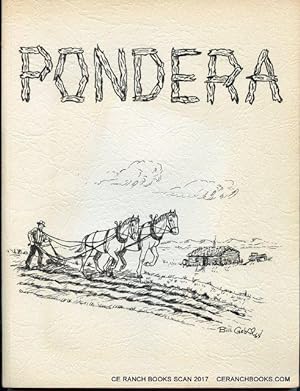
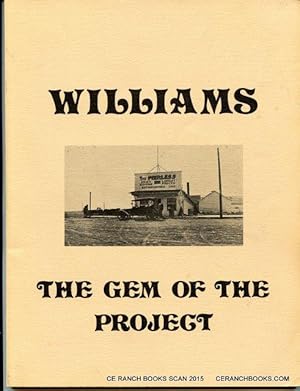
"PONDERA" AND "WILLIAMS, GEM OF THE PROJECT"

Go to Abebooks.com and look for CE Ranch Books to buy copies of "Pondera" or "Williams or Gem of the Project".

Otherwise:

Overview of the Collection

Creator
Pondera History Association
Title
Pondera History Association Files
Dates
1955-1968
Quantity
.3 linear feet
Collection Number
Collection 0650, MtBC, us (collection)
Summary
The Pondera History Association files consist of material gathered by the organization and not included in their 1968 book, Pondera. Subjects include: homesteading reminiscences; the Marias River massacre of 1870 (also known as the "Baker Massacre"), the Blackfeet, Cree and Metis people; and other topics specifically relating to Pondera County or the surrounding region.
Repository
Montana State University Library, Merrill G. Burlingame Special Collections
Montana State University-Bozeman Library
Merrill G Burlingame Special Collections
P.O. Box 173320
Bozeman, MT
59717-3320
Telephone: 406-994-4242
Fax: 406-994-2851
spcoll@www.lib.montana.edu
Access Restrictions
This collection is open for research.
Languages
English


Biographical NoteReturn to Top

The Pondera History Association was founded in Conrad, Montana sometime before 1968, initially for the purpose of gathering information to include in a county history book. Among the founding officers were President Veta Marsh, Secretary R. M. Emery, Treasurer A. J. Kovatch and members Dorothy Floerchinger and Marian Kovatch. After soliciting material from various Pondera County residents and reviewing history papers that had been written for an adult history class taught in Conrad in 1955, the committee found it had more information than they could fit into their proposed publication. Pondera was published in Great Falls, Montana by the Blueprint and Letter Company in 1968, and the additional unpublished material was made available for copying by the Montana State College library.

Content DescriptionReturn to Top

The Pondera History Association files consist of photocopies and duplicate photographs primarily of material gathered by the organization and not included in their 1968 book, Pondera. Subjects include: homesteading reminiscences; the Marias River massacre of 1870 (also known as the "Baker Massacre"), the Blackfeet, Cree and Metis people; and other topics specifically relating to Pondera County or the surrounding region. With two notable exceptions (Folders 6 and 14) the material appears to have been placed in no logical order and put into folders as they were photocopied. This random order has been retained in the present inventory. A series of meticulously typed catalog cards were produced that attempted to itemize the contents of the original folders. After checking for accuracy, most of the information from the original cards has been retained in the following inventory.


Pondera (County History, Pondera County, Montana)
Bookseller Image
Pondera (County History, Pondera County, Montana)
Pondera History Association
Published by: Pondera History Association 1968
 From: CE Ranch Books (IOBA) Conrad, MT, U.S.A.
Seller rating: 5-star rating
Quantity available: 1

About this item
Used Condition: Very Good Soft Cover
179 pages. Chapters include Fort Conrad and the Whoop-Up Trail; Willow Rounds; Robare; Dupuyer; The Conrads; The Seven Block; Pondera County Canal and Reservoir Company; The First Dutch Settlers; The Belgian Colony; Pondera; Conrad; Valier; Williams; Williams School; Manson; Brady; Midway Community; East Community; Bootlegger Trail; Ledger-Fowler; Sollid; Pondera Basin; Hutterite Colonies; Spring Creek; Teaching in the Twenties. Many black and white photographs. Artwork by Bill Gebhart. Bookseller Inventory # 016067


Williams: The Gem of the Project
Bookseller Image
Williams: The Gem of the Project
Nelson, Freda Phillips
Published by: Advanced Litho Printing 1979
 From: CE Ranch Books (IOBA) Conrad, MT, U.S.A.
Seller rating: 5-star rating
Quantity available: 1

About this item
Used Condition: Very Good Soft Cover
76 pages. Chapters include Background of the Valier/ Williams Irrigation Project; H. L. Barber; Williams Post Office; Businesses in Williams; Creamery; Equity Coop; First State Bank; Montana Western Railway; Williams School; George E. Sullivan; L. F. Powers. Aiken; Vera Crawford; Ern Gofs; McFarland Family; Ted R. Crawford; Hofland Heritage; Brophy; L. E. Bliss Family; The Mellotts and Baseball in Williams; Harry Hermanson; Letters that portray the difficult times of the 1930's. Illustrated with many photographs. Bookseller Inventory # 015698
Both of these books are in the Valier library.

BELGIANS IN VALIER

Belgians are a key nucleus of the population of Valier, brought in by church and railroad authorities as a whole village.  The nation itself was outlined and organized in 1830 after a period as "the low countries" during which it was the battleground for forming countries of Europe.  It was left with three languages defining the origins:  "two main linguistic groups: the Dutch-speaking, mostly Flemish community, which constitutes about 59 percent of the population, and the French-speaking, mostly Walloon population, which comprises about 40 percent of all Belgians. Additionally, there is a small group of German speakers."  

Because the village came in 1913 just before WWI, it's clear that they were looking for a quiet place to survive, not expanding an empire.

The Pondera Historical Society and the Ancestry messenger board listed below have gathered up the names and origins of many of the people who were moved to Valier by Monsignor Victor Day and the railroad.  The idea was that they would guard the irrigation system and use it to begin the wheat crops that are a world force now.  The railroad needed to have crops to ship and they still do that.

"On Feb. 6, 1913, thirteen families and a few single men (69 people in all) embarked at Antwerp on the S. S. Vanderland; arrived at New York on Feb.25 and arrived at Williams (MT) on March 1."  Letter at the Pondera Historical Society"  https://www.ancestry.com/boards/thread.aspxmv=flat&m=179&p=localities.northam.usa.states.montana.counties.pondera

Williams was a small first town that is a ghost town now.  One of its vestiges is an electrical transmission node that burned in the 2010's, paralyzing Valier which had eventually become the larger center of population.  Another remnant is the "Belgian Church" and its adjacent graveyard, both of which are maintained by locals but do not sustain a parish.

Linda reports "The Pondera History Association wrote the book "PONDERA" about the history of Pondera County MT. The only thing - it is nor DATED."

Harold John Jay Funk wrote this:  "My Great-Great-Grandfather H.L. Barber was the founder of Williams Montana. I have a copy of a book titled "Williams - The Gem Of The Project" written by Freda Nelson. This book contains much on the families of Williams."

Christi says:  "I know of 3 families that came over from Belgium on the SS Vaderland in February 1913 and ended up in Valier/Williams, MT. The Christiaens and Sabbe families from Wareghem and the Ghekiere family from ? (I could not read the Vaderland passenger manifest). My grandmother was the youngest of the Sabbe family to come over. I'd be interested in finding out more about the letter and I will be happy to share any info I have with you. Email me at kchnyberg@yahoo.com."

MKay says:  "My Grandfather Goemare Christiaens, through the help of Father Day, immigrated from Belgium to Valier, Montana in 1912, returned in 1913, and brought back another group - including his future wife Pharila Sabbe -- my other Grandfather Peter Habets and his family also made that trip.'

tjkeolker added much information, part of which is included here.  Koelker seems to live in Belgium:  "Remi Nollet was my great uncle. He was the author of the letter below. His sister Felicie VanDaele (my grandmother) came to this country in 1914.

ENLARGING OF THE BELGIAN COLONY IN M0NTANA

UNITED STATES OF NORTH AMERICA

Printers Bouquillon, Merckem

Exceptionally productive land, at 527 francs per hectare, divided in fifteen yearly payments.

Read this letter, addressed to Belgian farmers, and see how you, with a few thousand francs, can in a few years be the owner of a nice large farm. Read this today, for you will need all your time to make the necessary arrangements if you want to come along around 20 February 1911.

Noordechote

Honorable Mr. Farmer

I have the honor of informing you that last winter on 15 February (1913) a colony of Belgians of 80 persons left for the Valier area in Montana, United States of North America.

I took part in this colony and have now returned to Belgium with the aim of getting more settlers together, in order to enlarge the existing colony. This colony went to Montana under the guidance of Monsignor Victor de Brabandere of Desselghem, now living in Helena, capitol of Montana. The colony consists of the following families: 
The three families Christiaens originated in Waereghem 
The family Jules Sabbe “ “ Waereghem
The family Henri Deketele “ “ Nazareth
The family Cyrille Ghekiere “ “ Beveren (Leie)
The family P. Leclerq “ “ Bachte (0. Vl.)
The family H. Vandoorne “ “ Denterghem
The family C. Vandebulcke-Nollet “ “ Noordschote
The family Th. Beelaert “ “ Meulebeke
Emile Verstraete “ “ Meulebeke
Cyrille Decramer “ “ Langemarck
Maurice Tack “ “ Caeneghem
Ch. Vanderjeught “ “ Dendemonde (O.Vl.)
Rene Vandepopuliere “ “ Moen
Remi Nollet “ “ Noordechote 

The families Habets, Jochems, Houbens, Raemaeker, originating in Holland.

Some bought irrigated land and some are renting. All are satisfied with it and harvested a crop better than they expected.

The Valier area is situated between the towns of Valier and Conrad in western Montana, and about 15 hours from the Rocky Mountains which extend through north and south America.

From my own experience I can give you the following information.

Climate in Montana

The climate is somewhat harsher in winter than in Belgium, in summer the temperature is about the same as in Belgium. There are approximately 300 days of sunshine in a year, therefore much nice weather. The air is extremely healthy, because there is much more open sky than in Belgium, therefore much healthier.

Appearance of the land

The land in the Valier area is very picturesque. It is overgrown with grass, on which large herds of sheep are being grazed. There are neither trees or brush, one finds some rocks which have been brought there by nature, in some fields there are more rocks than others, none are completely free of rocks, one finds this all over America. After removing these rocks, the land is ready for the plow. 

Altogether, there is only one bad drawback in America, the grass gets frozen and dried up, due to scarcity of rain in Montana. Some of us were thinking of buying hay, but everything changed after irrigation. The ground has a gradual slope, which makes irrigating easy. There are a few hills, which would be out of reach of a sprinkling system and these were much reduced in price.
"
Irrigating the land

In Montana there is not enough rain to meet the requirements of the crops. For this reason there is a big difference between irrigated and non-irrigated land. The farmers who own irrigated land do not have to worry much about rain, indeed, they much prefer nice weather as it is nicer for traveling on the roads, and they are assured of a harvest by irrigation. By irrigated land is meant land that can be irrigated if necessary. In irrigated land there are the necessary canals and ditches to bring water, and by means of sluices, the water is brought to the land. The water comes from the snow in the Rocky Mountains which are about 15 hours away. There are places where the snow stays the year around. Much of this snow melts in summer and is carried to a lake near Valier by means of a river. The canals bring the water from this lake to the land. Irrigating is very simple, after seeding the grain, one makes the necessary ditches in the field to bring water from the canal, then let these ditches fill with water and make small dams here and there to make them run over, and the water spreads over the fields. It is unbelievable how much water this land can absorb. After irrigating the crops grow surprisingly fast, one has to witness this to grasp it fully.

For the summer wheat we irrigated once and that was sufficient. The winter wheat must be irrigated twice, once during harvest season and again in the spring season.


In Belgium one often wishes he could have rain in one field and not in the other, in irrigated land this wish can become a reality. One cannot control the rain, but one can irrigate one field and not the other, if one chooses. Irrigation of the land has been made available by the state.

Tuesday, August 07, 2018

WAGON CULTURE

Less directly connected to the story of water is that of the Métis people, mostly but not entirely in Canada.  A syncretic culture, that is, one made of two melded together, everyone agrees that in the old days the most obvious way to identify them was that you could hear them coming.  Emerging mostly from alliances with trappers coming up the Mississippi complex from Louisiana or inland from Quebec   -- both footprints left by the French -- and their wives from local tribes, they founded a wagon culture, living in homes they could take with them.  They were an early "RV" people, like Gypsies, "Travelers".  Because they had no access to metal, the giant-wheeled wagons traversed the rough prairie with much squealing noise.

Since the people had both First Nations relatives and white relatives, they gradually distributed themselves along a continuum from those who lived as the tribes did to those who settled in small towns.  Some ended up not quite either and were left out when the reservations were defined because they were not sedentary liked reservations.  Eventually, their distress caused them to be placed on the Blackfeet rez, American side, introducing competition for limited resources.  Then Fort Belknap was dedicated to a reservation for them, but some had mixed with Blackfeet and stayed there.

Métis became stronger and better defined until they began to seem like a country of their own, called Red River Nation.  The leaders, Louis Riel, and his cousin, Dumont, were charismatic, esp. Riel who had visions.

The earliest defined conflict between the Métis, who were simply there, and the English who had the paper law on their side, was in 1812 and involved Lord Selkirk, who had been given a land grant for the confluence of the Red and Assiniboine Rivers by the Hudson's Bay company, owners of "Rupert's Land," the whole Western half of Canada.  The grief climaxed in the Seven Oaks Massacre in 1816.  This time it was 21 settlers killed.

In 1869, the Hudson's Bay Company agreed to sell its territory to the new Dominion of Canada, which had been formed in 1867 by the uniting of four British colonies: Canada East (Quebec), Canada West (Ontario), New Brunswick, and Nova Scotia.

http://firstpeoplesofcanada.com/fp_metis/fp_metis_redriver.html

Louis David Riel (1844-85) was a Canadian politician, a founder of the province of Manitoba, and a political leader of the Métis people of the Canadian Prairies.  He was an educated man and taught in Montana at the St. Peter's Mission School near Great Falls.  He is said to have had one-eighth Indian blood, his paternal grandmother being a Franco-Chipewyan Métisse.  (The variations of the word Metis all mean "mixed".  Mestizo, Michif.)

As the group became more tightly organized and intense, they were facing the army of Canada.  In 1883 Riel became a citizen of Montana.  Returning to Canada, after a long dramatic struggle marked by battle, Riel became unstable and was hung with others.  The British have always ended dissent this way.

http://www.biographi.ca/en/bio/riel_louis_1844_85_11E.html

The consequences of a violent end to a proposed country were in part that the Métis took refuge in Montana on the East slope, going up the valleys produced by snowmelt rivers.  Their descendants remain.  Some intermarried with Blackfeet and can be distinguished by the many French last names, though they are enrolled in the tribe.  Their families are strong because of religious connections and that helps to hold the web together, along with the preservation of what were originally Euro elements like fiddle tunes and clog dancing, which made them lots of friends at dances and fairs.

in the Seventies a Métis grandfather who had grown up with Bob Scriver was trusted to "babysit" Bob's studio/home with its valuable contents when Scriver was gone.  The conviction in the Scriver family was that Métis (whom they called "Cree") were more hard-working and reliable than Blackfeet.  This man told me he was troubled that he didn't know what tribe he was and at that point I didn't know either.  Métis had gone underground.  The next time I was in Lethbridge I went to the used book store but only found a small book in French with a lot of pictures.  I brought it to the man so I could say, "This is who you are.  Maybe someone here knows French."

I didn't see this man after that, but then I found out that Joseph Kinsey Howard (1906-1951), "newspaper man, historian and Métis -- born in Iowa and raised in Lethbridge -- had already written about Montana.  Aided by the support of Guggenheim Fellowships in 1947 and 1948, he devoted considerable effort to the writing of a history of Métis leader Louis Riel and his resistance movements against the Canadian government. The result of this project was the book Strange Empire: A Narrative of the Northwest, published posthumously in 1952."  (Wikipedia)  I mailed a copy to the man who wondered.  Until his death, Howard and a small cluster of writers and professionals occupied summer cabins with Métis origins up Blackleaf Canyon.  The local Métis presence persists in the area, including a cemetery and a demonstration cabin, made like an historical home with a loft and a baby cradle hammock over the adult bed, so dozing parents could reach up and set it rocking.

In Canada in 1982 the Métis were defined as an aboriginal people just like First Nations ("Indians") and Inuit ("Eskimos").  This gives them certain entitlements and protections, though not necessarily reservation-based functions.  https://en.wikipedia.org/wiki/Métis_in_Canada  This entry is exhaustive in terms of both nature and place.

The Métis are fascinating because they are a dynamic recent enough in history and documented enough for us to think about how the organic, natural definitions of a people smash into the legal laws and treaties of a Euro-based culture.  Accommodations have to be made but also some people will be hurt, left out, or even possibly lifted up by the confusion.  They persist. 

Certainly the individual people are vivid and their stories are full of drama.  Peter Bowen in Montana is one of the best known among the novelists and benefits from their drama.  https://www.youtube.com/watch?v=aiRkx-wTwnc

Monday, August 06, 2018

BEAVER

The first white contact with indigenous people on the East Slope plains was made from the Canada side in the form of fur trappers, even before the explorers found Chief Mountain.  Their "life-style" was totally different from the nomadic villages of the Blackfeet.  

When the People lived off Buffalo, especially at first when the piskun was the main way of harvesting, they took everyone to the place of killing to do the work of processing the animal.  A grown buffalo weighs a thousand pounds and could not be moved, esp. before there were horses.  Later, when the killing was done on horseback and the carcass left behind the hunters, a dark mound in the grass, the women were tracking close behind and tackled the work in small groups, portable abbatoirs.  

It could take all day to gut, skin, and slice the meat into easily dried filets.  When there were horses, they loaded the travois with the material for drying racks.  Hides were split down the spine to make them possible to handle while still wet with blood and fat, so they could be stretched out on the ground or in frames to be scraped and worked to get the fibers loose and soft.  Those who try it today as a demonstration and exploration report that it is hard work.  

But the fur trappers smashed that culture like an egg, yet were not far from it.  The individuals were not necessarily white but often came from two unstable pools of men with cultures of their own: the military and the sea ships.  From almost every racial and national source, both sources were individuals with rough allegiance to a group and maybe a few close buddies.  They were used to hardship, mutilation and death.  It was rare for them to have families, but the whole webwork could include boys of many ages, who grew up in that context.  On the prairie they brought their own ideas: horses for lack of ships, weapons, and a daily allocation of "grog", as Western working men had required since medieval times.

They were two kinds of men: those who were mostly British Islanders with minimal educations, the kind that had been ship captains and port authorities, and who built forts to be their ports; and the kind who did the actual trapping and built small scattered log cabins to be their place to "dock".  The "factors" or heads of the forts kept order and made bookkeeping records, many of which are now available through the opening of the Hudson's Bay historical records.  They were sedentary but always kept the connection to their British masters far away because of their ability to write.

The trapper depended on a "trap line", a regular path marked by the setting of his steel spring traps in places where the water animals lived, since they had the best fur.  Beaver, otter, muskrat, marten, fisher, and even wolverine were trapped and carried back to cabins for processing, which meant warming carcasses enough to skin, stretching the skins on hoops or scabbards so as to remove fat and to dry, then storing them until Spring when they could be carried to the fort.  The pattern of the trapper's days was a hub with radiating paths, often along waterways.

The factor at the fort had a staff of men to help and might take in women to cook and clean.  The trapper in his cabin might hook up with a woman or several to be the crew of his "ship," to deal with the accumulating skins, to maintain tackle and clothing, to cook, and to accommodate whatever other needs he had.  No clergy as in settlements were there to criticize, insist on marriage or monogamy, try to baptize the children that were inevitable.  For some, "beaver" was affectionate slang for a winter's partner. 

Below is the conventional history of the fur trade, taken from Wikipedia:

"The North American fur trade was the industry and activities related to the acquisition, trade, exchange, and sale of animal furs in North America. Aboriginal peoples in Canada and Native Americans in the United States of different regions traded among themselves in the Pre-Columbian Era, but Europeans participated in the trade beginning from the time of their arrival in the New World and extended its reach to Europe. The French started trading in the 16th century, the English established trading posts on Hudson Bay in present-day Canada in the 17th century, and the Dutch had trade by the same time in New Netherland. The 19th-century North American fur trade, when the industry was at its peak of economic importance, involved the development of elaborate trade networks.

"The fur trade became one of the main economic ventures in North America attracting competition among the French, British, Dutch, Spanish, and Russians. Indeed, in the early history of the United States, capitalizing on this trade, and removing the British stranglehold over it, was seen as a major economic objective. Many Native American societies across the continent came to depend on the fur trade as their primary source of income. By the mid-1800s, however, changing fashions in Europe brought about a collapse in fur prices. The American Fur Company and some other companies failed. Many Native communities were plunged into long-term poverty and consequently lost much of the political influence they once had."

The removal of beaver, the results their work, and the dependent lives that used the ponds they created and were spared the destruction of the floods they prevented, even the loss of fertile small clearings of silted-up ponds, changed the world.  The wisdom of protecting such busy workers was only gradually realized.

At the time it was more interesting to learn the tricky plotting of how to trap.  The canoe and woodland peoples farther east had built up a field of expertise based on close observation of what animals do, where they go, what attracts them.  Baits and tricks were semi-military strategies.  It was almost more like fishing than anything mammal.  Romantic ideas about nature, even the miserable frozen world of snow and ice, combined with the American love of unsupervised solitude, shortened many lives.  

But when it was time for gathering into convocations like the Rocky Mountain Rendezvous that existed between 1825 and 1840, the trappers were joyous with drinking, eating, getting news, meeting old friends, gambling and the other pursuits of aging military or seaworthy men.  This is what groups like to pretend they are re-enacting -- with great nostalgia for something that never quite existed.