Showing posts with label high school rules. Show all posts

Saturday, February 27, 2016

ATTACHMENT IN THE FACE OF TRAUMA


My accumulations of paper — which persist in spite of computers or maybe because of computers because it’s so easy to print — include much on the theme of development in humans.  The theories come and go, the names of the same phenomena change, and the pendulum swings from focusing on individuals to groups and back again.

I’m looking at this tempting bit of a larger document.  I can’t make it copy and paste so I’ll summarize a bit.
  
traumacenter.org

“The attachment system provides the safe container.”

Since today is Saturday and I’m composing my post for Sunday, it occurred to me that it was worth looking at these concepts in terms of congregations.  Some words are so worn and abused (traumatized, you might say) that they have lost their meaning or have been seized by people who use them as weapons:  I’m thinking of the words “church,” religion,” “community,” “family,” and so on.  They become triggers.  The fists come up ready to fight.  So we say “congregation”, “spirituality”, or whatever but don’t really examine the phenomena.

Here’s the assertion:  “Within the safety of that attachment system, children are able to explore their worlds, and develop a range of skills, including the ability to regulate their body and emotions, build an early understanding of self and others, and over time, develop an array of increasingly sophisticated developmental competencies.”  We are all lifelong children.


What makes a congregation “attachable”?  Safety is the consequence of being attached, but what safety is there during the process of approaching, testing, awareness of exits, identifying what dangers there might be?

This little bit of an essay asserts that there are two kinds of trauma with quite different developmental consequences.  One is the catastrophic overwhelming kind of trauma and the other is the constant erosion of smaller insults, losses, deficits, and uncontrollable change.  To be frank, life in general is a sequence of traumas.

The newer material about surviving life itself, both as an individual human and as a human group, is quite different in tone.  Conformity has been removed.  There is little talk about morality.  Not only is the discussion quite secular, but it begins to sound like learning to play the piano:

Making order from chaos.  OR in the name of re-organizing, creating chaos.  (Tolerating temporary chaos is a competency, but persistent chaos is a malfunction.  Temporary chaos as a self-protecting strategy can work either way.)

The ability to self-regulate emotions and experience.   (I suppose you might have not considered how important emotion is as a music principle.)

Openness to new strategies if the old ones don’t work or are outgrown or maybe even were imposed by clumsy helpers.

Willingness to address and resist destruction from outside the sphere of attachment.

Small attachments among individuals within the larger community and competency in managing them.  (Truly sophisticated musicians consider and internalize the micro-relationships between notes.)

The point of this discussion is to support caregivers, not to directly address the traumatized.  So I suppose one could say this is for professional and natural caregivers in the group.  The authors sketch what they call a “theoretical framework” rather than a “manualized protocol.”  

Right there — in the beginning — is what I’m seeing as a major and possibly hindering prerequisite: the failure of our modern systems to produce leaders who can think at the level of theory and abstract principles.  Particularly in conventional churches, the idea is to prevent change, and we can get frustrated about that, but what I’m finding in this small prairie town is that brains have not been encouraged to take the last step of development which happens after high school, in the early twenties.  High school is considered completion, the rules learned then persist through life.  Sometimes that’s not helpful.  They think only in terms of learned "boxes."

Backing up, “within the Attachment domain, 4 key building blocks for the caregivers”:

1.  Getting the caregiver to maturity in self-management.
2.  Attunement: “the capacity to accurately read each other’s cues and respond effectively.”
3.  A collection of strategies for meeting melt-downs or roll-ups or outright flight.
4.  Consistency and predictability.

The Competency Domain isn’t about pathology, but what about what every person needs to know in a tough world.  Three basics are:

1.  Problem solving:  personal agency, ability to generate options, reaching out.
2.  Knowing one’s own identity, finding coherence, feeling valuable.
3.  Ability to accept what developmental tasks are limiting and confidence that there are ways to learn them.

There’s a lot more than this.  For instance, the interference of the criminalizing forces (both criminals and law enforcers), the constant manipulative barrages from media, and awareness of suffering around the planet —coming your way in vivid technicolor.  A UU minister observed that our congregations seem not to be as intensely centered as they once were.  This particular movement seems to have moved to social action or personal development, depending on the extrovert/introvert aptitudes of the group.  The social action part has different allegiances depending on their outside affiliations.  The personal development interests vary all over the place — art to yoga.  Conventional churches are still arguing about the various theisms, which we've left behind.


I think there are not enough well-defined challenges.  In a middle-class group things can get worrisome and lately we realize that any of us can be thrown out on the street overnight because of some policy change or renovation project.  This class arose as shop-keepers and salarymen, but now the world is dominated by franchises and corporations — coupon-clippers in a capital-dependent world.  

Under all those economic arrangements (everything is economic when you’re talking survival and I’m talking biology here —you MUST have enough food, water, shelter to survive and that’s economic) is the planet itself.  Tsunamis, droughts, earthquakes, firestorms, hurricanes — you wanna talk trauma?  Lately I’ve been thinking about the catastrophic/economic/corporate consequences of grain crop failure, since I’m living right in the fields.  

The ebbing of the middle-class on the prairie (the closing of shops, the disappearance of wage labor) means that the middle-class religious groups who depend on dressing up and using good manners on Sunday morning have also shrunk.  They still love to sponsor community feeds in a place where diabetes and gluten-allergies are real.  Their ministers are all part-time.  Alcohol is still the favorite medication, as it has been for most of their ancestors since Medieval European times, and they still watch network TV.  Their dependence on cell phones is only limited by the lack of infrastructure.   “Rough sleepers” are few around here: they would die.  We’re not so modern.


Most seriously, they know nothing about the larger world, not even the layer of culture where their kids live, nor the layer of highly intellectualized thought where I live.  So much of the world is confusing and distressing that they cocoon.

Ben is the near-ninety-year-old man who with his wife operates the Cut Bank laundromat where I spent most of the morning yesterday.  He was in the military in Nuremburg during the post WWII trials.  http://www.history.com/topics/world-war-ii/nuremberg-trials   He is sharply aware of the importance of such events, not in terms of who got which penalty, but in terms of order-keeping.  Larry Reevis, whom some will know from his “letters to the editor” in the Glacier Reporter, lives nearby.  He’s working on the politics of the Blackfeet Rez.   The “History.com” website referred to above is the source of the “Vikings” series that Harry Barnes likes to watch.

Maybe the three of us very different people represent caregivers in a broad sense.  We are all rather intensely attached to our lives and people, maybe more consciously than most.  With that comes awareness of the pain of many humans and a need for safe containers while we figure out ourselves and others.  I keep thinking, “What on EARTH sort of childhood traumas could have created the US politicians?  Where are the ones who grew up happy and learned to be competent?”  I think this is an essential religious question.  Because “religion” is about survival.


Friday, March 20, 2015

BACK TO THE SEVENTIES!!


"We must let go of ourselves but we can’t -- because we don’t really exist."

"We’re only an idea based on feeling.  We’ve lost our connection to natural homeostasis, happening of itself."

Alan Watts  1970

This post is a discussion of my own 2015 version of Watts’ insights.
_______________


These assumptions keep people from being in touch with reality:

That everyone is like them.  Anyone who is not like them is either better or worse.  If they are worse, they should be treated badly and even eliminated.  If they are better, one should attach to them to one’s advantage.  All the rest of the world is just like this place.

That their consciousness, which is based on words either in print or spoken, is THEM.  Their identity.  It defines them.  Therefore, words that are insulting should be eliminated.  Words that are unknown should either be quickly learned or considered some kind of witchcraft, ruled out of order.

That what they have in their consciousness is real.  This makes two problematic experiences suspect:  one is perception of imaginary things, (possibly the “voices” of psychosis) and the other is virtual worlds like those created for fiction of some kind.  [Images are as powerful as words.]  Keeping one’s reality separate from one’s vivid but “unreal” experiences is a preoccupation, though sometimes it is the “unreal” experiences of books, movies, or even stories recounted by friends and relatives that become more valid than what one’s own body has recorded or can reconstitute from its memory systems.

IMPLICATIONS AND ADDITIONS:

We can actually move our “experience” back and forth between “real” and imaginary worlds.  We have made flying an experience both in machines and with sails as personal “wings.”  We have made dragons real by inventing predator drones.  


There is a world, reached through scientific augmentation, that amounts to extrasensory perception.  Sometimes we found those second-hand or enabled experiences through curiosity about what it is that other creatures are reacting to:  the honeybee, the homing pigeon, the snuffling pig or dog, the deep earth thrumming of elephants or the deep water songs of whales, how the bat finds the gnat.  Sometimes we find them almost by accident while trying to understand northern lights or relieve pain or discover why -- if all the mushrooms in a grove are picked -- the trees die.  Then we discover the cooperating filaments among them.  If we weren’t so intent on these searches, we would not know about DNA, but knowing about DNA means that we’re unraveling all sorts of things, from crimes to the knowledge of our physical unfolding over time and the vulnerabilities/
strengths/variabilities of the assemblage of cells we “wear” as our bodies.  New “truth tests” arrive and reveal the faults of our old systems of justice and commitment.

One of those physical systems is our sensory monitoring systems and the brain that sorts and regulates them to keep us within the bounds of human homeostasis -- the conditions that will allow us to keep living.  But this varies from one person to another and we know that it is subject to illusions, maybe from molecular ingestions and maybe from processing aberrations, brain glitches.  To say we have five senses doesn’t tell us much except that we have organ protuberances to help the sensing cells: ears, eyes, noses, mouths with tongues, little hairs that stand on end, inner gyroscopes to keep us level and so on.  

All the sensory intake cells are interacting with the outside environment as fiercely and carefully as they can, but they can be fooled.  For instance, phantom pain or the opposite, anesthesia.  At the “keyboard” or “dashboard” or “working platform” level of the brain, which is the presumably conscious mechanism that accepts, discards, organizes and orders action, deception is even more possible.  And yet this is what we claim as our identity, our coherent “self.”


The dark historic brain cannot be accessed by the conscious brain nor can the biomes that live in the flesh and gut as digesting organisms.  But we can “feel” them as dis-ease, joy, well-being, fittingness, grief.  Experience-based thought systems choose facts to fit these moods or intuitions.  Viruses cannot be directly felt -- they are only code -- but their consequences can be catastrophic in the case of aggressive code that infects cells.  But now that we can identify and describe a virus, recognize it as code for a cell nucleus, we are learning how to reach it and use its tricks for our own good.

Wirelessness is comparable.  The electromagnetic forces that zoom through us all the time are usually not felt, but have major consequences that we can harness to create things like the internet so that our senses are greatly extended.  And yet we are ultimately dependent on the emanations of the sun and even right now great tongues of storm there are affecting my provider service here in this Valier back bedroom, scattering and distorting the letters I'm trying to make into words.


Many people have been persuaded by our educational systems that literacy is a superiority to others, when it is in fact only an instrumentation.  People believe that their consciousness, as captured in words, is their identity and that identities can be ranked in value, with the more powerful values being captured and recorded by institutions.  These are sorted according to gender roles which -- with the invention of agriculture and cities -- were pulled away from their biological origins in child-bearing and physical strength.  Now that physical gender is being blurred -- maybe by choice, maybe by molecular industrial environments, maybe by a change of consciousness -- we must make choices more individually.  

It greatly helps to have the instruments of literacy, academic disciplines, social hierarchy, and the other social forces of homeostasis, which can be as sustaining or as deadly as physical bodily need.  How those forces are used is the crux of morality.  The more variety can be successfully introduced to the ecosystem, whether it is biological or social, the more structurally robust the entire system can be.  And yet each social element tries to seduce the individual persona into believing that only one attachment counts.


So where does attachment come from?  It is a biological phenomenon to keep babies close to their mothers until they learn how to take care of themselves, and in some situations that attachment is lifelong.  In others the attachment is shifted or shared to one’s own reproductive partner.  But because there is so much in the human identity that is created over time inside the brain and not dependent on outside “facts” though interacting with them, that attachment can express as repetition of former attachments or even as rejection of attachment to persons, slipping them over to attachment to things, disciplines, activities and other foci.

In sum, a naive person living in homeostasis with a stable biome will be quite different from someone trying to deal with scientifically presented realities, created stories of great power, and a physical world that is limited and created by human invention -- or possibly one that has been set free in some dimension, learning to parasail or deep-sea dive or walk on the moon.

Since the brain loves metaphors and uses them to keep sorted out what is “really” happening, who they “really” are and what should “really” be done, sometimes becoming a hazard to all the rest of us, what is the most compelling metaphor that can cause someone like Netanyahu, someone like an African dictator, someone like a street addict, someone like a woman who seeks power through her appearance -- what will throw on the lights so that they see they are on a theatre stage and could walk away?

The most recent map of the cosmos.

When does the obsessive story of all the holocausts, all the famines, all the species extinctions end?  Surely they are not “real” in the sense of inevitable, imposed by Gods or Fate or even human limitation.  Where are the stories that can replace them?

Wednesday, January 21, 2015

HIGH SCHOOL RULES

High School Architecture

If one accepts all those ideas about humans evolving in paleo-times into groups of a hundred people or so, mixing hunting with gathering, dividing the work by gender, deeply shaped by the ecology of their place, then there ought to be echo in the small towns and urban neighborhoods about that size where people still live.  I think there is.

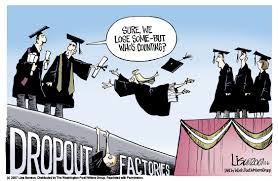
When I try to talk to people about religion or even when I read the steady stream of articles from journalists and academics, I find that they still see the subject in terms of what I call “high school rules,” that is, assuming that the point of life is adversarial, status-bound, group-dominated, and not much affected by the theoretically governing body -- the faculty/administration.  

Growing up -- to a point

What is acquired in classes, which are defined by work (jobs), is irrelevant compared to what is acquired by interaction with peers.  There is little or no expectation of personal development or learning -- strange for an institution specifically meant to educate, but probably due to the adolescent belief that they are already grown up, because they don’t have a mental picture of how a true adult is different from them unless they include signs of aging: balding, wrinkling, slowing.  The final maturation is inside the head, not on the pretty face.

Maybe the strangest aspect of our present situation is that our “peers” are fictional characters presented in our own homes.  They come to be what we think of as normal, though most of their behavior was never considered normal before television and now is more “normal” on television than it is on computers, though what we see on YouTube is each other.  The “norming” of social behavior, which is what we think everyone else is doing, is far riskier than it ever has been in spite of all cautions.

"High School", the musical

I am not comparing theologies, but sociologies.  “Theology” is the business of the equivalent of faculty, curriculum, courses of study, even grading.  Sociology is what really happens in the dynamics of the population which may not have much to do with the institution.  Bullying, hazing, pecking order -- the interactions of those who consider themselves the standard, who are trying to maintain that in the face of challenges from the exceptional, the misfit, the transgressive, and those with weak or missing families.  The idea is to make them blame themselves and possibly eradicate themselves.

In a sociological context “From is to ought” and “misplaced concreteness” are the most common philosophical and ethical blunders.  That means maintaining the status quo, marking tight local horizons and supporting fear and resentment of the “Other”.  Also, it is high school to expect an external enforcer (parents) to be the Deus ex Machina.  If they are given a chance to be judges (student discipline panels or town councils) they tend to be rigid and harsh, which may be displacement from how they see authorities above them.  But they are very skillful at triangulating: the high school practice of pitching parents against faculty, for instance.

A horrible example

“From is to ought” has several dimensions.  It can come from being in the catbird seat and not wanting to leave it.  It can come from fear of change.  It may just be a lack of imagination, an inability to create options.  “Misplaced concreteness” means not being able to handle metaphor, so either one thinks what was a figure of speech was a statement of actual fact, or one cannot see through the surface to the pattern underneath it, the subtext as it were.   There’s no awareness of difference between different people’s thoughts.  I find both of these very characteristic of small towns or, for instance, ethnic neighborhoods that people don’t leave much.  They don’t know they’re in a box, much less wonder what’s outside it.

On the good side, these communities are stable, reassuring, and offer a strong base for those who work in some viable way.  They tend to become prosperous, so long as the larger picture doesn’t change, but they don’t respond well to something like climate change or frakking that causes earthquakes or aquifer contamination.  The constant drumbeats are jobs and safety, like grades and basketball tournament prospects.  Progress means to them something more like continuity: bigger and better versions of what already exists, especially if it favors their pursuits.  A monoculture.

People here are constantly instructing each other how to do things, how to act, the way junior high kids critique each other.  The aim is conformity in the guise of encouraging success.  Even a new social site I dropped out of -- a virtual neighborhood not here at all -- was constantly instructing members to post cheerful selfies, not to write over other people’s heads, and to stick to popular topics -- the target populace being the people running the site. 

In terms of church congregations of the Abrahamic type, these biases are evident on both ends of the political scale, both liberal and conservative.  There is no thought of looking for new ground, but rather protecting old ground.  There is appreciation for new methods in the old pursuits.  They are interested in moving to a fresh new planet -- like a new set of school supplies -- and making it like this one -- not finding a transformation of this planet.

A sociological pendulum has always swung between protecting the interests of the individual or the interests of the group.  Right now we seem to be just about at the limits of the individual and slowly turning back to the group.  They tell us that so much wealth is accumulated by one percent of the population of the nation (some say one percent of the world population) that it equals the wealth of the other 99 percent.  This cannot stand.  It won’t.  We’ll be very lucky indeed to redistribute wealth peacefully.


Another pendulum has swung demographically.  Much of the planet has been depopulated by war, famine and disease.  Many places are rubble.  Most of the population in developed countries is accumulated in supercities along the coasts.  They have taken the money that should have been spent on infrastructure in the interior of the country, thinking no one lives there anyway, but they will soon have to spend huge amounts to survive the rising oceans.  All this is happening much faster than anyone has expected.  Now the bulge from all the WWII babies are aging, retiring and dying.  


The tenured college profs who began their careers teaching veterans on the GI Bill are clutching their lecterns in terror of retirement, though their classroom material is outdated.   This sort of thing will change governments, manufacturing, and living circumstances.  We’re told it all the time.  And yet our health system is unprepared.  The old and the poor are still pushing dust mops and sneaking cigarettes in the boiler room.  Delinquent outsider kids used to be told to join the army where they could get it out of their systems, but they cannot be taught how to operate predator drones.  Now they go to join Islamic terror cells overseas if they can get someone to help them with the paperwork to apply for a passport.  Or they live in prisons.


At present there is a lot of talk about the “middle class” but it is also stratified between those who earn $100,000 a year, own cars and houses, send their kids to college -- and those who are still working class, though it takes two jobs with low pay to survive.  The truly prosperous are a criminal class whose robberies are on paper infrastructure they pay upper-middle-class people to maintain.  Their only physical risk is their lifestyle. 

I’m not sure any of this is new.  I do know it is very fragile.  The planet will not support it.   But this is not the whole story.  We are always taken by surprise, one way or another.  It might be very good.  It will be different.