Showing posts with label PTSD. Show all posts

Tuesday, October 20, 2015

"FIELDS OF COMBAT" by Erin P. Finley


PTSD has had a lot of names and a lot of causes.  It is troublesome and painful enough that people over the centuries -- CENTURIES -- have tried to figure it out enough to get a “cure” or at least some kind of survivability out of the aftermath of war.  Some have succeeded.  It appears that what has worked the best, in spite of all our sophisticated meds and strategies, is to simply get used to it, wear it out, repeat the stories -- with other people who have had the same experience, with trained therapists, or with the self through the use of tape recordings listened to repeatedly.   It's a little risky.  The other stuff helps some people.  It would help to disentangle the issue from alcoholism/drugs/self-medication and from homelessness/joblessness/“familylessness.”

What we are learning through fMRI research, war stories, cultural histories, is beginning to cross disciplines now.  Some of the concepts that felt like realities -- courage, obsession, vulnerability, and whatever PTSD is being called this time around -- turn out to be multiple, layered, and interactive.  They come apart more easily (at least for me) when seen through this five-aspect list I’ve been using.

Birth is only half-way through gestation

1.  The actual “machinery” of the body when it was assembled molecule by molecule during gestation and the first few years afterwards, which are really the last part of gestation outside the womb.  This forms a unique shape for each person: what limits there are, what special gifts, what will be taken in through the senses, what will be imperceptible.  The first “world-frame” that the awakening brain uses to sort itself out physically snuffs neurons that aren’t used, allotting more neurons to needed categories.

2.  The beginnings of experience after the person begins to be self-motivating are crucial.  Very bad things like a flood, a war, a disintegrating family, physical attack, might make a young person shut down or split or internalize warnings.  Various forms of dissociation can form, instead of the dynamic but coherent process of being human.  As the body's muscles and bones are shaped against the world, so are the parts of the brain.  It helps to have a significant person to use as a model and protection.


3.  One figures out what to do by referring to the cohort: one looks to the people around nearby for clues and relationship.  Kids at this stage can belong to what amounts to a pack, so that in indigenous/homogeneous/isolated societies, there is a shift from the family to the group of same-age same-gender youngsters.  Often physical separation, at least part of the time.  Seventeen-year-old guys gravitate to this in a way that makes them easy to form into an army, a team.

4.  Later there are two forces: one is the cultural overview of the Big Picture -- what life is about, a kind of religio-political metaphor that guides and unifies pluralities and contradictions.  The other is sexually driven pair-bonding that can produce babies.  Or same-sex bonds that can raise babies. This is as far as mammals can go, except for humans.  Our television stories and novels operate at this level.  So do organized religions.  They are vulnerable to challenges by experience.  They can be inspired, building cathedrals.

Contemporary cathedral -- Strasbourg

5.  In the mid-twenties the brain has reached a stage where it can operate on the virtual level, actively conceiving of things not seen, not heard of, outside any box.  Abstract, analytical.  Scientific, if you like.  Cosmic.  Understanding that a human being is a tiny particle in a vast and gorgeous drama.  Most people never get to this.


Erin P. Finley

I’ve just finished reading “Field of Combat: Understanding PTSD among Veterans of Iraq and Afghanistan” by Erin P. Finley, who is a cultural anthropologist, meaning that she studies the patterns of a culture and their effect on individuals taken as a group.  This is neither therapy nor history nor sociology, but an account of a specific group surviving a particular time, place, and situation: in this case, veterans at a Texas hospital trying to overcome damage -- physical and psychological -- imposed by service in Afghanistan and Iraq.  The rising numbers of strugglers (both the veterans and their families) and the lagging understanding of what to do meant that Finley could get funding.  She had done similar studies with former combatants in Northern Ireland, heroin and cocaine users in Boston, and Sudanese refugees resettled in Atlanta.

For a psychological point of view, consult the Diagnostic and Statistical Manual of Mental Disorders produced by the APA.  As a reminder, there are three symptom “clusters” each with 5 or 6 sub-items.  All three clusters are both physical and “mental” so dividing the symptoms on those terms is useless.  They also vary between cultures, but these particular veterans were a coherent group.  They are: 

Reexperiencing (dreams, flashbacks, waking reenactment, intense reaction to reminder cues.)

Avoidance/numbing  (being solitary, blocking memories, not being able to feel emotion)

Hyperarousal (sleep problems, irritability and anger, trouble concentrating, hypervigilance)


by Larry Moore

The individuals Finley interviewed at length -- sometimes with their wives -- were members of a volunteer army with inefficient and underfunded management in a blundering political climate.  Because they were in Texas, most were low-income whites, blacks and Latinos. The most assorted cultural styles were the Latinos whose families came from the vast Spanish-speaking territory of Central and South America.  There turned out to be negligible differences between the categories.  What all these men shared was intense bonding, especially those who saw combat, combined with ghastly deaths and grievous harms.  There turned out to be negligible differences between the ethnic categories.

Since the culture around the military is invested in a notion of what a man is or ought to be  (TOUGH!  SUPERIOR! )  those ideas interfered with each soldier’s attempt to be the best he could be, since everyone has limits.  It opened the door to very high expectations and a good deal of self-blame for not meeting them.  They were not used to the idea of a person as a shifting, reorganizing, response to situations, so put a lot of energy into trying to stay the same, both during enlistment and afterwards.

Since these veterans were in the hospital setting, their shattered identities often had to accommodate missing parts, esp. feet and legs because of land mines.  In previous wars, casualties were as high as a third of the soldiers.  Now they are about 10%, but only because there is a new category of alive-with-deficits, a category that gobbles money for medical care, bionic compensation, and steep assisted-learning curves.  The hardest deficit is brain damage, characteristic of terrorist-bomb sudden explosions while in transit.  Concussions don't necessarily show as wounds.  Maybe one of the hardest things to witness for these men who took pride in fathering was the callous collateral damage to women and children.

The veteran's name is Alex Minsky.

This book is easy to read, full of stories and examples of resilience.  But it is not just about soldiers and their families.  It is about being human in a world that can be turbulent and horrifying. In modern America where the predominant religion is arguably no-limits prosperity and even traditional or “spiritual” contexts are often expressed with money, then a war that makes questionable allocations of basic resources and doesn’t pay soldiers enough to keep their families off welfare is demonic.  But Finley doesn’t take this on -- she is not a comparative religion anthropologist.  

For men in Texas, as in Montana, “cowboy up” (walk it off) meets “be a soldier” (ignore pain) with the difference possibly being that a cowboy is an independent survivor but a soldier is part of a group that depends on him.  The public sees PTSD in terms of Vietnam so that it associated with national guilt over the treatment of those soldiers.  In today's wars, the dimension of “saving the world” that was a big part of the WWII is missing.
This is Arthur Berkowitz, then and now.

The WWII men are just going over the horizon.  When my brother-in-law (b. 1912) spent his first Thanksgiving at home, my husband took a group pic as the turkey was carved.  The flash sent his brother under the table and then outside, vomiting.  Lifelong he was a functioning alcoholic, quietly secretive but potentially combative -- doing the best he could to meet conventional standards and mostly succeeding.  His business was successful, his marriage stayed intact, and he was well-respected.  He just hated Germans.  Not every warrior develops PTSD and even those who do sometimes just accept the burden and go on.  But they are not the same.

Some people try to argue that PTSD is just an idea anchored in one cultural moment, but it’s easy enough to find in EVERY culture the childhood fault-lines, physiology tuned to intense response, high expectations and blame at failure.  That’s why we need cultural anthropologists.

"Robina Asti"

Robin Asti was a male pilot in WWII.  In the Seventies she switched to being a female.  Now 92, she has been happily married ever since.  To her, it was NOT traumatic. Until she was denied widow's benefits.  Story at:  http://www.buzzfeed.com/skarlan/this-92-year-old-trans-wwii-veteran-is-fighting-to-be-treate#.ejO4jZl3b  Money and trauma are intertwined.


Tuesday, October 06, 2015

EMBRACING AROUSAL (This oughta get hits!)


Philip Bromberg
Allan Schore
Ed Tronick
Dan Siegel
Pat Ogden
Joseph Ledoux

These are the names of the shrinks that Mike Defreitas brought up in his desire to go back to the more classic theories of trauma.  I pulled up on the computer each of their biographies, websites, blogs and webinars and came away with a lot of suspicion about how much money each of these guys is making, why those archetypal Manhattan Jewish Freudians still migrate to Berkeley as soon as they’re famous, and how much they moosh together a lot of stuff that will soon turn your own brain to moosh if you try too hard to grok what they’re saying, even though most it is perfectly obvious.  

The main thing I get out of it is that Mike’s little rhyme-- “name it to tame it” is both helpful and not helpful, because so much is in a name, particularly if it's a catchy phrase like “Standing in the spaces” (I love it, but what the heck does it mean?) made up by some academic prize-winner with a very big income.  We’re still talking about less than 12% of the earth’s population, the same college students (white, male, professional) on whom the research community standardizes their ideas.  It’s a circle.  Because the troublesome psychic mismanagement of whatever it is, once named, hands over a script telling what to do next.  And that controls the results of research.

Mike also nailed another problem: that people like the soldiers who have volunteered for our modern military are not just likely to be from the stigmatized margins (in color much more like the people they are fighting) but also from a different generation; contemporary people but not equipped with all the post-modern philosophical equipment available to upper-class college grads.  When I googled, it appeared that the thinking about contemporary military issues was mostly about the equipment.  It’s all about guns.  Soldiers, not so much.

This morning it was clear that I had to do my monthly 5-load wash at the laundromat.  This time I chose the Cut Bank version because the owners tend it well and hand over change instead of depending on a machine.  They also provide coffee and conversation.  The man is 89 and fought in WWII in Germany and France.  He started to tell me about what it was like to walk through a city reduced to rubble and decomposing body parts, but his eyes began to tear and he said,  “It’s not a good thing to talk about.”  We’d only stumbled into it because he admires Richard  S. Wheeler’s account of the San Francisco earthquake, an account that includes heroism with tragedy.  I had given him my paperback copy of "Aftershocks" more than a year ago, but he's still thinking about it.

San Francisco earthquake  

Then my friend wanted to tell me what a terrific writer John Grisham is and wanted to me to read one of his novels he had been working on.  I had brought along my “Neuroanthropology” book and he looked it over carefully.  “Is THIS what you read?” he asked.  “Well, everyone has their own preferences, but if you want to read something really good, try Grisham.”

I tried to explain how many PTSD people live around here and how I was trying to understand them, but how difficult it is, since each person’s gestation, infant framing of the world, acquisition of elementary skills, sexual flowering . . .  But I could see I was losing him.

He sighed.  “There’s just so much to know, so much new stuff.  What’s this about mice now?”  We visited a bit about the very new discovery of stem cells in the brain that keep creating new neurons.  A mouse makes maybe a hundred new neurons in the timespan that a human makes a thousand.  I started explaining how each neuron has a specialty and some let you know whether you are right-side-up, but I’d lost him again.


Part of his endearing old-fashionedness is that he won’t let me complain.  (I’m not a fan of Cut Bank.)  But he did like hearing how Pat Fields’ boot heel got shot off at the U of Texas when Whitman flipped out and started shooting people from the campus clock tower.

In the end the theme to our conversations is always the likelihood of coming disasters: more earthquakes, local scandals, flooding.  And always the economic worry.  This couple has run small businesses all their lives, knowing everyone,  watching kids grow up, securing their old age with the laundromat and attached car wash.  Their sons are local and attentive.

Few reflect much about how brains work.  I keep thinking about my 7th grade library teacher’s version, much like a Escher print: little paths going this way and that and teeny messengers running along them.  She believed in learning something by repetition -- “keep your feet on the path.”  There are good guys and bad guys and not much point in knowing a lot more about it, like what it is that keeps them the way they are.  They don’t dissociate -- they just get drunk, and if that doesn’t work, they pick a fight.  Thinking about it will just screw your head into the ground.


I’ve been thinking about “arousal” and Defreitas talked about “hypo” (too little arousal) and “hyper” (too much arousal) and made a case for self-awareness in terms of arousal because either too much or too little can shut out information you need to know about your own state so you can either wake up or calm down.  These days I can flash into rage in a second, but then it’s gone.  People tell me I sound angry, but I don't feel angry.  More frustrated.   Both arousal extremes will shut down the pre-frontal cortex.  Maybe even put a person into a state of dissociation where info just isn’t getting through.  He suggests this is why people become inconsolable (no comfort can get through to them) or lonely (same problem).

So I googled arousal and you can guess what I got: page after page of how to arouse a woman for the pleasure of a man.  (None of the suggestions mentioned washing the dishes once in a while.)  Strange on a planet where even one-celled creatures can under-react or over-react -- surviving in happy non-arousal in some ecologies and doing very well in an aroused state in other ecologies -- even if they are sexless and reproduce by simply dividing in half.  (Mitosis.)


They don’t bother about guns or death.  Maybe violence -- does anyone research one-celled violence?  I suppose it’s absorption by a bigger, meaner cell.  Can a mitochondrial inclusion in a mammal cell feel pain and regret?  I wouldn’t rule it out.  Or is there a social dimension? Does one pond algae put a pseudopod around another and say,  “That’s okay, little buddy.”  In the end it’s all secretions, so why not?

Monday, October 05, 2015

RECONCILING TRAUMA


For the next few days I’m going to be working my way through a pile of materials about PTSD, which necessarily pulls in narrative-based theory (telling your story) and other subjects like cross-discipline studies, experience-based learning, fMRI, and so on.  It becomes clear that PTSD studies are in a state of reconsideration and reconfiguration.  I’m not part of any academic group, but my community here in Montana includes people who need more understanding and better strategy than drinking, which is already a problem.  I see that depression is part of this complex and recognize in myself that anger is an immediately effective way of handling depression, even if you have to fantasize about the target and even it doesn't work very well in the long run.

Daniel H. Lende with PTSD support group

If you want to follow along, I’ll identify what I’m reading and how it strikes me.  The place I started was a book called “The Encultured Brain: An Introduction to Neuroanthropology” edited by Daniel H. Lende and Greg Downey.  So far I’ve only read one article:  “War and Dislocation: A Neuroanthropological Model of Trauma among American Veterans with Combat PTSD” by Erin Finley.  I was impressed enough that I ordered her book, “Fields of Combat.”

Greg Downey and his cross-species relationship, Louis

It hasn’t come yet so there will be a “second wave” of thinking when this book and others arrive.  In the meantime I found her 2008 article called “Cultural Aspects of Post-Traumatic Stress Disorder: thinking on Meaning and Risk.”  The gist of it is that “meaning” is one of the factors that can relieve trauma that won’t end otherwise.  An expert told her that “meaning” was about depression rather than PTSD, but she found in her research that the two overlapped a lot.


Dr. Edna Foa

At the time she was writing, two people were working on what is called “Prolonged Exposure Therapy” Dr. David Riggs and Dr. Edna Foa.  It’s a strategy of reiteration to the point of habituation, which is sometimes used for phobias and obsession.  I don’t find it attractive, so I skipped it for now.

Finley’s point of view is more research-oriented so she wants to know what makes one man vulnerable and not the next, what makes one event traumatic and not the next.  Cultural meaning, life history, genetics, echo from previous traumas, all seem relevant.  She was particularly interested in NCO’s whose place in the social and power structure of the military is both to protect the men under them and obey the men over them -- which sometimes puts them in impossible conflicts.

Lt. Col. Dave Grossman

Lt. Col. Dave Grossman points out that one way to resolve this is to define some people as evil (ok to kill) and others as innocent (must protect).  Surely we see this in our whole society as a political tool demonizing the “Other” and even in the erratic thinking of deranged shooters.  I once read a bit of memoir by a woman who worked one summer in Alaska canning salmon.  Her job was to separate the dark meat of each fish from the light.  She found herself demonizing the dark, at first as a fantasy, but then the dark fish meat became in her mind “bad” and even “evil.”  This suggests to me an organic brain function left over from evolution and coming down to “ingroup” versus “outgroup.”


Memory, which is narrative, seems important to study.  Here Finley talks about Theresa O’Nell, an anthropologist working with Native American communities in Montana, who answers the question of why just telling stories down at the VA bar isn’t effective, but the stories that leave men weeping and distraught after protected sharing can have profound effects on them.  

There is a lot of plot-fodder in this, but O’Nell has a new “take.” which is from a different culture.  (Sioux) They speak of iglata, stories that are funny and often told when a little bit “mellow” from drinking.  Many of my Blackfeet friends tell these stories, but get upset when I retell them, because they are about “owning” the experience while putting a collar on it, deflating it.  The contrast is wagtoglata, which is to “retell one’s heroism.”  This is often translated as “boasting” when anthropologists explain that important events are preceded by the oldest, most important, and most respected men telling their achievements in order to endorse the importance of a ceremony.  

There is another level of story in the Blackfeet context.  One is the sweat lodge stories that go deep (men-only among Blackfeet) and the other is the old women’s stories in the wee small hours when no one else is around, which are also truth-telling but more moral, more focussed on the group, its “way.”  World-making.

O’Nell’s book is called “Disciplined Hearts: History, Identity, and Depression in an American Community.”  25¢ at Amazon.  Grab it!

In her article in “The Encultured Brain” Finley offers six elements: 1) cultural environment, 2) stress, 3) horror, 4) dislocation, 5) grief, and 6) cultural mediators.  In a long comment on the article, Mike Defreitas (no background) takes exception.  He wants to focus on a physiological neurological tension between hyperarousal and hypoarousal and the various ways people handle this universal reciprocal relationship.  It is controlled by the sympathetic/parasympathetic system and therefore not conscious, except for the effects, like panting or increased heart rate.

Philip Bromberg


The expert he quotes is a psychoanalyst, Philip Bromberg, whose books are “Awakening the Dreamer: Clinical Journeys” and “Standing in the Spaces: Essays on Clinical Process Trauma and Dissociation.”  (Expensive books.)  DeFreitas recommends “mindfulness,” which is very trendy just now.  Most of the time I find psychoanalysis full of moonbeams and self-congratulation, but Defreitas also brings up Joseph Ledoux, whom I respect, in order to recommend a duality that I knew from theology:  one is thought from inside the circle of believing, which Defreitas identifies with thought from inside the experience of hyperarousal, even trauma; and thought from outside the circle, when reflecting safely and therefore free to use the pre-frontal cortex to be rational.  

There is a new suggestion (several books) that suggest functioning morality is a matter of bringing that sort of rational reflection into reconciliation with the under-consciousness, learned by experience without realizing it, cultural conviction of what seems intuitively right.  Without that, finding a satisfactory and vivid personal meaning is not possible, no matter how rational a taboo experience may have been.

The little story I wrote about the “Bear Knife” was meant to approach a narrative that would suggest this reconciliation, but I’m not the first to try this -- in fact, the most famous and beloved story of this kind is “Ceremony” by Leslie Marmon Silko, which describes a Navajo veteran coming back into meaningfulness.  Maybe “The Man Who Killed the Deer” by Frank Waters is aligned with this strategy.

So much to read, so much to think about.  Possibly lives renewed by new ideas.

Sunday, October 04, 2015

BEAR KNIFE (fiction)


The loud crash of his revolver going off woke him up from the alcoholic stupor he needed in order to sleep.  He really had fired the gun -- he could smell it and it was hot in his hand.  Usually he hid it at suppertime because otherwise he would do exactly what he had just done.  It was PTSD, he understood that, but he hadn’t been able to control it.  The VA was no help.  It was already hard to find a place to live and shooting in the night would get him evicted from any apartment building.  But he must have been too drunk too early to remember to hide it.

Now he heard a thin wail from behind the sofa.  “Don’t kill me, mister!  Please don’t kill me.  I’ll do whatever you want me to do.”  His head swirled, pinwheeling through the realities and fantasies, memories and imaginings, symbols and . . .   What the hell was a child doing in this little old house he had rented?  

“Come outta there,” he shouted, juiced with adrenaline.  A bare-chested and ribby little boy came out, very slowly with his hands up.  Information came to the man like words forming underwater.  This boy was his son, a boy he had never known, who had been born while he was fighting in Afghanistan.  He’d hardly even known the boy’s mother who had died after her own long hard-fought war with health.  Paperwork sent him the boy.  He was the only relative of record.  For a long time the kid had disappeared and he didn’t turn up in a good way.  Actually, in Juvie.  Even after feeding him and taking him home to sleep on the sofa, the man could hardly recognize his son,


What registered with him now was huge eyes with hair falling over his forehead.  He saw that the kid had big ears and his nose was snotty from fear and tears.  “I didn’t do anything, honest,” he said. “Don’t shoot me.”

The man was deeply ashamed.  He threw the gun into the nightstand drawer and slammed it shut.  Sitting on the edge of his bed, also bare-chested but hairy, he rubbed his head and closed his eyes, trying to find some kind of reference point.  Then there were small hands on his knees.  

“I would never hurt you, kid.  You are my son.”

“I know.”

“I can’t even remember your name.  I forgot you were here.  I’m so very sorry.”

“Don’t send me away.  I’ll do whatever you want.”  He ran his small hands over his father’s furry chest.

“What are you doing?”

“I could comfort you, make you forget your troubles.”

The man stared.  The boy hands wandered down over his stomach until they came to the boxer elastic.  “What the fuck are you doing?”

“Men always like this.  I’ve made a lot of money.”

He grabbed the boy’s hands.  “Not me.  I’m your father.  It isn’t right.”  It wasn’t that he hadn’t . . . but the others were adults.

The boy was crying again.  He didn’t make a face, just wept.  There were scars on his little chest.  The man was overcome with pity, very close to being love.  He enfolded the boy and rocked him.


That night changed everything, but slowly.

As the boy grew more accustomed to the man and felt a little more secure, he began to ask questions.  “Is it because you have PTSD?” he asked.  And then he wanted to know about the shot fired.  “Was there someone in the doorway, very big, coming to get you, to make you scream with pain?  That’s the dream that makes me want a gun.”

The man stared.  He said,  “It’s not quite a dream, is it?  A sort of hallucination.”

“Yeah, like drugs,” the boy said matter-of-factly.  He was not like Americans think boys are like.  More like an Afghani boy.  “Everybody knows about drugs.  They make things seen lots better.  Less pain when they go in you.  If you get the right drug.  Afterwards, weed is always good.”

The man had a quick thought that if this kid found his weed stash, he would smoke it.  What really happened was that the kid hid the gun in a place so clever that that the man never could find it again.   The boy promised that he hadn’t ditched it -- after all, the boy might need it himself.  He didn't even look for the weed.  Clearly he was safer if his father used it.

Over the months the pair grew calmer.  The boy tried school, though he sat in the back not saying much.  It wasn't as bad as he remembered.  The man found a group for sharing.

Then one evening, the boy asked, “Are we Indians?”  He’d been watching the trailers for “Jimmy P” and “Winter in the Blood.”  He was sitting cross-legged on the floor with the man’s iPad.  With his head bent forward, the nape of his neck showed, tender and vulnerable.  He had black, straight hair and his skin was fawn-colored.

“You are.  I’m not.”

“Then what are you?”

“Nothing.”  

The boy glanced back to see what that meant.  He decided he couldn’t get it.  “Let’s do something Indian,” the boy said. “There’s a pow-wow here on Saturday.”  It was Laura Grizzlypaws, the only woman bear dancer.  Paws -- not claws.  She stood for peace, harmony, belonging.  When she danced, she WAS a bear.  He found the vids and watched them over and over.


They did go.  The man wasn't Indian but he could explain the powwow.  The boy was enchanted.  “I thought bears were scary,” he declared and then his eyes brimmed over.  His father understood and his own eyes welled up.  “Thinking of your mother,” he said and the boy nodded.

That night the man didn’t get drunk, so he lay awake in that twilight state before sleep.  He was sweating and hearing the woman screaming.  The Afghani one who had been raped and decapitated in a small building while he and his comrades were held down behind a wall by gunfire from inside.  They were very close to the house.  An eviscerated man lay by the front door.  It took them a while to realize that the small piles of rags in the yard had been children.  


They could hear her screaming but if they raked the building with gunfire they might kill her.  What they imagined was happening was worse than what they might have seen -- but they could guess because they had seen remains before.  Finally, one of them couldn’t stand it any longer and risked throwing a grenade through the open front door into the house.  After the explosion everyone inside was quiet, both the criminals and the woman.  The silence was paradoxically loud.  "She would have wanted it," declared the man with the good throwing arm.  He was that man.

Through the horror replay in his mind, the man felt the boy’s hand on his shoulder.  He sure could creep around really quiet.  “I’m scared,” admitted the boy. “Can I get in this bed with you.”  The man just swept him under the covers without saying anything.  

They lay side-by-side, not touching while their breathing synchronized.  Then the boy asked, “Do you know any bedtime stories?”
   

After a bit of thought, his father said,  “I’ll tell you one I learned from your mother.”  He could feel the boy grin.  “It’s about a Bear Knife Bundle and it’s a warrior’s tale.  A Bear Knife is a really big knife and the handle is decorated with a cluster of brass hawk’s bells among other powerful things.  It is kept in a Bundle which is transferred from one man to another.  That means it is Holy and handled with respect.  It carries power which is why it must be properly transferred, or people will die.” 

“In fact, besides the receiver learning certain songs, gestures and taboos, the way it is transferred is by the previous Keeper throwing it at the head of the receiver.  If he can catch it safely by the handle, he is the new Keeper of the Power.  If he cannot catch it, he will be killed.”  The boy sighed with satisfaction.  He admired power. 

The next day when the man came home after his day of looking for work, he found the biggest kitchen knife on the table, decorated with a cluster of Christmas jingle bells and ribbons.  “Hey, dad,” said the boy.  “We’re both kinda dangerous, but I think we’re Keepers.  Like, for keeps.”

“Yeah.  Survivors.”  Their grins were nearly identical.


Friday, June 26, 2015

LONG MORALITY VS. LONG STRATEGY


On the way to Cut Bank.


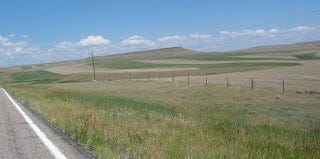
To Cut Bank today early — only 30 miles — to get the rest of my groceries, frozen and dairy plus cheap canned goods. The road is a secondary with tertiaries branching off to ranches and rocker oil pumps. The mountains are mostly bare of snow and stand in vague stony array behind a smoke scrim. The roadsides are full of sweet clover and alfalfa, bushing out over the asphalt, alternating yellow and purple, waving as high as the little pickiup’s doorhandles. The irrigation canals are topped up, hay will soon be ready to cut.

This time I’m thinking about the Supreme Court’s decisions and also about the number of guys around here who are veterans of the “sand wars.” It’s coming down to a comparison of “morality” and “strategy,” son of Sunstein. Morality is the sum of the survival wisdom of a specific time and place. Nothing theological about it but rather Levitican or Pauline because it is generally recorded in writing as rules, even commandments. But in the effort to enforce the rules, we freeze into law justifying punishment or those who disobey are stigmatized.

I was reading about veterans who have PTSD, which is pretty much stigmatized in military cultures because backing off from danger won’t work in combat. Therefore, they don’t say a lot about it either. But some suffer a LOT. In a small town like this one the drug that comes easiest to hand is alcohol. In sophisticated circles they call it “self-medicating.” Around here it’s more like “getting drunk enough to sleep.”


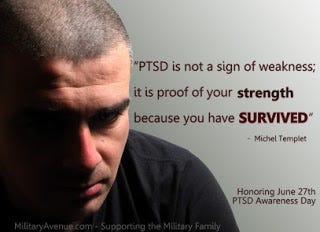
Let me be clear: PTSD is a change in the brain, it is not an emotional weakness but a linking, a conditioning, that has wired things together that ought to be processed and separated. This is a chemical, molecular reaction and SHOULD be addressed with meds that can help reverse it. Alcohol will not. It borrows the relief from the future so that like any addiction, the deficit comes due as soon as alcohol intake is stopped. And it erodes every aspect of bodies, not just livers, as well as minds.

Add to that our social acceptance of alcohol, so that the drinker is welcomed to the warm darkness of neon and buddies, a comforting habit often learned in military service. Drunk people are funny and loose — in the beginning. It’s only later that the bad stuff creeps in. For a while Valier had no taverns, but the oil boom has turned a pizza and beer refuge into a place where the parking lot can bloom with fistfights. The strategies of other things to do get bypassed. Drinking begins to take more money and more risk: a DUI, a car crash, maybe even the loss of a job or a life. The high-pay rural industrial jobs — oil, mono-crops with monster machines, wind farms, grain elevators — that are scattered among the ranch lands cannot tolerate anyone with diminished attention and reflexes.


In the few months I taught in Cut Bank, the kids told me about keggers as though they were a naughty entitlement, a reward for winning. Adults pay for the kegs — enablers looking for identification with winners. Most people think about drinking in terms of morality but not with the unforgivingness for hard drugs. They know meth will make you crazy but can’t see the harm of alcohol because it’s always been there, while meth is new. Slowly, gradually, booze leads them into the craziness of bad judgment and links it to sex and the highway. Fucking giveth babies and driving fast taketh away lives.

So morality in the form of an ironclad rule NEVER to drink, to be a teetotaller, a Mormon-all-by-yourself if necessary, might HAVE a strong justification. A few people have the will power to do it, even if their local milieu is constantly luring them. Bob Scriver suddenly quit smoking — no laws posted in public places, no patches, no electronic vapors. He learned smoking in the military where it was a reward, a soothing near-liturgy, a displacement of sex, a little intimate language as well as a casual sharing with strangers, a little respite for thought. I don’t know why he quit. He was a secretive guy. He said he just realized one day that he was being bullied by little white cylinders full of leaves. I do think it helped that I’m a non-smoker.


But if you can’t just throw a lever like that — which is also in part a matter of brain-wiring — then you must go to strategy, maybe a more formal and conscious version of Cass Sunstein’s “nudging”, self-imposed rather than required by laws. A strategy for breaking addiction to alcohol that is related to PTSD is going to be harder than just taking up golf. Not every doc is smart about helping.

The sort of drugs that will help must be “titrated” and there may be a category of them with enough variation that one will work with this person’s molecules and the next one won’t. These are very subtle meds, not suitable for chugging. Indeed, a slight variation of dose or regime can make the difference between working and not working, so there’s a lot of fiddling. That’s part of what I mean about strategy. This is a kind of high-monitoring that doesn’t mean peeing in a cup or blowing a breathalyzer score, but rather the kind of thing that diabetics do with their little machines. It should be accompanied by a lot of encouragement from sympathetic and understanding others. If the morality of those significant others is too fine and lofty to provide that, if they can’t see their own self-interest, then that might mean a Big Change. Like leaving.

Our cultural morality had been so restricting and so rigid, that we’ve reasonably rejected a lot of it. Our youngsters have questioned and discarded a lot of the rules that were meant to reinforce the privilege and superiority of authorities. But too many have gone on to drop even valuable moralities and a few vulnerable and terrified people have been crazed with morality, judging and executing those they disapprove. We do not know what strategy will address this. At least not yet.


Science has opened dialogue on a lot of things we took for granted and thinking about some of their questions is truly transformative. But a sub-category of science — technology and computer-driven statistics — which is heavily laden with profit-strategy — has fallen into the trap of “from IS to OUGHT,” a familiar but sneaky tendency to want to keep things as they are, so as to defend them as somehow moral meaning sacred.. Some of these things are juggernauts that would be very hard to block.

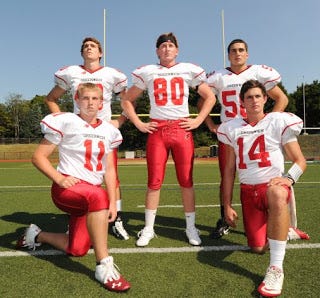
I personally would like to separate sports from schools at every level, but there would be screams of rage. I know because I once preached a playful sermon on why football is sacred to some people and the feedback was furious. The strategy so far is to invent better football helmets. Moral outrage over the sexual entitlement of star athletes or, with younger kids, what goes on in the shower room, seems impossible to change. Statistics say these things are widespread and suggest they are so deeply rooted in our physiology that they can’t be changed, only managed. Like war.


Brave young men, unless they are concussed.


It’s enlightening to compare Obama’s strategy with Scalia’s institutional morality. I think we need to think about “long-morality” and “long strategy.” Scalia’s two-millennium-old-rules no longer fit the world. Obama’s in-the-moment practical strategy may save lives from “pencil death” caused by failure to fund human basics. In the long run this kind of strategy might create a new culture, one we can be proud of. One where, when we go to war, we realize that the real costs and damage will come AFTER peace is achieved, rebuilding lives as well as structures. One that will reach out across the continent through the heat into the little dark air-conditioned drinking emporiums where veterans cluster to heal and perhaps to ponder a new morality.

The boys come here straight from football.