On the way to Cut Bank.

To Cut Bank today early — only 30 miles — to get the rest of my groceries, frozen and dairy plus cheap canned goods. The road is a secondary with tertiaries branching off to ranches and rocker oil pumps. The mountains are mostly bare of snow and stand in vague stony array behind a smoke scrim. The roadsides are full of sweet clover and alfalfa, bushing out over the asphalt, alternating yellow and purple, waving as high as the little pickiup’s doorhandles. The irrigation canals are topped up, hay will soon be ready to cut.
This time I’m thinking about the Supreme Court’s decisions and also about the number of guys around here who are veterans of the “sand wars.” It’s coming down to a comparison of “morality” and “strategy,” son of Sunstein. Morality is the sum of the survival wisdom of a specific time and place. Nothing theological about it but rather Levitican or Pauline because it is generally recorded in writing as rules, even commandments. But in the effort to enforce the rules, we freeze into law justifying punishment or those who disobey are stigmatized.
I was reading about veterans who have PTSD, which is pretty much stigmatized in military cultures because backing off from danger won’t work in combat. Therefore, they don’t say a lot about it either. But some suffer a LOT. In a small town like this one the drug that comes easiest to hand is alcohol. In sophisticated circles they call it “self-medicating.” Around here it’s more like “getting drunk enough to sleep.”
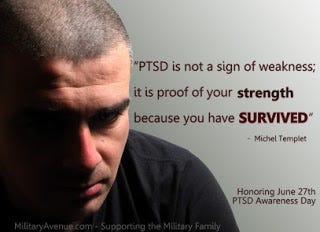
Let me be clear: PTSD is a change in the brain, it is not an emotional weakness but a linking, a conditioning, that has wired things together that ought to be processed and separated. This is a chemical, molecular reaction and SHOULD be addressed with meds that can help reverse it. Alcohol will not. It borrows the relief from the future so that like any addiction, the deficit comes due as soon as alcohol intake is stopped. And it erodes every aspect of bodies, not just livers, as well as minds.
Add to that our social acceptance of alcohol, so that the drinker is welcomed to the warm darkness of neon and buddies, a comforting habit often learned in military service. Drunk people are funny and loose — in the beginning. It’s only later that the bad stuff creeps in. For a while Valier had no taverns, but the oil boom has turned a pizza and beer refuge into a place where the parking lot can bloom with fistfights. The strategies of other things to do get bypassed. Drinking begins to take more money and more risk: a DUI, a car crash, maybe even the loss of a job or a life. The high-pay rural industrial jobs — oil, mono-crops with monster machines, wind farms, grain elevators — that are scattered among the ranch lands cannot tolerate anyone with diminished attention and reflexes.

In the few months I taught in Cut Bank, the kids told me about keggers as though they were a naughty entitlement, a reward for winning. Adults pay for the kegs — enablers looking for identification with winners. Most people think about drinking in terms of morality but not with the unforgivingness for hard drugs. They know meth will make you crazy but can’t see the harm of alcohol because it’s always been there, while meth is new. Slowly, gradually, booze leads them into the craziness of bad judgment and links it to sex and the highway. Fucking giveth babies and driving fast taketh away lives.
So morality in the form of an ironclad rule NEVER to drink, to be a teetotaller, a Mormon-all-by-yourself if necessary, might HAVE a strong justification. A few people have the will power to do it, even if their local milieu is constantly luring them. Bob Scriver suddenly quit smoking — no laws posted in public places, no patches, no electronic vapors. He learned smoking in the military where it was a reward, a soothing near-liturgy, a displacement of sex, a little intimate language as well as a casual sharing with strangers, a little respite for thought. I don’t know why he quit. He was a secretive guy. He said he just realized one day that he was being bullied by little white cylinders full of leaves. I do think it helped that I’m a non-smoker.

But if you can’t just throw a lever like that — which is also in part a matter of brain-wiring — then you must go to strategy, maybe a more formal and conscious version of Cass Sunstein’s “nudging”, self-imposed rather than required by laws. A strategy for breaking addiction to alcohol that is related to PTSD is going to be harder than just taking up golf. Not every doc is smart about helping.
The sort of drugs that will help must be “titrated” and there may be a category of them with enough variation that one will work with this person’s molecules and the next one won’t. These are very subtle meds, not suitable for chugging. Indeed, a slight variation of dose or regime can make the difference between working and not working, so there’s a lot of fiddling. That’s part of what I mean about strategy. This is a kind of high-monitoring that doesn’t mean peeing in a cup or blowing a breathalyzer score, but rather the kind of thing that diabetics do with their little machines. It should be accompanied by a lot of encouragement from sympathetic and understanding others. If the morality of those significant others is too fine and lofty to provide that, if they can’t see their own self-interest, then that might mean a Big Change. Like leaving.
Our cultural morality had been so restricting and so rigid, that we’ve reasonably rejected a lot of it. Our youngsters have questioned and discarded a lot of the rules that were meant to reinforce the privilege and superiority of authorities. But too many have gone on to drop even valuable moralities and a few vulnerable and terrified people have been crazed with morality, judging and executing those they disapprove. We do not know what strategy will address this. At least not yet.
Science has opened dialogue on a lot of things we took for granted and thinking about some of their questions is truly transformative. But a sub-category of science — technology and computer-driven statistics — which is heavily laden with profit-strategy — has fallen into the trap of “from IS to OUGHT,” a familiar but sneaky tendency to want to keep things as they are, so as to defend them as somehow moral meaning sacred.. Some of these things are juggernauts that would be very hard to block.
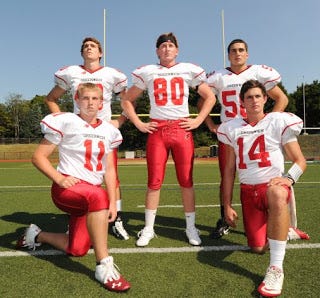
I personally would like to separate sports from schools at every level, but there would be screams of rage. I know because I once preached a playful sermon on why football is sacred to some people and the feedback was furious. The strategy so far is to invent better football helmets. Moral outrage over the sexual entitlement of star athletes or, with younger kids, what goes on in the shower room, seems impossible to change. Statistics say these things are widespread and suggest they are so deeply rooted in our physiology that they can’t be changed, only managed. Like war.
Brave young men, unless they are concussed.
It’s enlightening to compare Obama’s strategy with Scalia’s institutional morality. I think we need to think about “long-morality” and “long strategy.” Scalia’s two-millennium-old-rules no longer fit the world. Obama’s in-the-moment practical strategy may save lives from “pencil death” caused by failure to fund human basics. In the long run this kind of strategy might create a new culture, one we can be proud of. One where, when we go to war, we realize that the real costs and damage will come AFTER peace is achieved, rebuilding lives as well as structures. One that will reach out across the continent through the heat into the little dark air-conditioned drinking emporiums where veterans cluster to heal and perhaps to ponder a new morality.

The boys come here straight from football.


