
According to this embodied meaning theory, from the very beginning a person is an “organism-environmental coupling”. Of course, the very beginning is a chromosomal coupling, which then becomes a blastosphere, which divides itself in half so that half can become an infant and the other half can become the spacesuit attachment to the mother’s uterus for the purpose of molecular exchange. But besides that, the environmental unit containing the baby walks around, makes noise, laughs, sings, embraces other people, plays volleyball or the piano. I’m saying that from the beginning the environment is moving and changing and therefore the fetus has all that to feel and record on VENN cells.
The “organism/environment coupling” is what creates a human being. The purpose of a brain is to manage the coupling and the purpose of the coupling is survival. It is the deluge of sensations washing through the neurons to the brain for sorting and possible action that is the true nature of “thought” — not the introverted reflections of an evasive person in an ivory tower.
But no sooner does the individual figure out how to survive in his particular world than the world changes (birth). The terms of survival are new, and either the person changes his or her. strategy or they don’t survive. Which brings us to boys at risk.
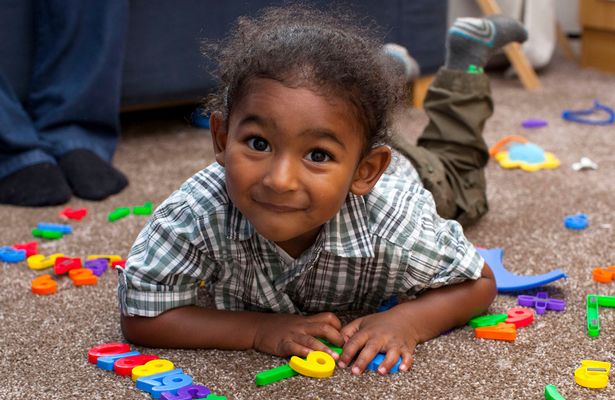
Let’s make one up just to play with the ideas without embarrassing anyone. Pretend this boy is in a bottom-of-the- barrel situation with an unknown dad and a hooked hooker mom. When she’s clean, she’s fine, but that doesn’t happen often. She’s just attractive enough for there to be a steady procession of men through the household. Somehow there was enough order and food for the infant to survive. Maybe the guy of the moment was from an ethnic group that took it for granted that a man could mother and so this imaginary guy mothered both the woman and the baby.
That means that when the maturation window for imprinting arrived, the baby imprinted like a baby duck on this drake. But maybe the two adults in their coupling mixed sex with drugs and that meant they forgot about the baby sometimes. The baby learned that there are long wet cold hungry times but if he could hang on, the care would come back. Still, he learned not to care, not to want, not to worry, not to be active on his own behalf because there was nothing he could do without adults to charm. He teetered between the edge of despair (“the hell with them”) and blaming himself. As he grew older he grew harder and stop believing that things could ever be good. Cynicism was his shield.

As he grew up, it turned out that he could still charm adults, though he often punished them and they betrayed him because they didn’t expect punishment and didn’t like it, but he didn’t see the connection. Finally he pair-bonded with someone like that man he had been imprinted with and he didn’t want to punish that close person, didn’t want him to leave. He didn’t want to just seduce him, but to really be loyal and deeply intimate.
One day he gets a bicycle, don’t ask how, and then he can travel farther. He works on the bicycle until he’s a pretty good bike mechanic and gets a job. Puberty hits and he learns which parts of town he can cruise, because it turns out he’s a YY instead of an XY. This means that one part of the culture will hate him and try to kill him, and another part will claim him and try to make him conform to their ideas.

The edges and rags of his former strategies keep showing up and cutting through. He needs help. He feels blind, unable to understand what was happening. The old way of being in the world just didn’t work but how does he get to a new way without losing himself, the identity he had had to hack out of an unforgiving world? Then he tests positive for HIV.
So let’s look at possible ways to change. It’s not easy. The body tries to be consistent, to do what worked last time and the mind’s impulse is to rationalize that, to knit a cover story. They’re in cahoots. (Actually they are different aspects of the same thing, the organic being trying to manage itself in an unpredictable world.)
So, this invented person has found an invented significant other, someone he cares about. What if he’s an illegal immigrant? Probably, even if he is, this ethnic man likely has a second advantage: community. Maybe he was raised in a small town with a lot of family. Maybe he works with a crew doing manual labor and they form friendships. He knows how to be in a community and sets an example.
Or maybe he has a cause, maybe he’s an AIDS activist or is working on a political justice issue, so that he has self-respect for what he is doing. Or maybe he is a graffiti artist, a really good one who is admired and can draw publicity to issues. These are all ways of changing while not losing one’s identity.

What I’ve been working towards understanding is how experiencing the sacred can be useful for organism/
environment grappling. If this loved one is from South or Central America, he likely has some experience with Catholic worship and stories, but how can a guy with no background and a justified grudge against all authority figures, much less a god who won’t get involved, feel anything spiritual -- or whatever you want to call it? Still, he struggles along and watches others, wondering what they’re feeling.
environment grappling. If this loved one is from South or Central America, he likely has some experience with Catholic worship and stories, but how can a guy with no background and a justified grudge against all authority figures, much less a god who won’t get involved, feel anything spiritual -- or whatever you want to call it? Still, he struggles along and watches others, wondering what they’re feeling.
I could make this story go any number of ways — so many ways that life and this culture will kill you, cripple you, deceive you. But I’m trying to put in little handholds, the kind of small things or even big things that can transform everything and everybody. So this imaginary boy survives through the enormous challenge that is finding sexual balance and gets all the way to that mid-twenties flowering of the brain/mind that gives more power and possibility. Somehow he teaches himself how to read.

He finds a guitar and that penchant for Mexicans he has means that someone teaches him the basics. Music begins to flow through him and he finds a new lover who also plays the guitar. They can easily sit together playing duets all night.
One full moon night they go out to an abandoned gravel pit they’ve found where the quarry walls make a reverb and someone has dumped an old trashed-out sofa intact enough to sit on. It is a safe place with the moon down so low a person could pat its cool surface. It is a natural sacred experience. It won’t last, but at least now he knows what it’s like. Intense. Some say it’s worth all the suffering in the rest of life.
One full moon night they go out to an abandoned gravel pit they’ve found where the quarry walls make a reverb and someone has dumped an old trashed-out sofa intact enough to sit on. It is a safe place with the moon down so low a person could pat its cool surface. It is a natural sacred experience. It won’t last, but at least now he knows what it’s like. Intense. Some say it’s worth all the suffering in the rest of life.
I don’t know. I’m just making this up. I don’t really know this boy’s life though I carefully watch the vids made by boys like him. One way to access the sacred is empathy and one way to empathize is to try to imagine other lives even if you get it wrong. I’ll learn more and try again . . .and again.


