Showing posts with label imprinting. Show all posts

Friday, July 22, 2016

A CASE STUDY: BOY AT RISK


According to this embodied meaning theory, from the very beginning a person is an “organism-environmental coupling”.  Of course, the very beginning is a chromosomal coupling, which then becomes a blastosphere, which divides itself in half so that half can become an infant and the other half can become the spacesuit attachment to the mother’s uterus for the purpose of molecular exchange.  But besides that, the environmental unit containing the baby walks around, makes noise, laughs, sings, embraces other people, plays volleyball or the piano.  I’m saying that from the beginning the environment is moving and changing and therefore the fetus has all that to feel and record on VENN cells.

The “organism/environment coupling” is what creates a human being.  The purpose of a brain is to manage the coupling and the purpose of the coupling is survival.  It is the deluge of sensations washing through the neurons to the brain for sorting and possible action that is the true nature of “thought” — not the introverted reflections of an evasive person in an ivory tower.

But no sooner does the individual figure out how to survive in his particular world than the world changes (birth).  The terms of survival are new, and either the person changes his or her. strategy or they don’t survive.  Which brings us to boys at risk.
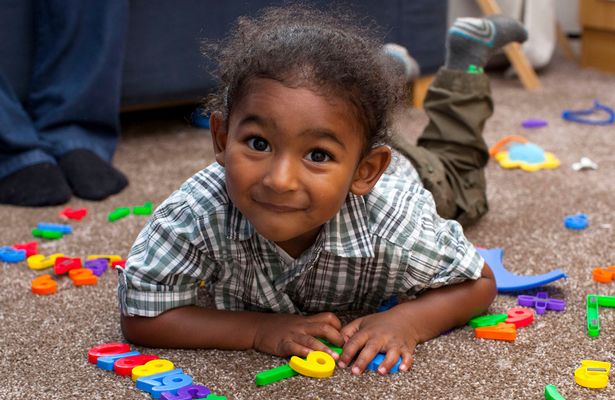

Let’s make one up just to play with the ideas without embarrassing anyone.  Pretend this boy is in a bottom-of-the- barrel situation with an unknown dad and a hooked hooker mom.  When she’s clean, she’s fine, but that doesn’t happen often.  She’s just attractive enough for there to be a steady procession of men through the household.  Somehow there was enough order and food for the infant to survive.  Maybe the guy of the moment was from an ethnic group that took it for granted that a man could mother and so this imaginary guy mothered both the woman and the baby.

That means that when the maturation window for imprinting arrived, the baby imprinted like a baby duck on this drake.  But maybe the two adults in their coupling mixed sex with drugs and that meant they forgot about the baby sometimes.  The baby learned that there are long wet cold hungry times but if he could hang on, the care would come back.  Still, he learned not to care, not to want, not to worry, not to be active on his own behalf because there was nothing he could do without adults to charm.  He teetered between the edge of despair (“the hell with them”) and blaming himself.  As he grew older he grew harder and stop believing that things could ever be good.  Cynicism was his shield.


As he grew up, it turned out that he could still charm adults, though he often punished them and they betrayed him because they didn’t expect punishment and didn’t like it, but he didn’t see the connection.  Finally he pair-bonded with someone like that man he had been imprinted with and he didn’t want to punish that close person, didn’t want him to leave.  He didn’t want to just seduce him, but to really be loyal and deeply intimate.  

One day he gets a bicycle, don’t ask how, and then he can travel farther.  He works on the bicycle until he’s a pretty good bike mechanic and gets a job.  Puberty hits and he learns which parts of town he can cruise, because it turns out he’s a YY instead of an XY.  This means that one part of the culture will hate him and try to kill him, and another part will claim him and try to make him conform to their ideas.


The edges and rags of his former strategies keep showing up and cutting through.  He needs help.  He feels blind, unable to understand what was happening.  The old way of being in the world just didn’t work but how does he get to a new way without losing himself, the identity he had had to hack out of an unforgiving world?  Then he tests positive for HIV.  

So let’s look at possible ways to change.  It’s not easy.  The body tries to be consistent, to do what worked last time and the mind’s impulse is to rationalize that, to knit a cover story.  They’re in cahoots.  (Actually they are different aspects of the same thing, the organic being trying to manage itself in an unpredictable world.)

So, this invented person has found an invented significant other, someone he cares about.  What if he’s an illegal immigrant?  Probably, even if he is, this ethnic man likely has a second advantage: community.  Maybe he was raised in a small town with a lot of family.  Maybe he works with a crew doing manual labor and they form friendships. He knows how to be in a community and sets an example.

Or maybe he has a cause, maybe he’s an AIDS activist or is working on a political justice issue, so that he has self-respect for what he is doing.  Or maybe he is a graffiti artist, a really good one who is admired and can draw publicity to issues.  These are all ways of changing while not losing one’s identity.


What I’ve been working towards understanding is how experiencing the sacred can be useful for organism/
environment grappling.  If this loved one is from South or Central America, he likely has some experience with Catholic worship and stories, but how can a guy with no background and a justified grudge against all authority figures, much less a god who won’t get involved, feel anything spiritual -- or whatever you want to call it?  Still, he struggles along and watches others, wondering what they’re feeling.

I could make this story go any number of ways — so many ways that life and this culture will kill you, cripple you, deceive you.  But I’m trying to put in little handholds, the kind of small things or even big things that can transform everything and everybody.  So this imaginary boy survives through the enormous challenge that is finding sexual balance and gets all the way to that mid-twenties flowering of the brain/mind that gives more power and possibility.  Somehow he teaches himself how to read.

He finds a guitar and that penchant for Mexicans he has means that someone teaches him the basics.  Music begins to flow through him and he finds a new lover who also plays the guitar.  They can easily sit together playing duets all night.  

One full moon night they go out to an abandoned gravel pit they’ve found where the quarry walls make a reverb and someone has dumped an old trashed-out sofa intact enough to sit on.  It is a safe place with the moon down so low a person could pat its cool surface.  It is a natural sacred experience.  It won’t last, but at least now he knows what it’s like.  Intense.  Some say it’s worth all the suffering in the rest of life.

I don’t know.  I’m just making this up.  I don’t really know this boy’s life though I carefully watch the vids made by boys like him.  One way to access the sacred is empathy and one way to empathize is to try to imagine other lives even if you get it wrong.  I’ll learn more and try again . . .and again.

Thursday, July 07, 2016

DUCKS IMPRINT -- DOGS BOND


“In psychology and ethology, imprinting is any kind of phase-sensitive learning (learning occurring at a particular age or a particular life stage) that is rapid and apparently independent of the consequences of behavior.”

“Bonding typically refers to the process of attachment that develops between romantic partners, close friends, or parents and children. This bond is characterized by emotions such as affection and trust. Any two people who spend time together may form a bond.”


These two definitions come from Wikipedia which means they were probably written by male white college grads in an urban context.  Or if they were written by “experts in the field,” that rather defeats the idea that the “cloud” of everyone is providing the information.  Each “category” of this project is edited or guided by someone who is considered expert in the field.  As those of us who follow the materials about Native American writing know, the people who run the site can’t possibly know who is blowing smoke in any field very different from those who produce male white college grads in cities, grandiose enough to play uber-editor.

One result of this is that the illusion that rational, authority-confirmed, non-emotional thought takes priority over anything else — it is the height of sophistication and achievement.   Moral judgement has been displaced to anthropology.  What makes a profit is good.  Read the whole entries on “imprinting” and “bonding”.  Then I won’t have to deal with them directly here.  Note that there is a lot of amusing self-serving going on.  For instance, the phenomenon called “baby duck syndrome” that means people who are imprinted with the first computer system they use and have difficulty accepting anything different.  Maybe that’s why everything keeps reverting to Facebook standards and practises.

The points I want to make here are that these are involuntary responses of human bodies, closely controlled to time-spans in the process of maturation, and usually entirely unconscious to the person being imprinted or bonded and yet of enormous importance to their course of life, their very survival.  

These two processes are primally but not primarily mammalian. Imprinting was recognized first in chickens and ducks and seems to be adaptive as a mechanism for taking babies out of their nests without losing them — they imprint with the mother which means following her.  She also imprints them on herself, so she doesn’t acquire a following of babies not her own.  Cross-species imprinting is possible and leads to strange events that fascinate humans, who — like Romeo and Juliet — can imprint with forbidden people.

One of the cruelest consequences of early childhood abuse and neglect is the destruction of the ability to imprint.  Like learning language, the brain will only allow this to form (it must be molecular) for a certain part of development.  No one knows how to reinstate the ability to imprint on a caregiver at a later time.  No one knows the relationship between the formation of fetishes and maturational imprinting.

If a human child never imprints with a specific caregiver, how will he or she have the ability to leave the holding environment of the nest without getting lost.  Won’t he or she just never realize that one path is better than another or never think of going home, wandering through life without regard for danger or sustenance? 


Or many neglected children will imprint on the neglecter, so they are at the mercy of blotto drunkards or addicts, vicious sociopaths who torture in their search for feeling something, or always through life trying to save people, consuming their energy in that effort and offending people who don’t WANT to be taken care of.  To people who have never experienced skillful and generous caretaking, this pseudo-parenting can feel like invasive attachment, energy-parasitism, and bondage.

Imprinting is automatic, carried genetically in the “clocks” that turn maturation tasks on and off, and not conscious while it’s happening, though it can be recognized by others or by one’s self after the passage of time.

Bonding is very much conscious and is produced by spending time together, interacting and sharing.  It is not necessarily sexual, but can be intensely so.  It can be one-sided, one person being bonded (possibly imprinted) without the other person’s cooperation or even consciousness.  One can become “bonded” with a movie star who isn’t even present, just by watching him or her talk to you on a screen or from a pulpit.

The modern novels that so consume everyone are most often centered on these issues in all the variations that are possible.  We know how intensely humans can bond with animals and I think environments or structures, which are inanimate and therefore incapable of bonding, can be the receivers of this attachment response.  Bonding is something physical but also emotional, but not described as rational or logical.  Mr. Spock bonds with humans, but presumably in a limited way.


Bonding can arouse jealousy and competition, esp. if there is a sexual element.  But marriage to strangers, maybe chosen by parents or maybe in unhappy ways like capture or bought or politically forced, can become a relationship of bonding after time has passed.  

Bonding is a form of bondage, of restraint by belonging, and therefore both a capture and a support.  This can be physically acted out, as a sexual interaction, or more commonly as a necessity in child-raising.  This thinking leads into a discussion of boundaries, when it is a matter of safety and when it must allow exploration.  It also becomes part of the consideration of treating insanity.

But I want to return to imprinting and those who have been deprived of the ability to imprint because the time window has closed.  Is it possible to achieve an equivalent to imprinting by providing a new “nest” and persuading the nestlings to bond with a provider, a form of salvation by Love?  In my experience human beings, esp. those still pliable, have a drive to live, to find balance and resources, is as strong and founded in neurology as the phototrophic drive of plants to grow.  The dandelion that cracks the asphalt overhead, “the force that through the green fuse drives” are very strong.


We know the wonderful stories of migratory birds raised in captivity without parents who are imprinted by humans and their ultralight aircraft who know the way.  These images, “imprinted” indelibly on us, show how involuntary connection can become bonding (love) that supports ancient patterns of flight through life across the planet.  


This way of thinking is nothing like the dominating, stage-formulating, benchmarking, testing, profiteering of academia, politics, denominations and other institutional profit-makers.  It has to be done almost covertly to escape meddling that shuts it down.  We just begin to realize it.

Thursday, November 21, 2013

TWO EMBEDDED GENOME CODES


If poultry is descended from dinosaurs -- and I have no trouble at all accepting that, esp. considering the Tyrannosaurus Rex roosters still strutting around -- then there are two things that are deep, deep in our genome.  Both recently showed up in little stories on the internet.  One was an account by Ellen Chase, reposted by Nick Kristof, about some adopted chickens, one of which went blind.  Most of the chickens kindly guided and even fed the unfortunate hen, but the chicken at the bottom of the pecking order saw it as an opportunity and often attacked the blind chicken.  Sometimes the rest of the flock intervened and sometimes they didn’t.  Bullying is not just for bulls.  And it is not the strong alpha creatures who are bullies -- rather losers trying to improve their status.


The other was a video clip that shows a turkey hatching, sprawling on the table top totally disorganized, hearing the biologist cheeping at it (which he had been doing all along while the chick was still in the egg), recognizing the voice, pulling itself together, staggering over to lean on the man’s cheek, and going to sleep.   http://video.pbs.org/video/2165688049/   The poult was imprinted and from then on would yearn for and rush to him, just as it would have to its turkey mother.  Babies need moms, but they needn’t be biological or even female or even the same species.

These two behaviors are so deep that they are described as “instincts,”  hard-wired into the brain, which means controlled by the genome by producing protein molecules.  The genes, so old, are still there, no doubt pre-mammal code that promoted survival. (Maiasaurus, the “good-mother” dino laid her eggs in nests near Valier.)  These two coded behaviors were deep enough and protective enough that the mammals preserved them in their own cells.  (No animal was coded for surviving asteroid hits -- that was just situational, literally once in a lifetime or even many lifetimes.)

We are in a time when we are just now looking at the excessive amount of “bullying” behavior in humans and wondering whether that’s really a survival tactic after all.  It certainly is for the immediate success of the individual, but what does it do for the whole community?  Is it a force for consolidation or does it undermine every possibility of human progress by sowing fear, distrust and forced compliance -- which is always an energy and resource burner.

Konrad Lorenz and his imprinted geese

Clearly the imprinting phenomenon is useful and charming.  Mostly.  My mother taught us as small children to hang onto her skirt because there were three of us and she only had two hands, even if she wasn’t carrying something.  On the other hand, when we were needy we followed her around bleating like bummer lambs, which got in her way and drove her nuts.  For an individual trying to get things done, having been imprinted upon is not always pleasant.  When one imprints on a therapist, that worthy will keep it under control with appointments and a closed door.  It might be called a form of transference.

Feral dogs and boys will attach to each other -- dogs with dogs and boys with boys or even dogs with boys -- sometimes in communities (packs, gangs).  But if the pecking order within that community is unstable, then bullying will thin the group.  What is the proper balance between attaching to each other and dominating each other?  What is the best trade-off between the individual and the group?  Can we replace bullying with nurturing in some constructive way?

The news this morning is that scientists have learned how to insert DNA code into the genome -- not at random by infecting with a virus, but deliberately in a specific place as though with tweezers.  So now all we need is to build the right gene (we’ve made simple ones) and put it in the right place (a little trickier).  That neglects issues like the epigenome and methylation, but at least we know the latter exist.  They might be easier ways to affect behavior than inserting or deleting genes.  The genome operates like a symphony orchestra, so one flat note or timing lag can throw the whole composition into trouble.  Genes are interactive and there is no sheet music to hand out.

In the meantime, what are the changes to our health care, our government, our classrooms, our marriages/families that would support nurturing instead of bullying?  In some families, children not capable of forcing their way will be destroyed, if only by exclusion.  This past week a young teen boy, wearing only trunks, was thrown out of the house in sub-zero weather because he was aggravating his parents.  People talk of “survival of the fittest” and define fitness as dominance.  But were these adults "fit" to be parents?


Some mammal mothers, if frightened or disturbed, will eat their babies.  (Mink are notorious for doing this, which is why mink ranchers get nervous around noise and disorder.)  Is this the interaction of the protein molecule that controls T.Rex behavior with the protein molecule that controls Maiasaurus behavior?  (“I love you to death!”)  Is cannibalism a form of over-nurturing? (“I wanted to make him part of me.”)  If humans have both genes, is modern “civilization” somehow making them interact dissonantly?  

So many manufactured molecules are out there in the ground water, and no one knows how to remove them.  Some are coming from meds in the pee of humans who will die without them -- should we be filtering and recycling urine?  Filtering them from the water supply would be formidably expensive, but nowhere near the cost of inserting manmade genes into human cells.  (The cost of getting a readout is now advertised at a little less than a hundred dollars, without specifying the quality, extent or usefulness of the document.)


Above is a still from a horror movie called “Splice” that addresses the mixing of genes from different species by scientific means, one -- naturally -- being human.  Here's the link:  http://www.youtube.com/watch?v=8pIeSYhipUs  In discussing the film, the director, Vincenzo Natale, astutely says that horror films are one way of thinking about the scientific edges of human life and suggests that this specific film has an undertow of incest.  How can one address genes without sex?  And who can love us more than we can love ourselves -- if we ever get around to it.  Once a person is in forbidden territory it all turns up at once, even our longing for our missing prehensile tails.  (Wings are a different issue --  see Nicholas Cage in “Michael.”  Tails belong to “Alien.”  Then there’s feathers vs. leathers.)

Luckily, we can explore the culturome and the memes of individuals much more easily and quickly, though perhaps not more safely considering how some people survive.  I mean, it upsets them to be investigated, much less interfered with.  Still, it is a counseling truism that if one changes oneself, everything around one will also change.  To understand such atrocities as battering and trafficking, it’s necessary to look at both sides PLUS the larger context.  Is the survival value of being beaten up worth the survival value of belonging to someone powerful?  Is the survival value of beating up one’s partner somehow a kind of self-nurturing, sucking power out of women and children like a Skeksi extracting life from the Pod People peasants?  Some people seem to think so.  I think we need to risk interfering or else lose all our best evolved culturomes.  We are neither dinosaurs nor poultry, but we’re not proving it.

Skeksi from "The Dark Crystal"